
Should Mark Hamill be more nicer, or less nicer, to autograph hunters? Steve Grad’s stories
Autographs are a very interesting cottage industry. You have to say “industry,” because autographs are sold. All the time. To some, that’s a sign of celebrity culture out of control.
It may also be a sign of exploitation — the wealthy celebrity actually being the one exploited by the little guy.
It’s an interesting study in economics.
Autographs have probably been in demand for hundreds of years. People presumably treasured any signature of William Shakespeare or Wolfgang Amadeus Mozart, or those of famous artists, writers or political figures. If you want the ink of George Washington, make sure you’ve got well into the 5 digits.
Nothing seems to generate autograph demand like baseball. Every game, every park, for many, many decades. Kids and sometimes grownups are lined up with baseballs, cards, programs, photos, pens in hands (typically Sharpies nowadays, the endeavor has gotten quite specialized). A lot of players can be gotten for free, but nowadays, many can’t, because they’ve signed exclusive deals with companies to sign select amounts of items, for significant compensation. Those penstrokes are serious moneymakers that can’t be given away for free.
Social custom suggests that a person who is asked for an autograph should be flattered. Turning down such a request, depending on the circumstances, can be seen as very selfish. For any celebrity concerned at all about looking bad ... they’ve got you there.
One autograph is one thing. Does anyone actually like signing dozens of autographs at a time? Probably not. Especially when some will be sold. But that’s the way this endeavor works. Often in bunches.
Being asked for an autograph is a remarkable cultural milestone. If you’re a ballplayer in the minor or major leagues and perhaps even college, you will certainly be asked. If you have any sports cards made of you, you will certainly be asked. If you’re a movie star or TV star, you will certainly be asked.
Everyone else? It’s pretty hard to achieve.
Think of CEOs and members of Congress and high-ranking members of the military. How many are actually asked for autographs? It’s probably not that common. Doctors? These are people literally saving lives, but probably no collectors are roaming Cedars-Sinai and the Mayo Clinic for signatures. University presidents? Probably only if they’re famous for something else.
It’s rare air to be asked.
Market price for an autograph depends obviously on the stature of one’s celebrity but also — and this is very important — the supply of signatures. There are otherwise forgettable big-league ballplayers who either refuse(d) to sign or passed away at a young age, and there simply are few autographs available.
If the selling of autographs troubles you, the flip side is that autograph collections are indeed beautiful. Someone may have the ’27 Yankees complete. Someone may have Crosby, Sinatra, Madonna, Taylor, Springsteen, Streisand, Morrison, Hendrix, Joplin, Cobain, Michael Jackson and Amy Winehouse, or someone else may have Douglas Fairbanks Sr. and Jr., Cary Grant, Carole Lombard, Humphrey Bogart, Katharine Hepburn, Shirley Temple, Clark Gable, Marlon Brando, Sharon Tate, Matt Damon & Ben Affleck, Steven Spielberg, Meryl Streep, Denzel Washington, Daniel Day-Lewis, Al Pacino, Jane and Henry and Peter Fonda, and however they got them, if the signatures are real, they are absolute treasures.
Acquiring signatures of the deceased, and the living, is where Steve Grad comes in. Grad is the popular and respected autograph voucher of TV’s “Pawn Stars” and has been chief of the country’s biggest sports-card authenticating units. His ascent is an indication of the highly subjective science of autograph “verification” — there is no Ph.D. for this line of work, rather, the credentials come from the school of hard knocks — spending hours waiting and pleading for stars to sign something, for decades ... and the stars and their security may not be thrilled about it.
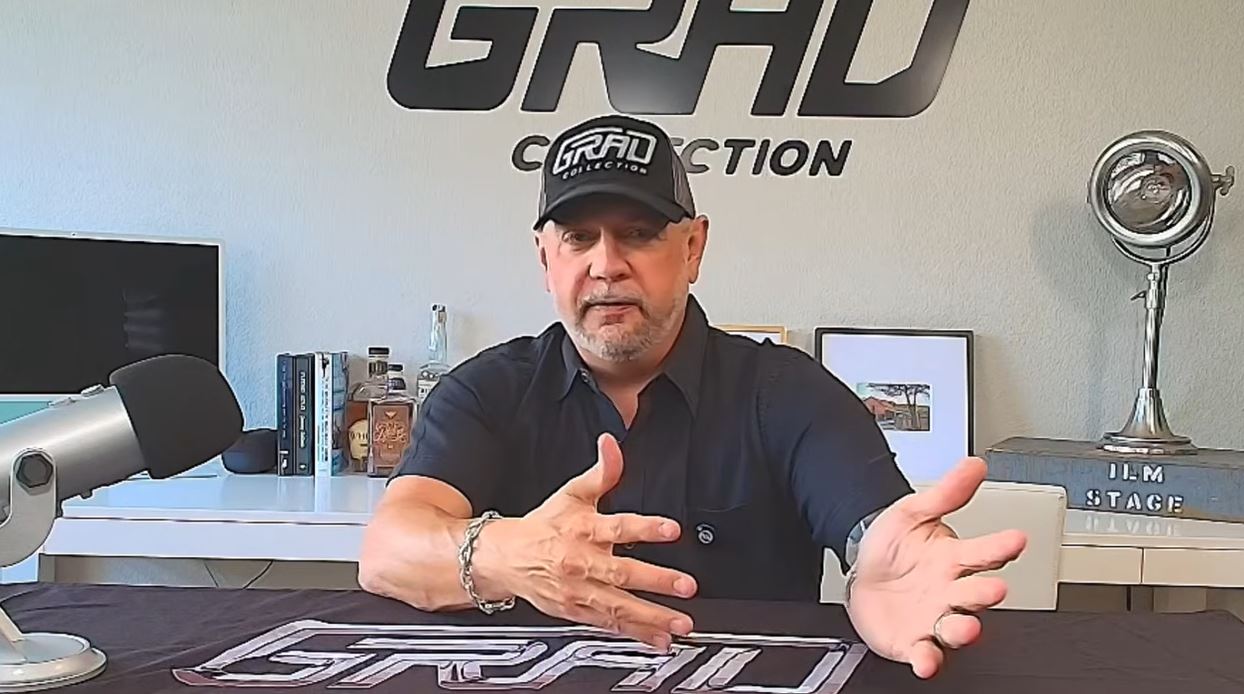
Grad, who has one of YouTube's best channels, has posted several videos this year explaining what celebrities’ real signatures look like, how fakes populate the marketplace, and most entertainingly, his own stories of “chasing” autographs for decades. He acquired many autographs growing up in the Chicago area, but it’s clear he’s made numerous trips to Los Angeles and New York and spent countless hours waiting at hotels, restaurants and conventions.
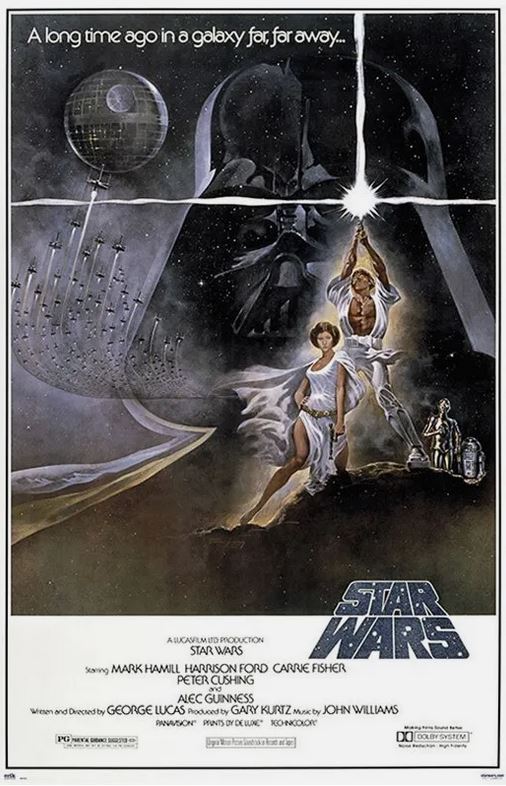
His most interesting takes concern the people associated with “Star Wars.” Grad has spoken on “Pawn Stars” about having a robust collection of “Star Wars” memorabilia. It’s clearly among his top collecting interests, and his expertise on the film’s collectibles is impeccable.
The popularity of “Star Wars,” and the interest in Grad’s industry, means that even fringe figures — human beings who voiced characters in the movie or walked around in costumes without saying anything — have found their autograph in demand. For decades.
Maybe too much demand. Grad speaks of meeting some of these people 30, 40 times. It’s fair to question, How many autographs does one need? Grad has not addressed this question in his videos, but chances are he would respond that in each encounter, a collector only gets a small number of things signed, if at all, and anyone with a collection of something wants it to be better and better, for example, who wouldn’t want Mickey Mantle to sign seven baseball cards instead of just one? (He does not address whether he often sold his autographs (he notes many for sale now), but it seems obvious he may have traded some for the ones he couldn’t get.)
Anyway, it’s clear that people associated with “Star Wars” are deluged with autograph requests, anytime in public, for as long as they live. And probably constantly through the mail (and the celebrities have to decide whether to spend time on the mail, use an auto-pen or “secretarial” signature, or simply ignore it). It seems like nobody’s fault that there is this interest. A lot of that is flattering. But then there are constant interruptions from people who in many cases are probably clamoring for a free gesture (signing) that they will turn around and sell.
What if someone simply doesn’t feel like signing something for free for someone? That seems like a fair reaction for any human being.
As a collector, Grad surely has a bias. He doesn’t explicitly suggest the tradeoff but indicates that people fortunate to be celebrities should at least do some signing for free, given how much effort people like himself put themselves through to acquire these signatures, and/or be friendly at the paid events.
Here are a few of his comments about “Star Wars” actors and crew:
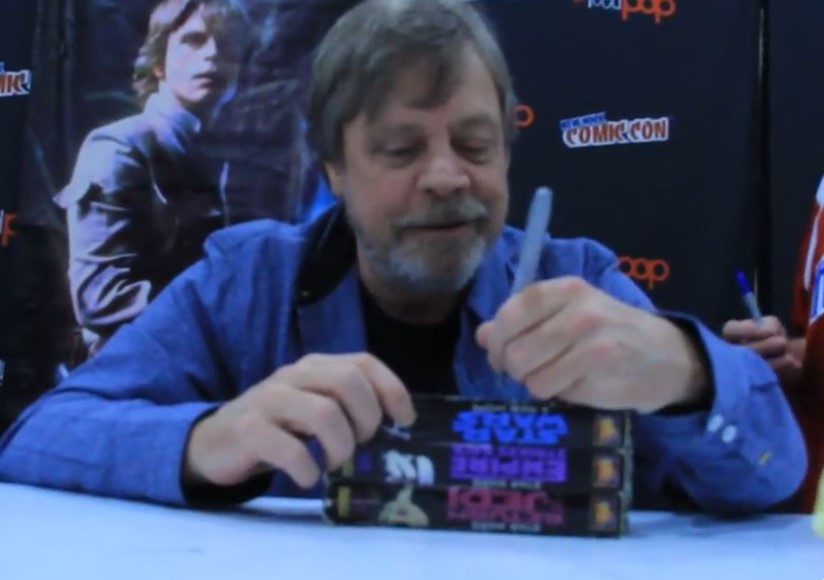
Mark Hamill: “He was never my favorite character. ... Man, oh man, oh man, oh man, he’s such a whiny baby about everything. And he just makes the experience so bad. ... He had said to me one time in person, back years ago, ‘I just wish that they could take out all my credits and, and get rid of Luke Skywalker.’ ... Still makes money off of it ... He is just a whiny baby ... I’ve met him many times on the streets. He’d do plays in New York. You’d have to literally beg him to get his autograph. ... He quit signing I think 2017 for a while, then he went back to it. He gets mobbed in person. His wife screams about it, his daughter does, ‘Leave him alone, leave him alone’ ... He’s a huge complainer. He’s a whiner.”
Carrie Fisher: “Getting Carrie Fisher on the streets pre-2002 was kinda just a mess. I ended up gettin’ her autograph one time in ’98 in Los Angeles, Beverly Hills. I had to show her my driver’s license to prove I didn’t live in California and I wasn’t some, you know, autograph hound there. So she signed one each for me and my friend. Which was nice of her. Didn’t sign really for anyone else ... I met her again in 2007, at ‘The Simpsons’ premiere, where she signed, no problem ... the show circuit, she was always friendly, she was always jovial, um, she’s always chatty ... she had her little sprinkles she’d throw at you. You might get ’em in your hair or your face, or all over your item. She didn’t care. She’d laugh about it.”
Harrison Ford: “I’ve met Harrison Ford probably 30, 40 times ... we had ‘The Fugitive’ filming in Chicago. And I remember every single time going for his autograph and meeting him ... went through the revolving door of a hotel, and I started saying, ‘Can I take a picture?’ He went through, watched him walk in the lobby, walked back out and said ‘Yeah, let’s take a picture.’ Unfortunately I don’t have it ... During ‘The Fugitive,’ I got him with a big beard ... ’98 he was filming a movie in New York called ‘Random Hearts’ ... We ended up going to the movie set, found him ... with three friends of mine ... Ford walks to go to his trailer. He’s got two plates of food. ... We said, ‘Hey we’re Chicago guys, can you sign for us?’ He goes, ‘Absolutely.’ ... This is what kind of guy he is. Takes his food and he sets it down on like a stoop at his trailer. And he sat there and he signed two each for us ... usually Ford during those periods was a one-apiece guy. ... When I’ve handed him photos with other signatures, he’s cognizant of it ... and he signs where he should usually. ... He flew planes. I did get Harrison Ford at an airport before ... he signed two things for my friend and I ... Harrison Ford started actually signing for money ... about 2011.”
Frank Oz (voice of Yoda): “Throughout the years, I got his autograph, up until 2015 ... Where it kinda went bad for Frank ... such a sweet guy ... I think about 2016, ’17, range, I might be wrong on the year, but it was at Newark Airport, he was flying in, he gets in, signing for collectors, and as a practice, Frank Oz, he liked to personalize everything ... sometimes he’d put ‘Yoda’ ... What really irked him ... He stopped signing. ... A collector had said, ‘You know, you could sign it to me, but I’m just gonna take it off.’ And Frank Oz is, you know, basically saying, ‘What do you mean, you’re taking it off?’ And he’s like, ‘No I just take off the personalization.’ ... And that ended it for Frank. He’d had it ... I kinda think he had a Neil Armstrong Moment ... had gone through this moment where he felt used and abused, and he stopped signing pretty much. And Frank Oz pretty much did that. ... Not a great signer anymore because he knows what collectors do with it. Now he’s been offered tons of money to sign, I mean, in the millions, and he’s turned it down.”
Gary Kurtz (producer): “Nothing but a sweet man. Um, I don’t think the guy had a bad bone in his body. ... I remember a show where he goes, ‘Why don’t you come over here and sit next to me?’ And I sat next to him for 15 minutes talking to him about ‘Star Wars’ stuff ... We miss Gary Kurtz. We miss his personality and his kindness.”
Peter Mayhew (Chewbacca): “Never nice ... didn’t smile much ... This guy was huge, he was 7-8 or something ... his shoulders hurt, his hands hurt ... arthritis and all kinds of different stuff goin’ on ... He was just miserable. And I don’t know what it was. ‘Can you do a character name?’ ‘No I’m not doin’ that today.’ Wouldn’t do it. ‘Hey what- talk about the movie.’ Didn’t want to talk about it. ... He had a career signing autographs ... I met the guy 25, 30 times, maybe 40. Not a great signer.”
Anthony Daniels (C3PO): “The diva known as Anthony Daniels ... in Rosemont ... He wouldn’t sign anywhere near anyone else ... The person who he despised the most unfortunately was the tin can, Kenny Baker ... they just didn’t get along great ... always diva, diva appearances. He’d show up at celebrations or cons and walk along the line to see the people waiting for him and being praised by people. ... If you got up there and, and shook that table, God forbid you did that, you’d get a death stare. God forbid you’d ask him to sign in a pen of your choice. It always had to be a pen of his choice. I think it still is ... He’s another guy I’ve probably met 30 times in my life. Usually an unpleasant experience to get your stuff signed. ... He makes you feel like you’re not worthy to be around him.”
Clearly Grad is not nearly as interested in show signings (though he has attended many, he says) as the free autographs that may be obtained outside hotels and restaurants. That’s understandable. The alternative for these people is to hand out their signatures for free — constantly — and watch them be sold on eBay. Hence we have A-listers asking to see collectors’ driver’s licenses.
Grad would chase down the likes of Mark Hamill on a street. But it’s not just elite collectors who approach the likes of Hamill. Hamill was in Chicago on June 18, 2026, for the opening of the Obama Presidential Center (with wife, Marilou York). The event was invitation-only. How many guests at this event must’ve asked him for an autograph? Can he really refuse?
The Frank Oz anecdote reveals a sad truth about autographs — the personalized ones aren’t worth very much. So sellers don’t want them. Collectors might appreciate personalization, especially if it’s a book signing, but to be honest, autographs are most impressive when it’s simply the name and nothing else. What is seemingly a very nice gesture by the signer to address it to the person receiving it is actually counterproductive and deflating. (Someone should tell sports stars to stop signing their uniform numbers on cards and balls and please, skip the “Hall of Fame” and year. Anyone can look you up in the Hall of Fame; you don’t have to tell us, and no need to write the year.)
The autograph subject (that’s a better-sounding term than “target”) most praised here by Grad is Gary Kurtz. But it has to be noted that Kurtz’s signature is probably the least in demand among all of these other individuals. He is not an actor nor the creator/director. He presumably gets less hassle than the others. Some fans may want Kurtz’s signature on a poster; others may not care.
Grad does not mention any encounters, or attempted encounters, with George Lucas. (A validated autograph of Lucas, whose signature appears to be barely a scribble, apparently starts around $1,000 on eBay and goes considerably higher, depending on certification; some with less impressive credentials are offered in the high three digits.)
A few other Hollywood stars are mentioned by Grad. If you ever wondered what it’s like being Sean Connery ...
Jamie Lee Curtis: “She walks out of the hotel and goes, ‘Oh, I think I’m gonna sign some autographs.’ There was only three of us. Signs autographs for us. And was great about it. ... I said, ‘Can I take a picture with you.’ Sure. She grabs my phone- my camera, takes the picture.”
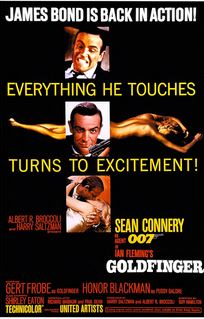
Sean Connery: “He came back from lunch and actually signed for me ... I was glad to get him ... I’m puttin’ in the time for this guy ... leaves the event, goes to a restaurant, I think it was called Le Colonial or something, it was downtown Chicago, I think on Oak Street. And, remember we followed him there, and waited for him and all of a sudden, um, he’s not in a good mood. ... At one point ... Connery turns around at one of my friends and goes ‘ENOUGH ALREADY!,’ and he raises his fist to hit my friend. And we’re in a small alleyway and finally, we’re like, ‘All right let’s get out of here.’ The wife pulls him away. And leaves. So afterwards, he comes out, not gonna sign again. We knew where he was at, he was at the Ritz Carlton. We went back to the Ritz Carlton. There was five of us ... awful chasing stories ... at any rate, he ends up signing for us again, so I got him twice that day. I got a ‘Rock’ photo signed like an idiot ... The next time, uh, the American Film Institute held this thing in Los Angeles ... I think it was 2009, it might be one of his last times that he ever visited Los Angeles ... It was packed. It was at the ArcLight too. Crazy place ... I knew where he stayed at the Four Seasons. So I just went to the Four Seasons. And waited there. And waited. And finally his car pulls up ... all the chasers by then followed him. And I was already there. ... His wife’s with him, he gets out of the car and security’s all over the place. ‘Mr. Connery, come with us.’ He goes, ‘No no no no no no no no no no no, I’m gonna do this. I’m gonna sign ... So he goes, basically he sets some ground rules ... He goes ‘I don’t wnat to hear you say anything, “Oh please, Mr. Connery sign my car or sign my book.” ‘SHUT IT! ... Don’t say a word!’ Lo and behold, he starts signing. Signed for me first. ... He signed maybe about seven or eight other things, inevitably, people like, ‘Oh Mr. Connery, me over here.’ And he’s like, ‘Shut it! Shut it!’ Finally he just threw the pen down and walked away.”
Jeff Bridges: “He did an event in Santa Monica, signed a few things coming in, but afterwards, he literally stood at his car and signed ’til everybody had whatever they were signed ... He’s really never disappointed me.”
Grad praises a music legend:
Eric Clapton: “I can’t say enough good things about Eric Clapton ... I never walked away without getting his signature ... really good signer ... always honored to meet him ... I got the good autographs. Eric Clapton’s autograph these days aren’t too nice. You’re lucky if you just get a, a little ‘e’ on him.”
Finally, the Beatles:
Paul McCartney: “He comes out and he walks right up to me. I’ve got a photo out and a pen. He grabs it and he goes, ‘Hmmmm,’ and he puts it down and walks in ... he went to a restaurant ... Trotter ... off Armitage Avenue ... four or five chasers, maybe six of us ... two random people who just happened to be in the neighborhood. ... It was great that night. We waited forever. His bodyguard that was with him, two of ’em, said ‘Hey listen, he’s in here eating, um, he’s gonna eat for a while, and, uh, if he’s in a good mood, he’ll sign when he comes out. Well he was in a good mood ... I got two photos signed ... I ended up getting two, went back for another, he goes, ‘Oh you’ve had enough tonight.’ ... 2009 ... his security would routinely do this ... he’s on a tour bus ... his security would quiz you, you know, uh, ‘Tell me about “Strawberry Fields,” what’s the- how many songs are on this album. I passed, whatever they asked me ... got it signed.”
Ringo Starr: “I hate saying this ... I just can’t find one time that I chased autographs in the late ’80s, ’90s, 2000s that I ever saw this guy that he just wasn’t a miserable SOB. There wasn’t one time ... He would come out, and he would go, ‘OK, 1, 2, 3,’ and he’d throw the pen up and just walk away ... I never would get him. I got him one time, and it was I think at the Whitehall Hotel, which is a weird hotel he stayed at.”
Asking for autographs is a curious social dynamic. Adults probably do it even more than kids, as adults are aware of more famous people than kids are. Unlike Grad, most adults probably do it spontaneously, when unexpectedly encountering someone of fame. Autograph hunters won’t flinch at asking. Other adults though may feel sheepish. Sometimes celebrities are happy to request it of other celebrities. But the appeal seems to decline with age. Grad reveals in one of his videos, “I’m kind of retired mode.” Apparently now in his 50s, his tales are all about older celebrities. Evidently, his enthusiasm for chasing younger ones is minimal.
Grad may be out of line in approaching celebrities, again and again, by his own admission sometimes multiple times a day, and asking for a favor. On the other hand, his efforts landed him a very important career in the world of collectibles and a prominent TV role. He’s not the only one interested in this, and he has worked hard to acquire an expertise. He is highly respected in what can be a dubious industry. A different “Pawn Stars” expert once verified a “Godfather” script as being signed by Al Pacino when it was actually signed by producer Al Ruddy.
How reliable is “authentication”? Sometimes, origins of even million-dollar artwork can fool the highest-paid experts. Imagine how many falsified signatures might get through on baseballs and baseball cards and movie-scene stills when hundreds of thousands, if not millions, of items are run through authenticating assembly lines at the major companies. Grad concedes sometimes mistakes are made. Hopefully not too many.
Consider the difficulty of not only acquiring in-demand autographs but verifying them. To get an autograph from the most elite living signers, you can try doing what Grad did, looking up schedules, camping out in a handful of big cities, figuring out hotels, waiting forever, spending hours, days on this, quite possibly with unwanted outcomes. Much less work is writing to the celebrities. But Grad reveals major pitfalls here — autopens and “secretarial” signatures, when employees or associates or relatives of the celebrities do the signing. For example, baseball cluhhouse personnel finishing out the “team” signing of baseballs when a few players weren’t available or didn’t want to do it. For mailed items, this tactic hopefully isn’t that common but probably goes back to the beginnings of the postal service. Grad notes that some really big stars do sign through the mail. But it’s possible that mailed-back items from celebrities may not necessarily be hand-signed by the person in question. Mail items from lesser-known figures are far more likely legit, but those people can get swamped too — note that even a not-particularly-well-known ballplayer of the 1970s says he signs 20 to 40 cards a week, presumably received through the mail — and if anyone’s health declines or they dislike anything about the letter sent by the autograph seeker or they simply become disinterested, who knows who might end up signing the item.
Grad hasn’t mentioned, at least in detail, the possibility that you could hustle and get a big-time autograph in person, and have it not verified by the authentication companies because the signature is too much of a scribble or perhaps it was rushed (as they often are) and too different from the “exemplars” everyone has on file. Ugh. So while you may appreciate its authenticity, you can’t display it with the current gold standard, certification from the two or three leading authentication companies, and your chances of getting full value in a swap or sale would be very low.
To ensure the real thing, you can attempt what Grad did, or you can pay up to wait in lines at conventions. To some, including sometimes the celebrities who are actually doing it, it can feel a bit sterile. A lot of in-demand signers don’t do conventions anyway. They, and even the ones who do, are still going to be greeted by groups like Grad was in outside restaurants and hotels, maybe more than once a day.
A celebrity lifestyle shouldn’t have to be this awkward.
Nowadays, Grad or anyone even with far less stature can deliver a bit of payback to those instances of perceived celebrity slights by talking about it on YouTube or commenting on someone else’s post. That’s another side effect of being a celebrity today. His stories are entertaining and interesting. But it’s fair to say that, if this is all Grad’s got, then this activity really isn’t that controversial or sexy, and probably for virtually everyone isn’t worth the time Grad put into it. Are Grad’s negative stories just sour grapes? Or somehow educational? They are helpful, but maybe not as Grad intends. We’ll never know if Sean Connery really had a right to be angry or was just being a jerk. We do know, there’s an endless market driving this attention, and if you’re a celebrity, how to deal with it is a decision that is going to have to be made every day, even several times a day.
(June 2026)