

Steven Soderbergh’s authenticity dramedy
‘The Christophers’
redefines art house film
The big statement in Steven Soderbergh’s “The Christophers” is in the casting, which immediately suggests the difference in expectations that even the seemingly egalitarian art world can bestow.
Unfortunately, the film makes very few statements visually. And even at a short length (about 100 minutes), viewers will find it a challenge to process all of the crucial information that the characters are telling each other.
Actually, the information is more “ridiculous” than “crucial,” but we need something to create drama here beyond an eccentric old man of muffled diction giving speeches on whatever comes to mind.
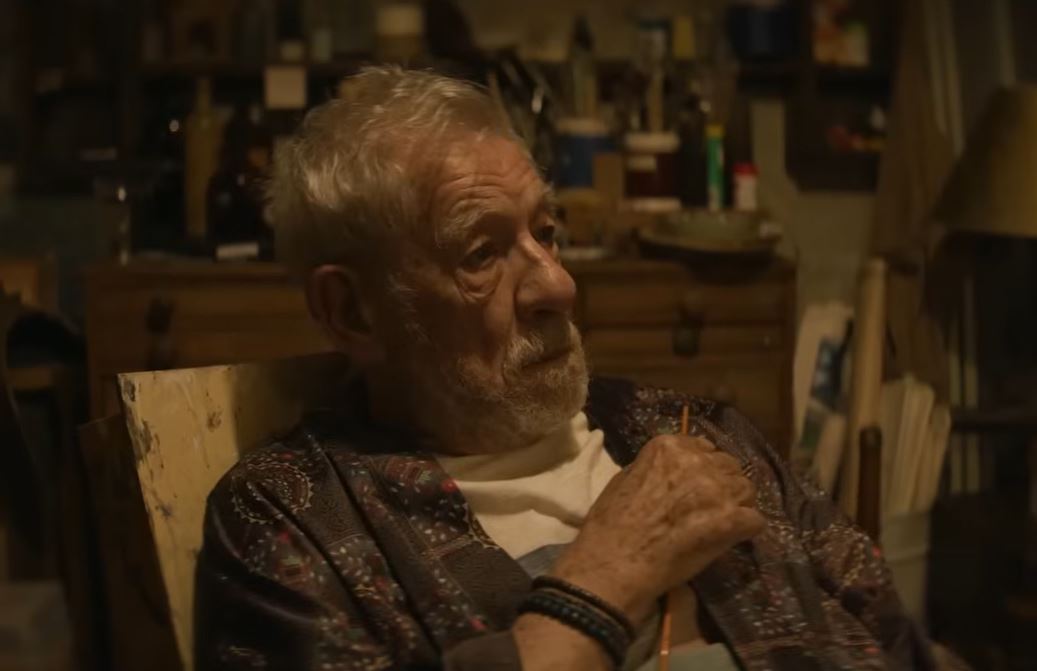
“The Christophers” is chock-ful of typical art-world satire. Wine is shown constantly at gatherings. Dollar amounts are thrown around constantly. Grosses and percentages. The notable buyer here (completely offscreen) is a “Tech Bro.” But he’s not even the end user — it’s a Vegas museum that will supply a tax break. The only person commenting on what any of this work actually means is the decrepit artist, Ian McKellen’s Julian Sklar, who evidently has enough money for his very limited lifestyle and is quicker with an insult than a paint brush.
“The Christophers” hints at being a strong film about frustration — the gifted individual (often older, but not always) who can provide great benefit (financial or otherwise) to other people but disdains being in that position and no longer cares. Maybe it’s even worse than that — it’s not that he doesn’t care about his value, he actually wants to disappoint people.
We do see him in a few instances only partly clothed. That, though, is filmmaking cliché, something older actors seem to relish, or maybe it’s the director intent on showing the impact of age. Is Julian losing his mind? Early stages of dementia or some other ailment? Or some other kind of health problem that has made him irritable?
The film will not blame health for Julian’s toxic outlook. It’s implied that he’s always been this way, which is perhaps how his own children, Barnaby and Sallie, could be the villains. The kids are morally deficient get-rich-quick schemers who see their dad as nothing more than a bank account. But what did he ever see in them? One of the most curious references, which is repeated at least once, is Julian’s mocking of his daughter’s talent. There is some kind of suggestion that Sallie may have gotten breaks that Lori did not.
Clint Eastwood has starred in at least a couple films depicting tension between an older father and his adult children, “Gran Torino” and “The Mule.” Both play the families straight. The latter is regarded as perhaps a personal statement about Eastwood’s family connections. The former is in the ballpark of “The Christophers,” as the aging protagonist, whose kids have written him off and vice versa, finds a connection to someone of a different ethnicity, which substitutes for the more typical approach of a family reconciliation.
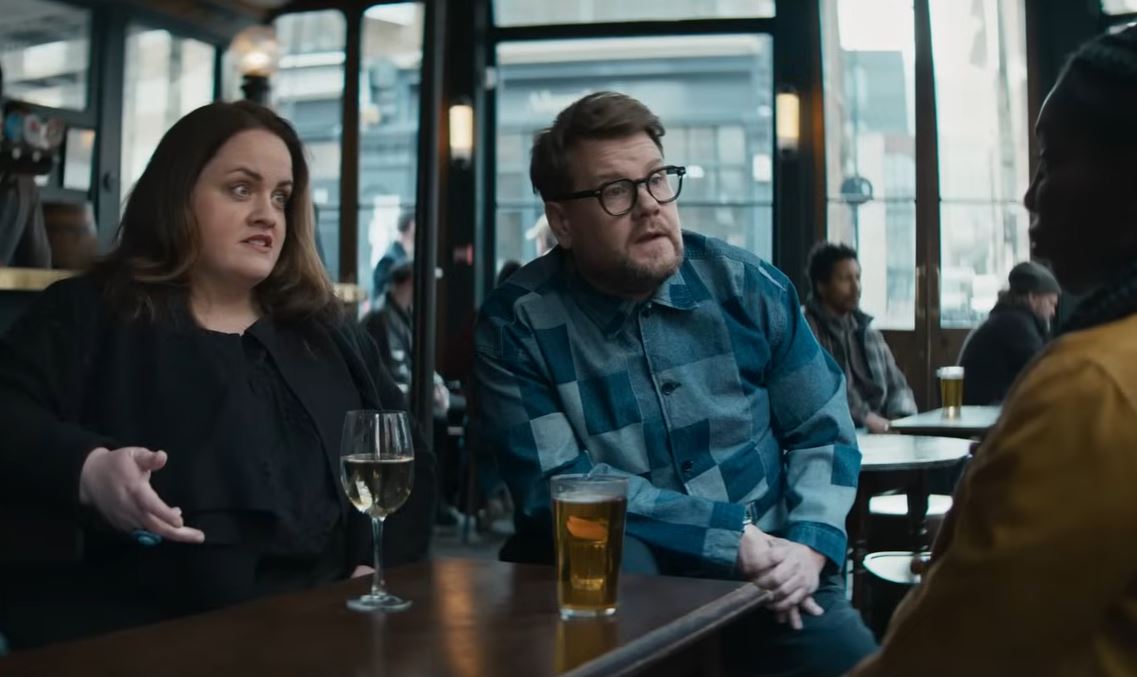
Surely even in “The Christophers,” there must have been heartbreak somewhere along the line — the child of a famous artisan who attempts to do the same thing but comes up way short. Soderbergh is not interested in those sentiments. “The Christophers” couldn’t be a dramedy if it were. To eliminate any such sympathies, he makes Sallie and brother Barnaby into comical buffoons. Was Julian a terrible parent? What was their mother like? Those are beyond the scope here. The nature of these two characters tells us nothing serious is really going to happen here.
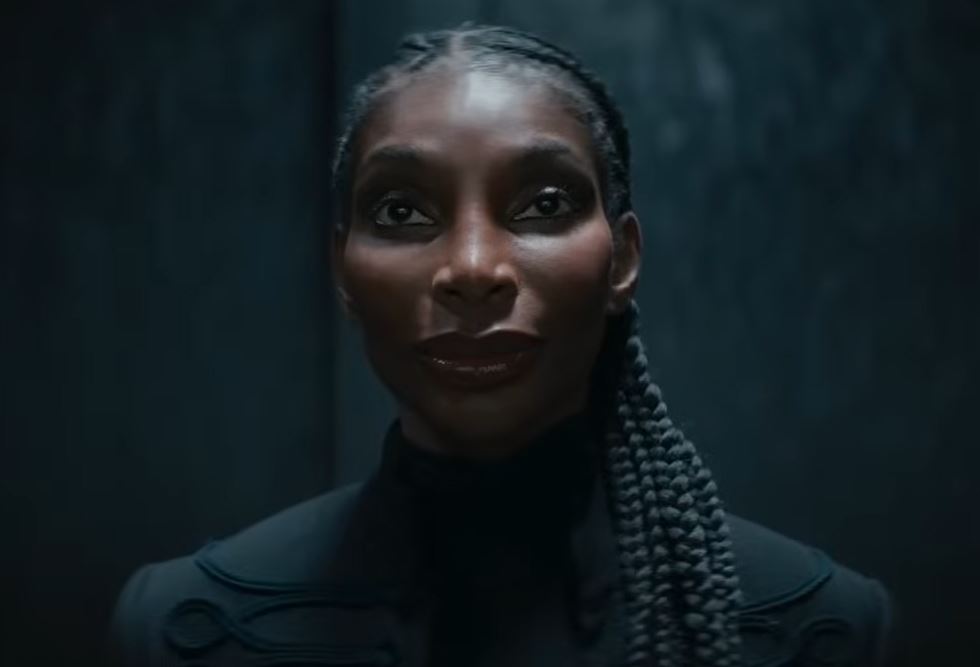
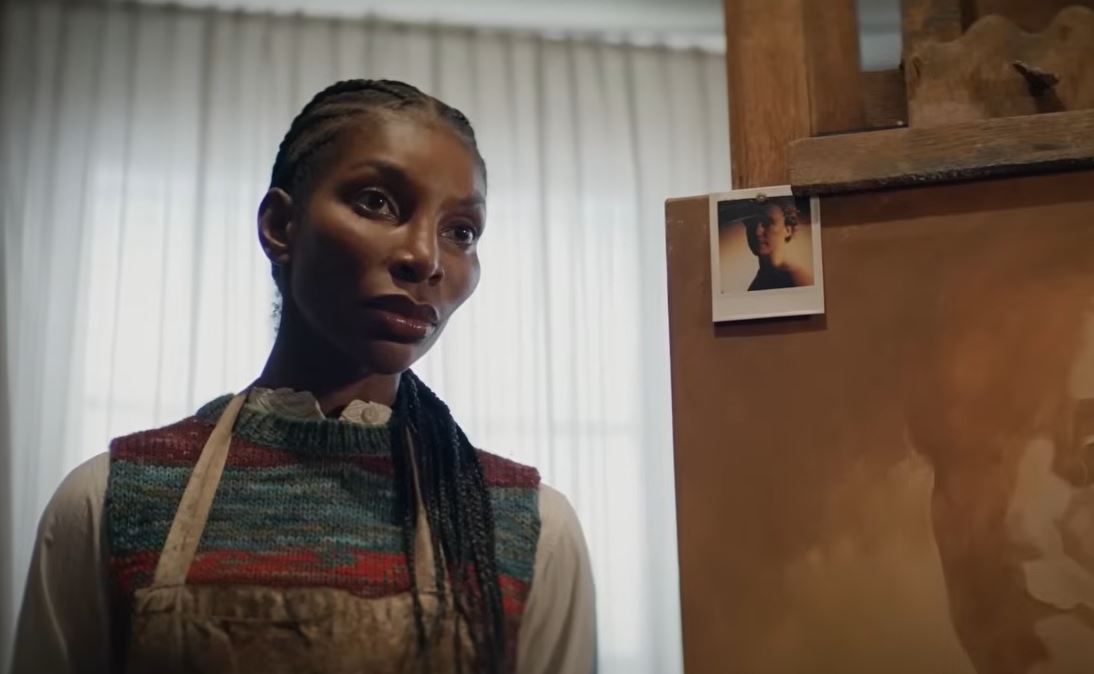
Soderbergh could’ve skipped the kids entirely and put Michaela Coel, as Lori Butler, on even more treacherous moral ground. She is working at a food truck with clearly uncertain career prospects when the kids approach her. By showing her in a low-wage job, Soderbergh is giving her moral leeway, in that we would not necessarily fault someone in this economic situation for taking advantage of a lucrative (though dubious) activity. But suppose she learned on her own that Julian was hiring an assistant, took the job, then began to get her own ideas about his unfinished work.
Soderbergh whiffs on what should be Lori’s greatest dilemma: whether to be a part of the art destruction that she is tasked to do.
Certainly this situation has happened many times. Legendary artists (and writers) experiment. Or perhaps they simply lose confidence. And they look at some unfinished or unreleased work they have done and decide they don’t want it to exist. It would seem the artist would simply destroy the work him/herself. But maybe they can’t bring themselves to do it, even if they want to. And so they enlist an associate. Perhaps because they’re secretly desperate for a second opinion ... or because they just want to stick it to somebody.
There could be other tough calls on destroying work. Perhaps a great artist is in decline, dies, and the assistant is left to organize the estate. A few remaining unfinished pieces would fetch good money. But the assistant concludes they are well below the artist’s typical caliber of work and would ultimately dilute the artist’s reputation. Family members may demand their release. Fellow artists may quietly urge their destruction.
Soderbergh sets up this cringing situation when Lori is told to take the art to a fire pit. Enough interruptions and conversations occur that the plan is not fulfilled and without Lori having to take a stand.
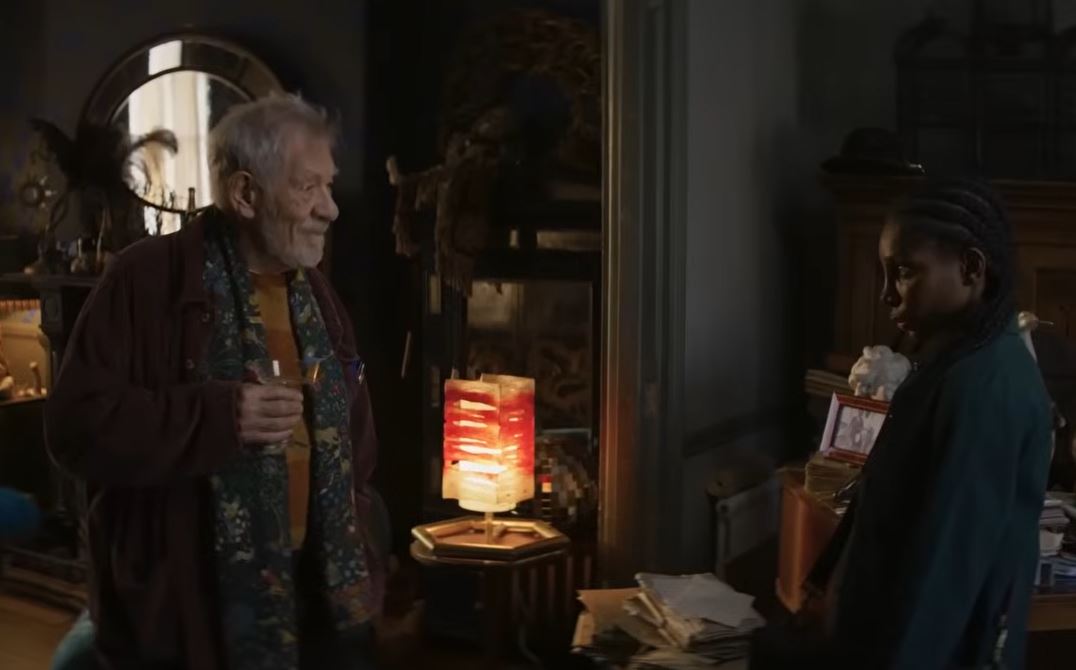
“The Christophers” would be a humdrum, forgettable film if not for Coel. In Britain, she has been known for years for her “Chewing Gum” sitcom, about a young woman from a Christian household on a mission of losing her virginity. Coel has a credit in “Star Wars: The Last Jedi,” and she has a larger role in “Black Panther: Wakanda Forever,” but she is mostly unknown to American audiences. In “The Christophers,” it’s not about what she says. It’s about her look. There’s an edge to it. It’s an edge of beauty, and there’s something striking about it. She has a very prominent chin. Soderbergh and his writer, Ed Solomon, smartly limit what Lori says, which is frustrating until you begin to wonder if she has a massive plan she’s about to unleash on the other three characters. Do her ultimate actions constitute a plan, or reaction?
Soderbergh has been in the news for his approach to AI. He may be, in various projects, experimenting, and maybe there’s a warning here about the future, but “The Christophers” is an old-school, analog tale about authenticity. (And a little bit about closeted sexuality.) The flaws here can’t be blamed on technology or lack thereof. Soderbergh and Solomon largely confine the action to a couple rooms in a house. This enables the production to be spare and cheap but risks the need for backstory speeches, and Soderbergh and Solomon indulge in way too many. The British accents, and McKellen’s sometimes mumbling diction, can take effort for American audiences to absorb. It’s just too much tell, not enough show.
For a time, it appears as though someone is going to be caught in an important room in which they should not be. But that mini-drama is watered down when Julian admits it makes him even more curious about Lori. That leads to more conversation. Soderbergh — mostly — is passing up the chance to show us the one obvious alternative to people talking in a room — the artwork. Eventually, Julian will impulsively slam together a work of art, called “not uninteresting” by Lori. We’re dying to see it. Soderbergh, like Lucy and Charlie Brown and the football, has Julian shred it with his hands.
As for standards, there is at least a pause by Lori as to differences between “restoration” and “forgery.” In the fascinating 2010 “Certified Copy,” starring Juliette Binoche and William Shimell, a writer argues that even a copy of a work of art is an original, and that even an “original” such as the Mona Lisa is a “copy” of what the subject looked like.
There is not such a provocative debate in “The Christophers,” but a key argument will be made, by Lori, that someone owning a forgery receives no less benefit from ownership than someone owning an original — unless the forgery owner is aware of it. This is a disturbing revelation, but is it literally true? What if a person dies not knowing something about his/her spouse that would’ve lessened their opinion of the spouse? Is their life better that way?
Lori will argue that revelations of forgeries harm everyone involved; thus it’s in everyone’s interest to keep secrets. Buyers would be angry and demand refunds. Galleries would probably be out the money and would suffer reputational damage. The only counterargument would seem to be that a grudge against a forger might outweigh the reasons for not exposing.
The connection Lori will make with Julian is part of her redemption; the other is that she is able to solve a mystery that no one else in the film cares about — who’s Christopher. This, like Julian’s exhibition, is too late in the film to be relevant, and, like Lori’s own thoughts on forgeries, might be just as well if never disclosed.
There are gray areas for the type of work Lori discusses. Someone who draws a picture in their living room and signs it “Picasso” is not going to be arrested. Someone who sells it or distributes it, however, could draw legal scrutiny, depending on the price tag and the extent of the material. Jonathan Demme’s fascinating “Melvin & Howard” of 1980 explores what everyday life may be like for someone presenting a questionable discovery. In high-end art, forgeries that achieve million-dollar sales may be rare, but lower-level items may alarmingly be commonplace. One professional autograph expert has done videos lamenting how “the glut of fakes has ruined Mickey Mantle’s market,” and it’s “disgusting.”
Fine art’s been known to drive people mad. Few things in the entire world cost as much. Sometimes it’s well-known works of easy prominence. It may also be doodling that no one ever knew about. “The Christophers” affirms that there’s nothing like an original. Authenticators — and heirs — are going to be busy for a long time.
2.5 stars
(April 2026)
“The Christophers” (2025)
Cast:
Michaela Coel as
Lori Butler ♦
Ian McKellen as
Julian Sklar ♦
Dmitri Prokopiev as
Food Truck Patron ♦
Jessica Gunning as
Sallie Milton Sklar ♦
James Corden as
Barnaby Sklar ♦
Tilly Botsford as
Esme ♦
Daniel Fearn as
Locksmith ♦
Lucy McCormick as
Lori’s Flatmate #1 ♦
Le Fil as
Lori’s Flatmate #2 ♦
Dallas Campbell as
Art Fight Moderator ♦
Ferdy Roberts as
Owen Appleton
Directed by: Steven Soderbergh
Written by: Ed Solomon
Producer: Iain A. Canning
Producer: Jim Parks
Executive producer: Corey Bayes
Executive producer: Mike Larocca
Executive producer: Michael Schaefer
Executive producer: Claire Kenny
Music: David Holmes
Cinematography: Peter Andrews (Steven Soderbergh)
Editor: Mary Ann Bernard (Steven Soderbergh)
Casting: Carmen Cuba
Production design: Antonia Lowe
Art direction: Sam Stokes, Louise Lannen
Set decoration: Kimberley Hussey
Costumes: Eleanor Baker
Makeup and hair: Amy Carter Mason, Lorraine Dublin, Frances Hounsom, Liz Phillips, Jenna Shaw, Eyesha Yates, Hayley Belle, Carly Simmons, Johnny Keterman, Tashana Francis, Louisa Gallon
Production manager: Sarah Boyks
Post-production consultant: James Doyle