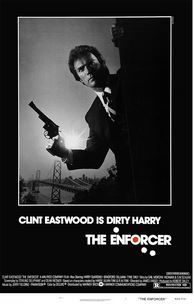
Unlike other Dirty Harry films, ‘The Enforcer’ hits a nerve not with criminal justice, but collateral damage
Sidekicks are maybe the most vulnerable movie characters. They tend to be noble. They don’t have demons. They save the protagonist.
Why, then, do filmmakers let anything happen to them? Well, the sidekicks tend to be victims of the dramatic arc — the bad guys are closing in, and in order to 1) convince audiences that the bad guys really are pretty bad and 2) give the hero over-the-top motivation, someone has to be sacrificed. Even, perhaps, twice in the same film.
If that sounds unfair, mission accomplished.
Some say Clint Eastwood is a better director than actor. His most famous role is certainly Dirty Harry Callahan, either because it resonated so strongly with the public or because he played it so often. Charles Bronson was in numerous landmark films but is most famous for “Death Wish,” when he was in his 50s. Like Eastwood, he came back for more, reluctantly or not, for decades.
There’s something about the vigilante.
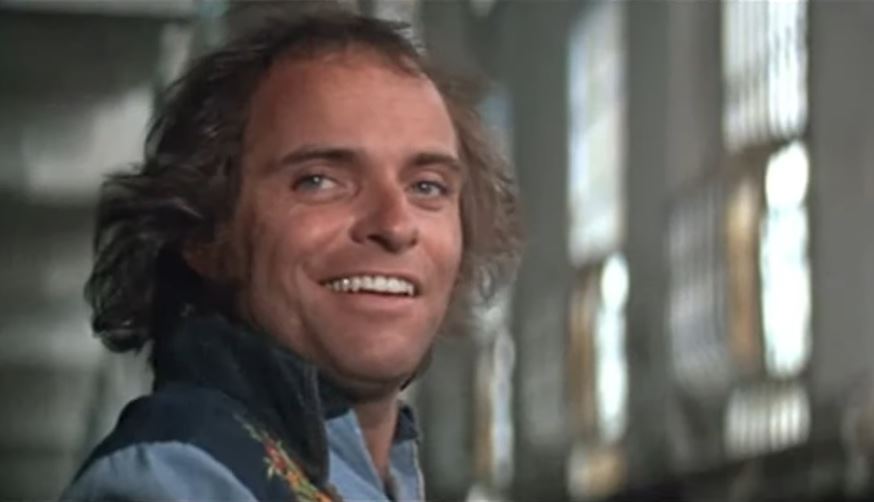
For the concept to work, the bad guys have to be animals, unredeemable cretins who murder without a second thought. “The Enforcer,” the third installment of the Dirty Harry series, meets that threshold, but the headband-wearing villains are otherwise preposterous. They are not as repulsive as Andy Robinson’s raving psychopath in the original film. This time, it’s an SLA crew led by two very similar-looking males that’s less into kidnappings than high-powered weaponry, which isn’t too hard to steal from a factory watched over by a senior citizen guard. They are confronted by two cops who call in no backup and choose to fire from straight on in the truck’s path rather than simply step aside. (The bad guys also are able to rather easily steal a utility van, well before the days of GPS.) (And they have figured out how to take over Alcatraz and leave themselves completely surrounded.)
There are hints in the movie that the bad guys are aided and abetted by a sympathetic, religion-cloaked network of liberals while the stuffy suits at city hall wrongly assume it’s black militants who are instead willing to help. What exactly the bad guys are trying to do, who knows, though in fairness, that’s a good question for the SLA too, and that was actually real. There’s one difference with the SLA though. Pauline Kael goes where Gene Siskel and Roger Ebert did not. “It’s not that the villains are kidnappers and murderers — their real crime is that they’re homosexual.” But this isn’t, according to Kael, the first time — in “Magnum Force,” the predecessor to “The Enforcer,” Dirty Harry “mowed down a homosexual Nazi group inside the police department.”
Clint Eastwood — still, incredibly, active today — achieved the sort of trifecta reached by only a handful of Hollywood stars: highly prolific as an actor, director and producer, gliding between all three, endlessly busy. George Clooney is in that realm now. Warren Beatty used to be, although he’s been involved in fewer films. Streisand is up there.
Movie franchises tend to wear thin pretty quickly. “Rocky” is one rare exception. Stallone kept it going for four films that are memorable. The second, one of the greatest sequels, provided a necessary update; the third and fourth are a couple of the funniest films ever made even though they’re not comedies.
“Dirty Harry” is not as fortunate. The first one is the best, by far. Quentin Tarantino deems it a “towering achievement of genre filmmaking.” The rest were made, perhaps at Eastwood’s resistance, surely because 1) they made a lot of money and 2) nearly every good film in the ’70s got a sequel.
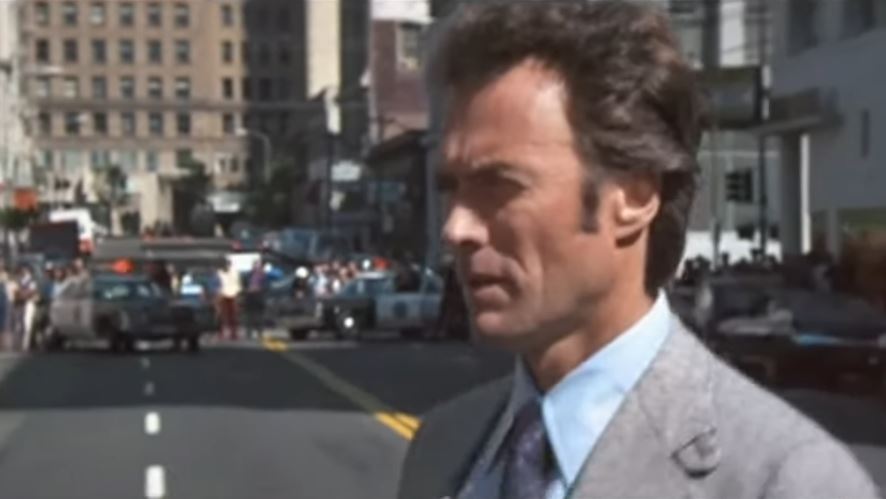
Quentin Tarantino says the sequels lack Don Siegel’s edge from the first film and rely on “generic movie bad guys.” He’s right. But the sequels are not unsuccessful. People saw them. And still would. They are interesting examples of the viability of formula and the permanence of certain emotions.
“The Enforcer” is not an insignificant film.
“The Enforcer” is the middle of the Dirty Harry franchise, which currently stands at five. (Who knows, maybe Clint will give it one more shot.) It is directed by James Fargo, an Eastwood and Spielberg associate who did not direct the previous two Dirty Harry films but was unit production manager on “Jaws” and would later direct “Every Which Way But Loose,” a pretty big box office hit. Kael suggests that most of what’s in “Enforcer” is “garbage” and Siskel, in a two-star scoffing review, calls the film “unfair to Eastwood’s fans” and says “The picture had four writers, a sure sign of trouble,” even though tons of scripts pick up writing help along the way.
Ebert, though, seems to think Eastwood actually was making progress. Ebert writes that “The Enforcer” is the “best of the Dirty Harry movies at striking a balance between the action and the humor ... For the first time we really get a sense of the human being behind Harry’s facade.”
That humor comes at a price — a price of artistic imprint. “The Enforcer” has some chuckles. But its goal is profit. Not controversy or a filmmaking statement or a social reckoning. It sprints from the social/racial references of the first Dirty Harry film. Harry Callahan goes from being Archie Bunker with a .44 Magnum in the first film to ... James Bond. In the early minutes of the film, he winces when liquor store robbers order him “on the floor,” explaining, “This is my best sport jacket.”
In “The Enforcer,” there is maniacal laughing during an autopsy. This is as edgy as it will get. (That, and perhaps interrupting the adult-film production.) The movie is careful to suggest black militants are not the bad guys, only mistaken by bigots as the bad guys. It seems white liberals, not monstrous killers, are Harry’s biggest obstacle. There’s a reference to “Neanderthal” thinking in the SFPD. At one point, Harry is told of a new quota for San Francisco police inspectors, five men and three women. A woman tells Harry that the mayor’s goal is that the department “be brought more into line with the mainstream of 20th century thought,” which is kinda funny. But the bad guys this time are virtually all white, and there are no “Do you feel lucky” questions directed at villains of other races.
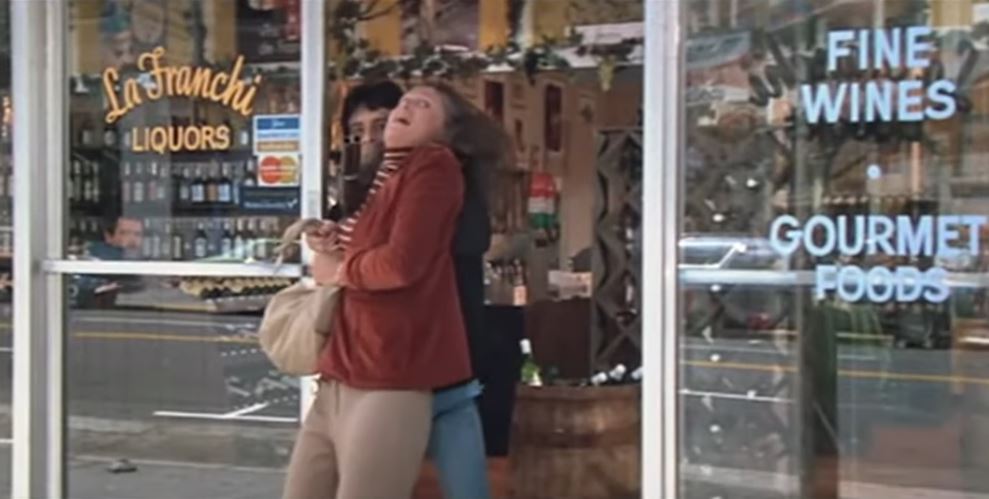
While Kael and Siskel and Ebert all make quality points, they overlook the value of blatant formula. “The Enforcer” is much like a mid-’70s cop TV show with Hollywood panache. In fact, mid-’70s cop shows were highly popular. That’s why there were so many. “The Enforcer,” like many cop TV shows, opens with the bad guys doing something shockingly heinous (and even has scenes such as a dying man telling Harry some key info, but not the whole thing, before he passes away). Maybe you believe the film’s ambition should be higher than that of television. In fact, it is, because there’s no way that network television is going to depict a protagonist with the characteristics of Harry Callahan. Audiences who Siskel thinks are getting “unfair” treatment probably considered themselves more than made whole by the 12th minute of “The Enforcer,” when Harry has finished off the liquor store robbers. Kael notes of the still-emerging Dirty Harry franchise in her “Enforcer” review that “each film has done bigger business than its predecessor.”
Indeed. “The Enforcer” was released in late December, probably like many Clint Eastwood films of the 1970s and ’80s, and according to the Internet Movie Database, it grossed about $46 million on a $9 million budget. That is a successful business model. (As always, reported box office numbers should not be taken as gospel; only a bunch of forensic accountants know for sure.)
The predecessor to “The Enforcer” was “Magnum Force,” the first sequel and the worst of the franchise (though it did reportedly gross $39 million). It is a notable film however in that, as Quentin Tarantino says, it’s actually a “counterpoint argument sequel.” Perhaps it’s the only one in existence. Instead of Harry being the rogue cop, his character is dramatically looped into being a good cop, weeding out the bad cops.
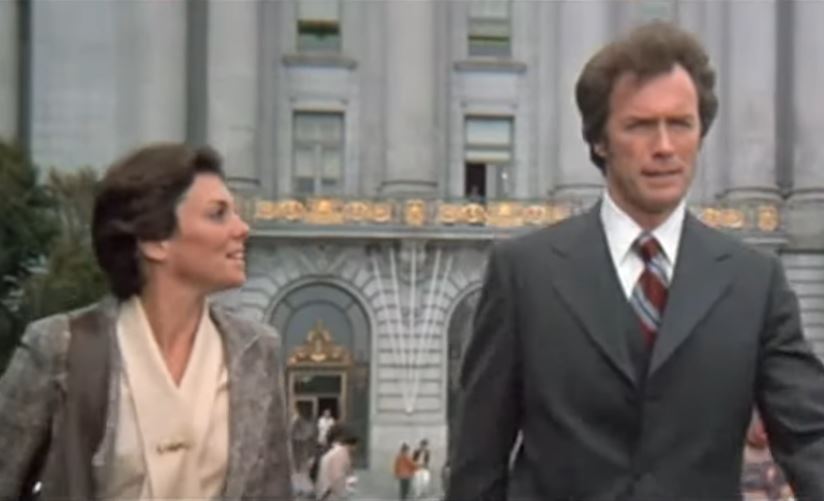
“The Enforcer” learned that lesson. Go back to Square 1. It is a mix of Dirty Harry Greatest Hits, mid-’70s news headlines and a recent twist in Hollywood policing. The idea of a female cop was new for Harry but not for the viewing public. TV’s “Police Woman” premiered in September 1974. At the time of the December 1976 release of “The Enforcer,” “Charlie’s Angels” had been on the air for three months. If there was going to be a third Dirty Harry film, a female partner was a logical step. Somehow, out of an otherwise uninspired recycled production, Tyne Daly supplies one of the most interesting movie characters of the 1970s, Inspector Kate Moore.
Not everyone agrees. Siskel bluntly writes that “The woman partner is a pathetic character.” He explains, “She exists first to be abused, then to run alongside Harry, and finally to make her first kill on her own. Whoopee.” He adds that Daly “always looks as if she’s about to cry.”
Inspector Moore is one of many police sidekicks in film who is square. She does it straight by the book and thus is among the most sympathetic of sidekicks, overly fixated on details and utterly clueless about the scale of the criminality she’s investigating. What’s intriguing about those characters is that they are the purest form of how the system is supposed to work. They are completely removed of the hardened biases of Harry. They don’t see the law as a judgment call — even though it basically is, every day — but a mechanism for serving society with hard and fast rules. These are likable characters but sometimes pitiable. “They don’t know what they got themselves into.” When bad things happen to them, we blame naivete or stupidity as much as the bad guys. Which sadly happens in real life, to the hardy souls who maybe don’t quite “get” the whole operation but give it 100%.
Unlike Siskel, Kael finds Daly the only bright spot of “The Enforcer.” Kael says that casting her was “the one smart move the filmmakers made,” as she “manages to show some believably human expressions of confusion.” Ebert agrees that Daly was “very well cast.” That seems to be the consensus, as Daly would move on in the 1980s to her most famous role, as a cop in TV’s “Cagney & Lacey.”
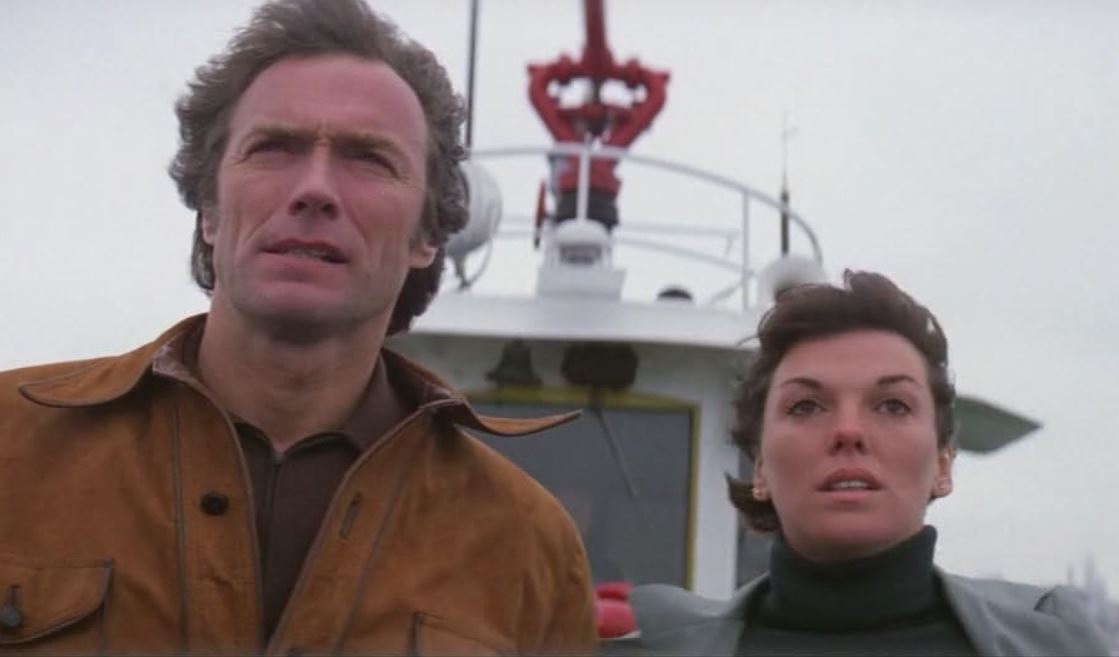
As Kate Moore, Daly wins us over with her determination. She doesn’t really know what she’s doing, at least regarding the unofficial parts of the job, but she’s going to succeed. The script only once gives her a semi-important discovery about the bad guys to reveal. With a woman cop, there is always going to be a fear among the audience as to what could happen to her aside from the typical shooting or knifing. Fargo gently veers into this territory when Kate and Harry visit the HQ of black militants but softens the scene with humor upon their exit.
Kate not only provides a likable character but further insight into Harry. Notice that despite his reputation, she considers him an authority figure, an expert on the business, and she wants to spend as much time with him as possible. That time is purely professional. And that is a nice touch, as it is in “A Few Good Men,” which proves how movies can entertain romantically even if the attractive leads never actually date. It’s up to the audience to speculate about Harry’s love life. He apparently has no kids and no close relatives. It’s presumed that his significant others can’t be that significant because of the danger he puts himself in. (This will change slightly, decades later, in Eastwood’s “In the Line of Fire,” in which he and a female associate will share an appealing affection.)
The literal wording of their dialogue (which strays into some odd phallic references) is kind of silly, but there’s something about the spirit of it. Kate will ask, “What do you have to carry that cannon for?” Harry responds, “Because I hit what I aim at, that’s why.” Which doesn’t answer the question. Kate concludes, “It’s for the penetration.”
The point being, someone’s actually gotten through to Harry on a personal level. The movie’s signature line is when Harry admits to Kate, “Whoever draws you as a partner could do a helluva lot worse.”
All of which bolsters the movie’s biggest surprise. Not only would few expect Kate’s outcome, but in emotional terms, most viewers would probably have no problem if it were Harry who experienced that fate. He’s crusty, he’s aging, he has no family and no future.
Sidekicks don’t have to be youngsters. The older they are, the more expendable. Witness Wade Garrett in “Road House.” He’s Dalton’s mentor, and he’s still able to kick someone’s ass on occasion, but he’s never heard of Brad Wesley and doesn’t adequately comprehend, despite the mayhem, what Wesley’s goons might do to him. Sean Connery is more than worldly wise as Jimmy Malone in “The Untouchables,” but he’s aging and slipping a bit and is perhaps done in by overconfidence, kind of like Apollo Creed in “Rocky IV.”
Sometimes, the sidekicks are simply unlucky. Witness Goose during Maverick’s doomed flight in “Top Gun,” or Mick getting pushed around in “Rocky III.”
“The Enforcer” doubles down on sidekick vulnerability. It gives us not one, but two. The first is DiGeorgio, played by John Mitchum, Robert’s brother and a grizzled veteran of the Dirty Harry franchise. He is the expendable character whom no one remembers from the first couple of films. Harry is less concerned about DiGeorgio’s health than the information he can provide about the criminals. The new partner is a complete 180. Young and female. Yet both make a crucial mistake — underestimating the depravity of the other side. Ask yourself this: Are your feelings about Kate’s outcome affected by reverse sexism — that this is not a policing professional who accepts the risks, but a woman who must be protected?
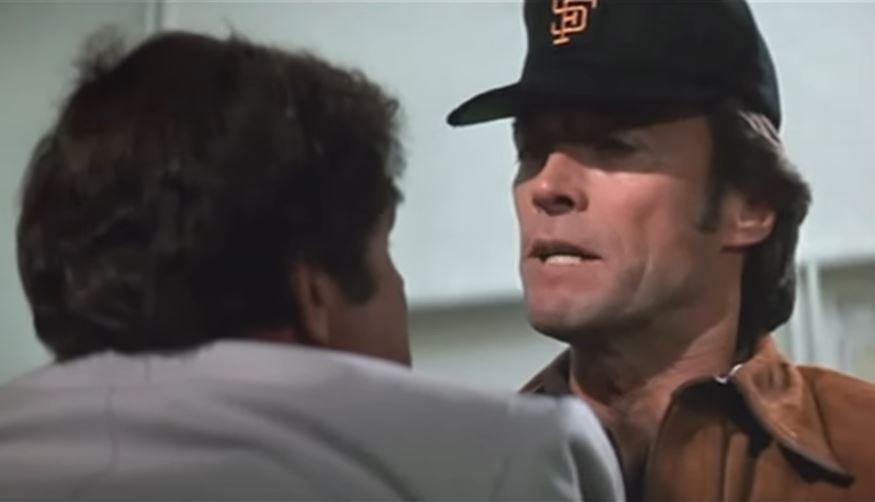
In exchange for sacrificing the sidekick, the protectee of the protagonist and sidekick is spared. That is the outrage. So we have with the mayor, who cares only about PR and has maybe a 90 I.Q., in “The Enforcer,” drawing upon the movie’s tone about the system and the government being corrupt but saved while good people die. (He appears to be watching a San Francisco Giants game against the Cincinnati Reds, presumably taking place in either 1975 or 1976, both years of The Big Red Machine’s sensational back-to-back titles.)
Approach to criminal punishment had changed radically — monumentally — at the time of the release of “Dirty Harry” and in just the decade prior to “The Enforcer.” People in the early ’60s would’ve quickly been executed for certain crimes, such as Lee Oswald; in less than a decade, we were setting up parole hearings for Sirhan Sirhan and the Manson family that continue to this day. What “The Enforcer” isn’t going to address is whether the suits are actually making the problem worse — or that it’s always going to be here, and they’re simply not dealing with it the way we’d like.
3 stars
(January 2026)
“The Enforcer” (1976)
Starring
Clint Eastwood as
Harry Callahan ♦
Tyne Daly as
Kate Moore ♦
Harry Guardino as
Lt. Bressler ♦
Bradford Dillman as
Capt. McKay ♦
John Mitchum as
DiGeorgio ♦
DeVeren Bookwalter as
Bobby Maxwell ♦
John Crawford as
The Mayor ♦
Samantha Doane as
Wanda ♦
Robert Hoy as
Buchinski ♦
Jocelyn Jones as
Miki ♦
M.G. Kelly as
Father John ♦
Nick Pellegrino as
Martin ♦
Albert Popwell as
Mustapha ♦
Rudy Ramos as
Mendez ♦
Bill Ackridge as
Andy ♦
Bill Jelliffe as
Johnny ♦
Joe Bellan as
Freddie the Fainter ♦
Tim O’Neill as
Police Sergeant ♦
Jan Stratton as
Mrs. Grey ♦
Will MacMillan as
Lt. Dobbs ♦
Jerry Walter as
Krause ♦
Steve Eoff as
Bustanoby ♦
Tim Burrus as
Henry Lee ♦
Michael Cavanaugh as
Lalo ♦
Dick Durock as
Karl ♦
Ronald Manning as
Tex ♦
Adele Proom as
Irene DiGeorgio ♦
Glenn Leigh Marshall as
Army Sergeant ♦
Robert Behling as
Autopsy Surgeon ♦
Terry McGovern as
Disc Jockey ♦
Stan Richie as
Bridge Operator ♦
John Roselius as
Mayor’s Driver ♦
Brian Fong as
Scoutmaster ♦
Art Rimdzius as
Porno Director ♦
Chuck Hicks as
Huey ♦
Ann Macey as
Madam ♦
Gloria Prince as
Massage Girl ♦
Kenneth Boyd as
Abdul ♦
Bernard Glin as
Koblo ♦
Fritz Manes as
Detective #1
Directed by: James Fargo
Written by: Harry Julian Fink (characters)
Written by: R.M. Fink (characters)
Written by: Stirling Silliphant (screenplay)
Written by: Dean Riesner (screenplay)
Written by: Gail Morgan Hickman (story)
Written by: S.W. Schurr (story)
Producer: Robert Daley
Music: Jerry Fielding
Cinematograpy: Charles W. Short
Editors: Joel Cox, Ferris Webster
Casting: Mary Goldberg
Art direction: Allen E. Smith
Set decoration: Ira Bates
Makeup and hair: Joe McKinney, Lorraine Roberson
Unit production manager: John G. Wilson