Pauline Kael leaves a message for ‘Mike’s Murder,’ a couple years too late
There are only five critics’ reviews of “Mike’s Murder” on Rotten Tomatoes, and in the typically dysfunctional way that Rotten Tomatoes works, you have to take its word for it, because almost none of the links works.
The top opinion, though, is a biggie — none other than The New Yorker’s Pauline Kael, who didn’t actually see the film during its “unheralded, minuscule New York run in 1984” but a year later on HBO, and her review took still another year to happen, apparently when she was inspired by seeing the movie in the New York Times TV listings with the description of “Skip it.”
The backstory of “Mike’s Murder&rquo; is actually more famous than the movie, and the backstory isn’t that famous. Kael writes that cast and crew first had to take a 30% salary cut, then Warner execs demanded director James Bridges make “some cuts and changes,” but they still “buried it.” Gene Siskel, who gave it three stars in a capsule review, writes that it was made before “Terms of Endearment” but was delayed because of “disastrous previews.” Finally, a contributor to rogerebert.com wrote in recent years that the movie originally actually began with the climax, and Bridges was forced to “reedit the film in chronological order.” There’s also music in the film composed by both John Barry and Joe Jackson, because the latter got fired, but a soundtrack was still released.
In certain films, people will say, “The city itself is a character.” But that’s one of the shortcomings of “Mike’s Murder.” It’s happening in Los Angeles, and Kael claims that it’s portrayal of L.A. drug culture is what spooked Warner Bros. execs, but we’re not seeing much that’s vintage SoCal. That Mike is a tennis player says California but could be true anywhere. There is one overhead shot of Brentwood but without much detail. There’s no nightclub vibe as in “Once Upon a Time... in Hollywood,” no beach house as in “Jackie Brown” or “Save the Tiger,” no pool parties like in “10” or “Boogie Nights.” It might as well be Richmond or Dallas or Flagstaff.
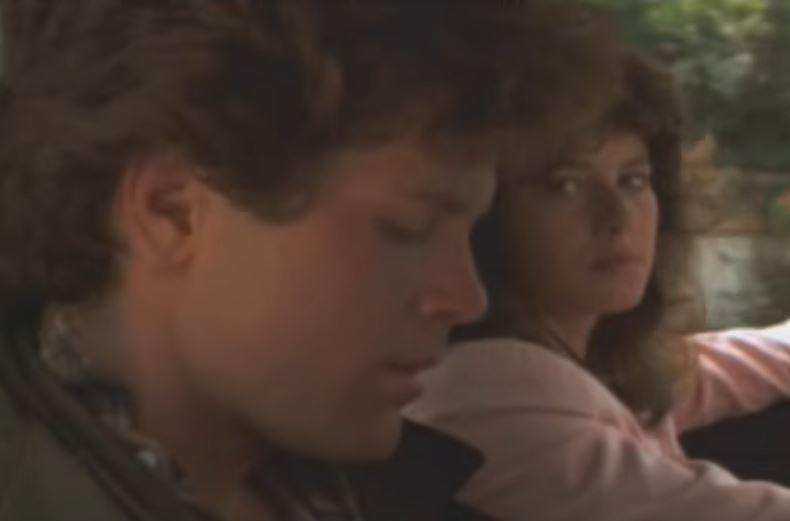
In any community, there are handsome young males bouncing around who haven’t found their “career” path and occasionally crash with friends. Yet “Mike’s Murder” actually is on to something here. The movie sits almost right in the middle, chronologically, of California’s three most infamous crimes, and in two of those, there was a male houseguest on the grounds of activity who basically told police and prosecutors they didn’t really know anything about anything. Were they in any kind of trouble? Ultimately no, but the arrangements were a little curious. (Actually, the guy in the guest house at 10050 Cielo did get arrested and hauled in for police interrogation for a couple days, until the cops determined he really was clueless and useless.) There’s a suggestion from these news accounts and from “Mike’s Murder” that there’s something combustible here, that wannabe actors, or wannabe somethings-or-others, who are attractive people can fairly easily wind up in the heart of celebrity culture and be firsthand observers, if not participants, in its drama.
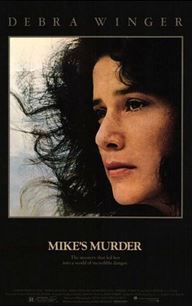
“Mike’s Murder” is definitely counting on Debra Winger to carry its flimsy concept. By the time of this filming, Winger was a bona fide superstar, for “Urban Cowboy” and “An Officer and a Gentleman,” and she also happened to be working on a future Oscar nomination for “Terms of Endearment.” Winger is hardly a femme fatale in “Mike’s Murder” but more like Gene Hackman’s private eye Harry Moseby in “Night Moves.” Her world should be in order, typical ups and downs, and at first it is, but there is a scheme going on that she doesn’t fully grasp. And neither does her primary connection to the scheme, and it costs him his life.
Winger’s character is named Betty, a name that for a woman of Winger’s age was more common in the ’40s and ’50s than ’80s. That’s one strong indication that “Mike’s Murder’ is a throwback to the Noir Era. Betty is also a name shared a couple decades later by Naomi Watts’s character in dripping-in-throwback “Mulholland Drive.”
Winger this time does not have a co-star like John Travolta or Richard Gere. This time, it’s Mark Keyloun, and if you’ve seen the movie and recall that name, that’s impressive. He apparently retired from acting in the early 1990s. His biggest credit is “Sudden Impact.” He does resemble Mark Wahlberg’s Dirk Diggler, who would surface a decade and a half later in “Boogie Nights.”
Mike’s demise occurs about 40 minutes into the movie, and this is the major challenge that Bridges isn’t up to. For less than half the movie, it would not make sense to sign a bigger actor, if one would even be interested. On the other hand, Mike has to be convincing enough that his fate will change Betty’s life. He’s not, but it does.
Mike and Betty are part of a dubious club — Movie Couples Who Aren’t Believable. They are deliberately cast as opposites. She’s grounded and disciplined and she works as a bank teller, a job that is not high-paying but that demands a high level of reliability and confidence, and she is evidently successful and receives a promotion. He’s the playboy, careless, forgetful, committing crimes, hanging out with the wrong crowd, off the grid, avoiding thugs. The biggest difference between the two is off-script — Winger is a movie star; Keyloun is a TV journeyman. She does not have to be a good tennis player for this part. He does, but doesn’t look it. He stands her up, goes months without calling and never seems to have time for her, but she apparently can’t find any better. Other than spending all their time in bed, it’s hard to envision what they would do together. She falls for an operator. He’s a moron. Mike has a girl pining for some reason to be with him whom he doesn’t deserve.
In a lot of these kinds of movies, such as “American Gigolo,” the police will pay someone a visit, and a seemingly gruff cop might prove to have a heart. It would be typical in fact if, instead of Betty doing her own investigating, an officer shows up to ask questions, and Betty gradually finds herself falling for the protective lawman. But police are completely absent in “Mike’s Murder,” barely mentioned and not seen. Do they just not care? Or is the movie implying that this is such an elite cocoon of decadence that even cops can’t force their way in?
Betty’s lone friend, Patty, is played by Brooke Alderson, an interesting Hollywood figure. Alderson’s first movie was “Urban Cowboy,” which is where Bridges and Winger first worked together. Alderson in that movie (she notably enters the Dolly Parton lookalike contest) plays Bud’s aunt, and she is basically in that movie playing someone a generation older than Winger’s Sissy. In “Mike’s Murder,” she seems a little too old for girlfriend-type conversations with Debby, and gradually, it’s fair to ask why she’s there. She’s a reliable friend but not a particularly savvy one; she’s never going to clue in Betty on what Betty’s getting into. Alderson acted for about a decade, then kind of quietly disappeared from Hollywood.
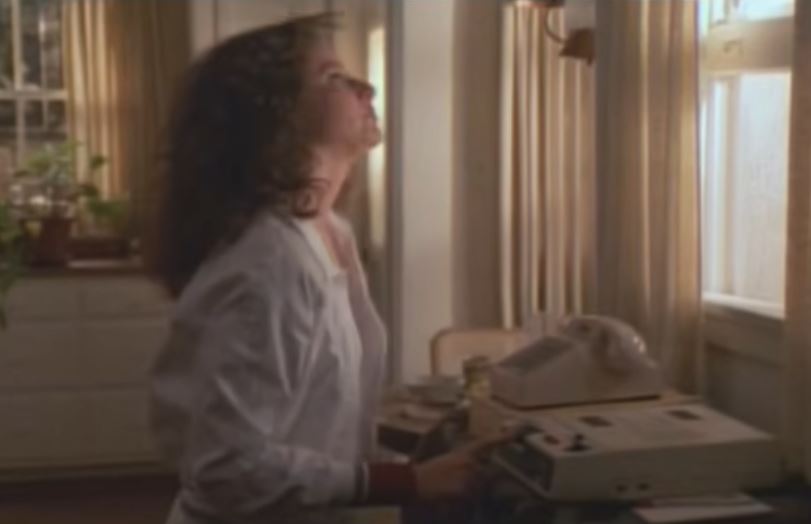
“Mike’s Murder” involves photography by the characters, but oddly, only a little bit, as if it’s trying to meet some noir quota. In terms of what the movie is showing, it’s a lot of people on the phone and a lot of poses of Winger (often in bed) and Darrell Larson, the highly prolific actor who plays Mike’s disturbing accomplice, Pete. He has that unique quality of making you wonder, for a time, if he’s going to end up the hero of this picture.
Kael claims that the film boasts “two superb performances,” by Winger and Paul Winfield, who plays Phillip, who is basically Mike’s sugar daddy and is the Vito Corleone of this world who will kindly explain to Betty, in the movie’s best scene, what Mike was all about and what kind of maniacs he was dealing with. Phillip has a legitimate job, and he lends money without strings and he doesn’t hurt anyone. His houseboy, while making the argument that drugs should be legal, has a conversation with Betty enhanced by a fad of the time, VCRs and camcorders (another one this movie loves is answering machines), in which a supposedly revelatory incident is just bizarre and somehow looks professionally filmed.
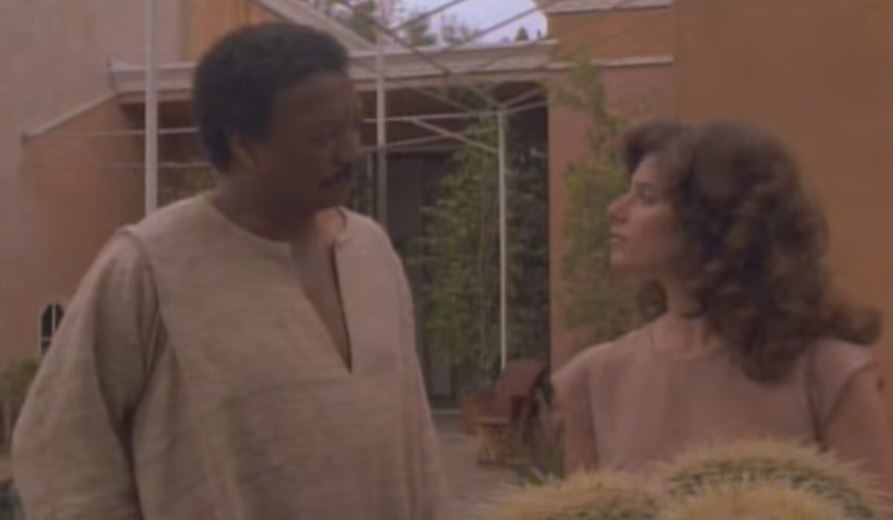
Even though Winger is beautiful and irresistible, she is not so superb, as she never makes the case for why this operator who hardly called her over two years is worth all of this trouble. The script doesn’t help. Is she trying to solve a whodunit? She courageously goes to see Phillip but admits to him, “I’m not quite sure” what she’s hoping to learn, other than maybe Mike’s demise, reported to her by another character, isn’t true. She somehow tells Phillip, “It’s just hard to accept.” Why? He told her he was dealing and in trouble and even had to avoid his home for safety reasons. And she barely heard from him over two years.
Phillip, who identified Mike’s body for the police, tells Betty she doesn’t want to know what happened to him. “This was an enforcement killing; they were making a statement.” He also reveals that he only met Mike when he “picked him up hitchhiking,” and that exactly who Mike really was may remain forever a mystery.
Nevertheless, Phillip and Betty both admit they were in love with him.
Kael suggests the movie was deliberately buried because of studio discomfort over its portrait of the L.A. entertainment culture. Those kinds of accusations are occasionally made about movies; the more likely truth is that the studio just didn’t think it was that good of a film, and the studio was right.
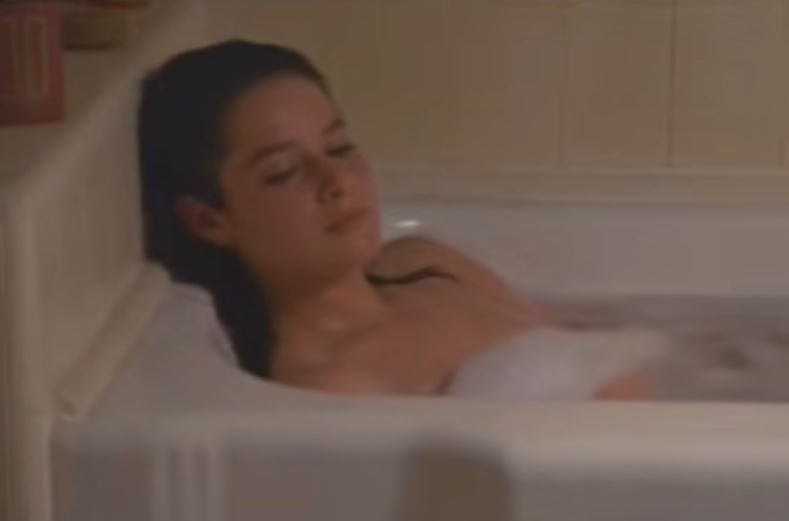
Kael correctly observes that “Winger has thick, long, loose hair and a deep sensual beauty in this movie.” Indeed, among Winger’s other qualities, her hair is all world, and Bridges seizes on all the possibilities; the shot of Debra in the bathtub is the film’s most powerful, though it really has nothing to do with the plot. A couple characters will mention Betty’s “ass,” and Bridges has no trouble featuring it. Debby has a very natural look and appears to shun bra.
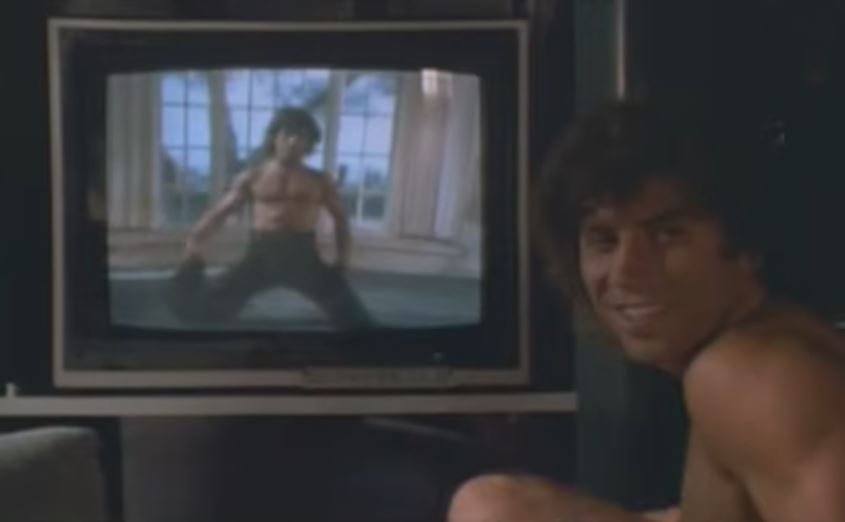
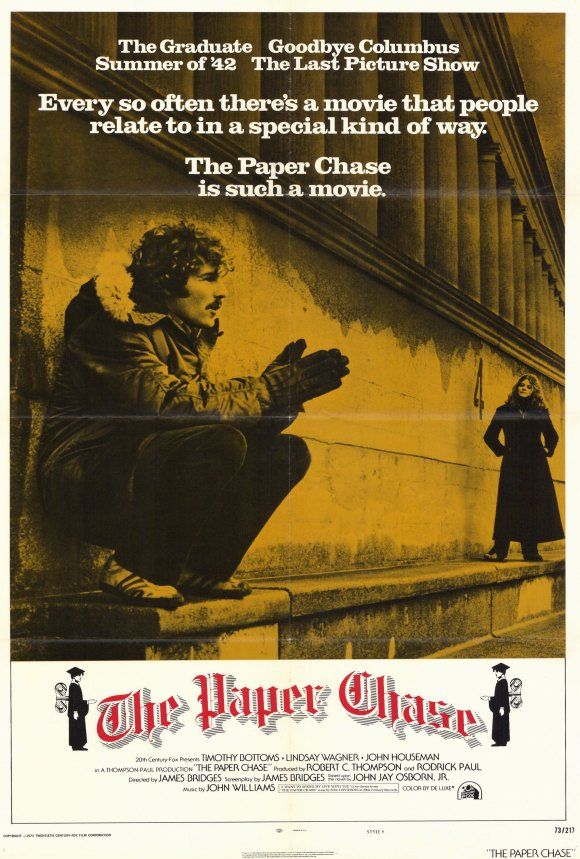
Kael calls the movie “probably the most original and daring effort” by Bridges, but that doesn’t mean it’s very good, even though Bridges is a great director. He put together three incredibly watchable films, “The Paper Chase,” “The China Syndrome” and “Urban Cowboy,” and after that, the magic was sadly gone. Maybe he should’ve been pushed to do more, or maybe, like Hal Ashby and several others, he’s a creature of the ’70s. What those other three films have in common is that they are appealing adventures without guns. Notice in “Mike’s Murder,” guns aren’t really the issue.
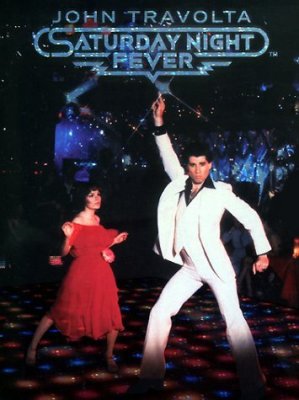
It’s hard to see how Bridges performed any imaginative filmmaking here. Like in “Urban Cowboy,” he enjoys filming hamburgers being prepared on the grill (an idea that may have been lifted from “Saturday Night Fever.” He also, like in countless movies, likes showing someone with a blade dividing up lines of cocaine on a mirror.
He uses mirrors in so many places (Betty’s bedroom, for one) that it’s almost like he finds it obligatory for a movie of this nature. He runs short of places to film; there are too many car rides and apartment visits. This story is overloaded with characters. There’s someone named Sam who’s kind of a safe, reliable observer who’s always looking out for Mike and isn’t involved in anything dirty. There’s another character, never seen, named Charlie who is connected only to Pete and apparently does a couple of very important things that move the plot along, solving Mike and Pete’s initial turf problem but then informing Pete that ripping off a dealer is something that can’t ever be bargained. Pete has still another acquaintance, Jim, who works at a restaurant and is evidently needed to get the plot to final phase. Mike and Pete have zero muscle and it’s unclear how they could ever be moving the amounts of drugs they are shown selling. While Mike is out of the picture, Betty dabbles in dating, this time with a geek (Dan Shor) involved in another fad of the times (music videos) who’s patently terrible at tennis but does have some great lines, decrying the “packaged art form” while declaring, “The ephemeral is eternal.”
Eventually, we’re going to get a woman trapped in a home with a madman, and their negotiations become a bit tedious.
The title of this picture — admit it, it doesn’t get you jazzed.
Roger Ebert and Gene Siskel talked about “Mike’s Murder” with some degree of enthusiasm on their TV show, though each found it kind of unsatisfying. Ebert complains that “The movie kind of follows the drugs to nowhere.” Siskel seems to think that it was good for a while, then it turns into a “routine slasher picture at the end” ... but “it works.”
He’s right. Bridges can make even a bad movie that’s watchable. If you’ve got Debra Winger lamenting the dating scene for two hours, and you’ve got an authentic slice of 1980s pop culture, you’ve got a winner on some levels.
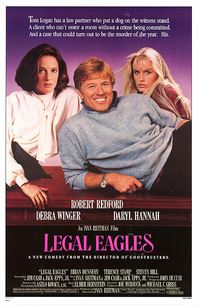
Kael’s interest in writing about “Mike’s Murder” in 1986 came around the time she reviewed “Legal Eagles,” another Winger movie, and this one is a much different experience, because, despite Kael’s opinion, it works. Beautifully.
This time, Winger has an adequate co-star: Robert Redford. She’s the adorable, flaky attorney and he’s the establishment enforcer on opposite sides of an intriguing art-world case who join forces to get to the truth.
It is hardly a perfect movie. But here’s the point: You’re dying for Winger and Redford to get together, and eventually, they do.
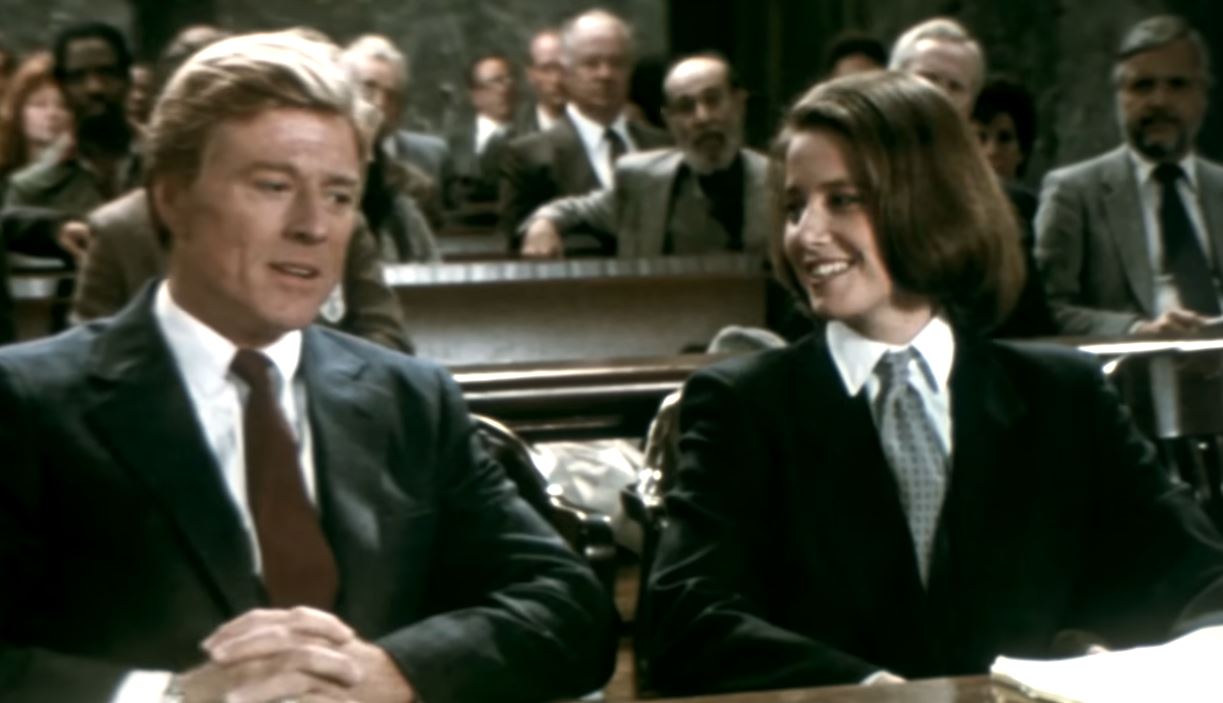
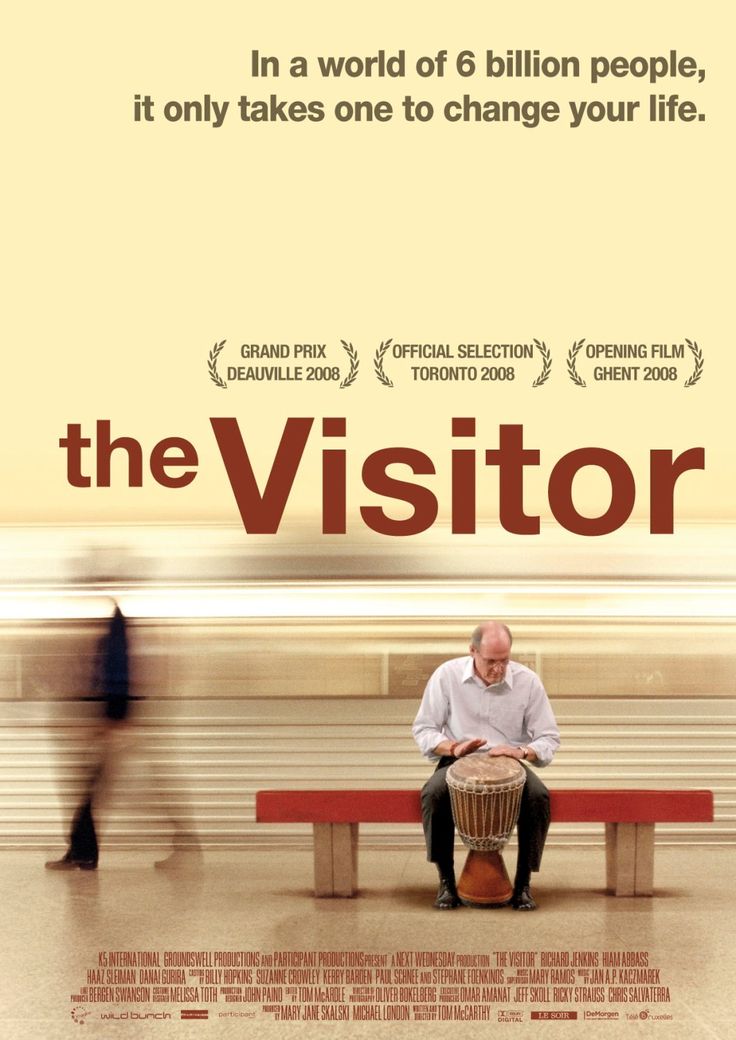
“Legal Eagles” smartly invokes the appeal of a New York City apartment, just like in “The Goodbye Girl” or “The Visitor.” They’re cozy places where exciting things seem to happen; you wish you could live there. Like in a lot of movies, Redford will be presented with the younger, hotter model (who happens to be Daryl Hannah, Winger’s character’s client), indulge, and be forgiven later. Lots of courtroom scenes in this film are funny, and there is an excellent twist.
Again, far from perfect. Siskel and Ebert on their show say the chemistry between Redford and Winger is great but complain that the art world subplot is out of control, that there are something like three fires in this movie. Fair complaints. Some of the plot involves characters talking about a flashback, and it gets kind of confusing.
Kael carps that “Eagles” is “all melodramatic plot and “a couple of dozen gifted actors in search of some characters to play.” Furthermore, “the plot is all holes,” Kael claims, “Nothing in the plot seems to connect in anything else,” valid points. Worse, she says Winger, as Laura Kelly, is “confined” and “practically deadpan.” Wrong. Laura is talented and underestimated and incredibly vulnerable and rescueable. And that’s what we get.
Kael is often associated with the term “championed,” as an advocate for films that were considered overlooked by “mainstream” critics but eventually came to be known as classics. In the ’60s and ’70s, her ability to draw headlines for a review and possibly shape programming decisions, if not box office results, was evident. By the ’80s, both movies and reviews had changed, Kael even ventured, for a few months, into the movie consulting business, and a delayed opinion for a rocky project such as “Mike’s Murder” wasn’t going to move the needle.
Movie criticism is not like umpiring balls and strikes, where nowadays you can be overruled by technology. Either you get it or you don’t. Critics have to call it like they see it. That’s fair. Kael in 1986 advises, instead of going to theaters for “Legal Eagles,” watch “Mike’s Murder” on cable. Your choice. The mystery isn’t about Mike’s murder. The mystery is why Pauline lobbied for this movie. It’s OK to “Skip.”
3 stars (Mike’s Murder)
3.5 stars (Legal Eagles)
(June 2026)
“Mike’s Murder” (1984)
Cast:
Debra Winger as
Betty ♦
Mark Keyloun as
Mike ♦
Darrell Larson as
Pete ♦
Brooke Alderson as
Patty ♦
Paul Winfield as
Phillip ♦
Robert Crosson as
Sam ♦
Daniel Shor as
Richard ♦
William Ostrander as
Randy ♦
Gregory Hormel as
Kid Drug Buyer ♦
John Michael Stewart as
Tough Guy #1 ♦
Víctor Perez as
Tough Guy #2 ♦
Mark Brandon as
Ben ♦
Ken Y. Namba as
Sushi Chef ♦
Ruth Winger as
Betty’s Mother (voice) ♦
April Ferry as
Bosslady ♦
Randy White as
Bossman ♦
Robert Kincaid as
Bodyguard ♦
Kym Malin as
Beautiful Girl #1 ♦
Dawn Abraham as
Beautiful Girl #2 ♦
Freeman King as
Killer #1 ♦
Alphonse Walter as
Killer #2 ♦
James Carrington as
Jim ♦
Rebecca Marder as
Cafe Worker ♦
Bruce Marder as
Cafe Worker ♦
Sarah Zinsser as
Girl in Video Tape ♦
James Dale Ryan as
Police Technician ♦
Robert Johnstreet as
Police Technician ♦
Gordon Hoban as
Police Technician ♦
Lori Butler as
Beautiful Girl #3 ♦
Javier Jose Gonzalez as
Bus Stop Boarder ♦
Cliff Jenkins as
Bus Boarder ♦
Aurelia Gallardo as
Pancho’s Waitress ♦
Frank Cavestani as
Charles (voice) ♦
Spazz Attack as
Spazz Attack ♦
Johnny B. Frank as
Blonde Punker ♦
Mari-Sol García as
Blonde Punker ♦
Jennifer Dixon as
Party Goer ♦
Steve Solberg as
Party Goer ♦
Annie Jones as
Party Goer ♦
Michael Uhlenkot as
Party Goer
Directed by: James Bridges
Written by: James Bridges
Producer: James Bridges
Associate producer: Jack Larson
Executive producer: Kim Kurumada
Composer: John Barry
Cinematographer: Reynaldo Villalobos
Editors: Dede Allen, Jeff Gourson
Casting: Wally Nicita
Production design: Peter Jamison
Art direction: Hub Braden
Set decoration: Chris Westlund
Costumes: April Ferry
Makeup and hair: Linda Gurasich, Mark Reedall
Unit production manager: Kim Kurumada
“Legal Eagles’ (1986)
Cast:
Robert Redford as
Tom Logan ♦
Debra Winger as
Laura Kelly ♦
Daryl Hannah as
Chelsea Deardon ♦
Brian Dennehy as
Cavanaugh ♦
Terence Stamp as
Victor Taft ♦
Steven Hill as
Bower ♦
David Clennon as
Blanchard ♦
John McMartin as
Forrester ♦
Jennie Dundas as
Jennifer Logan ♦
Roscoe Lee Browne as
Judge Dawkins ♦
Christine Baranski as
Carol Freeman ♦
Sara Botsford as
Barbara ♦
David Hart as
Marchek ♦
James Hurdle as
Sebastian Dearden ♦
Gary Klar as
Hit Man ♦
Christian Clemenson as
Clerk ♦
Bart Burns as
Judge #1 ♦
Bruce French as
Reporter ♦
Lynn Hamilton as
Doreen ♦
Paul Jabara as
Taxi Driver ♦
Chevi Colton as
Short Lady ♦
Annie Abbott as
Secretary #1 ♦
Kristine Sutherland as
Secretary #2 ♦
Everett Quinton as
Attorney #1 ♦
Peter Boyden as
McHugh ♦
Thomas Barbour as
Bored Judge ♦
Mary Alison Griffin as
Young Chelsea ♦
Vincent Guastaferro as
First Cop ♦
Burke Byrnes as
Second Cop ♦
Ken Kliban as
Reporter #1 ♦
Debra Stricklin as
Reporter #2 ♦
Ron Foster as
Reporter #3 ♦
Rudy Willrich as
Reporter #4 ♦
Robert Benedetti as
Bearded Speaker ♦
Grant Heslov as
Usher ♦
Robert Curtis Brown as
Roger ♦
Brian Doyle-Murray as
Shaw ♦
Shannon Wilcox as
Mrs. Williams ♦
Charles Brown as
Real Cavanaugh ♦
Kevin Hagan as
Cop ♦
Jay Thomas as
Waiter in Restaurant ♦
Alex Nevil as
Messenger ♦
Lou Cutell as
Kapstan ♦
Olivia Ward as
Nanny ♦
Duitch Helmer as
Lady in Gallery ♦
John Marion as
Auctioneer ♦
Barbara Pallenberg as
Assistant to Auctioneer ♦
Gabrielle DeCuir as
Reporter ♦
Liz Sheridan as
Little Old Lady ♦
Michael Anthony as
Courtroom Spectator
Directed by: Ivan Reitman
Written by: Ivan Reitman
Written by: Jim Cash
Written by: Jack Epps Jr.
Producer: Ivan Reitman
Associate producer: Arnold Glimcher
Associate producer: Sheldon Kahn
Executive producer: Michael C. Gross
Executive producer: Joe Medjuck
Music: Elmer Bernstein
Cinematography: Laszlo Kovacs
Editors: William Gordean, Pem Herring, Sheldon Kahn
Casting: Howard Feuer, Deborah Lucchesi
Production design: John DeCuir
Art direction: Ron Hobbs
Set decoration: Thomas L. Roysden
Costumes: Albert Wolsky
Makeup and hair:
Bunny Parker, Shirley Dolle, Anthony Cortino, Carl Fullerton, Tom Hoerber, Gary Liddiard
Production manager: John G. Wilson
Production manager: New York: John H. Starke
Thanks: Joanna Lipari