
‘She’s All That’ comes down
to 2 magnificent scenes
“She’s All That” is supposed to be a teen comedy. It’s not supposed to be great art.
Sometimes, greatness finds its way into unexpected places.
Praise for “She’s All That” is not about the whole, but has to be about the sum of a few parts. Robert Iscove is the director. You have almost certainly not seen anything else he has directed. In an 18-minute span, he uncorks two scenes that even Ingmar would have trouble matching.
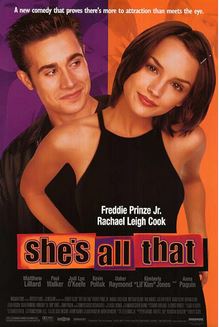
Probably the smartest thing Iscove gave his movie is heart. Yes, it’s a lot of bikinis and a little grossness; yes, Harvey Weinstein — back when he was doing great film work and mostly not wasting it all away on horrible and stupid criminal activity — was involved. “She’s All That” is as innocent as it is hip. These are attractive kids in beautiful mini-dramas. Laney is still mourning her mother. Cooler girls are wondering what life means after graduation. The movie has virtually nothing to do with sex. Teens in this movie — at least the ones we care about — are trying to get beyond stereotypes and figure out what they’re going to do in life.
It’s not perfect, even in its sensational scenes, which is why, by the end, you don’t really care whether Laney and Zack are a couple, or what college Zack attends, only that Laney understands that she is beautiful and that life is offering her far more than she is accepting. There are too many villains (one extra male, and several extra females) who really have nothing to do except put people down, and a prom contest that, even though it technically kick-starts the plot, is irrelevant and even redundant to an earlier party scene. Curiously, while filming was done at Torrance High School, there are no scenes in classrooms. Everyone tends to gather outside to evaluate the heaviest gossip. Usually in teen comedies, parents are out of touch and aloof. That’s refreshingly not the case here, but there’s not exactly much depth beyond a few token conversations that check a couple of boxes.
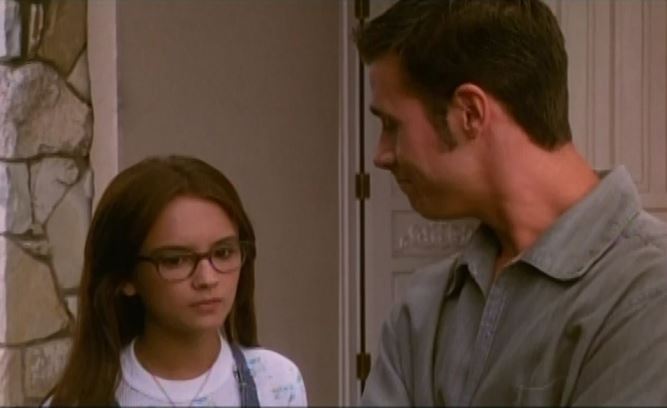
Even in her early scenes, Laney is gorgeous. Thia makes the plot bogus. If Laney is the least-attractive girl, then this school is beyond fantasyland. But Iscove correctly realized it doesn’t matter. Among his revealing comments about the film to Cosmopolitan in 2015 is that nobody was under any illusions that Rachael Leigh Cook would be an “ugly” character. In this film she is merely plain, and like many movie characters who emerge from shells, is given glasses, which do not make her look any less stunning. Iscove viewed the transformation as more like a “Clark Kent” and decided that what Cook looks like in the beginning isn’t nearly as important as the range she must bring to the role. “You either go along with it or you don’t go along with it.”
It’s undeniable that the film hinges on Laney’s physical beauty, that this is what’s attracting Zack and other males, not Laney’s advancement as an artist. Not only that, but it’s two males making a bet over Laney’s beauty and engineering her appearance, which Iscove admitted is “kind of misogynistic.”
But it’s more even-handed than “My Fair Lady,” the first famous “Pygmalion” update. “Lady” didn’t do too badly at the Oscars, or the box office, or all the Library of Congress selection stuff (check ’em out). Roger Ebert put it on his Great Movies portal. In “Lady,” you have an elite, 21 years older in real life, trying to train a young woman to be high society, instructing her how to speak and also finding work for her father. Still, “It is Eliza’s will that drives the plot,” Ebert writes of that film.
For reasons of sexism and/or classism and the potential for bullying, the “Pygmalion” concept probably seems like it should be controversial. But it evidently is not. Even “The Brady Bunch” saw fit to try it. In that 1972 episode titled “My Fair Opponent,” it’s a girl (Marcia) who orchestrates the sympathetic makeover of a homely friend, Molly Webber, only to realize there’s no need to feel sorry for Molly given Molly’s newfound ego. The 1996 film “Up Close & Personal” has unofficial Pygmalion leanings. There’s no indication from reviews of that film or “She’s All That” of protests from Gloria Steinem or anyone else. For “My Fair Lady,” the controversy was not over a man remaking a woman, but Audrey Hepburn being handed the Eliza role over Julie Andrews and Eliza’s singing being overdubbed.
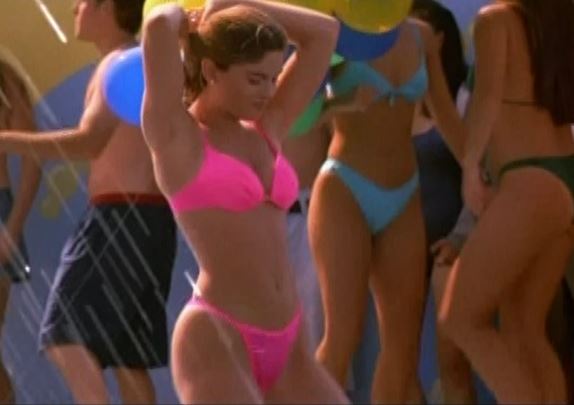
The credited scriptwriter for “She’s All That” is R. Lee Fleming. By all accounts, M. Night Shyamalan, then early in his career, did some script doctoring; exactly how much is apparently disputed, but each writer has success here. Some of the one-liners don’t hit, but there are many that do. One hilarious scene at the beach includes an invitation to a volleyball game and an elite girl declares Laney unathletic and “You run like a girl,” only to have Laney fire back “I am a girl,” followed by “Um, you know what I mean” and “Obviously, I don’t.” Kevin Pollak, as a pool-cleaning dad, hilariously struggles with rattling off answers at TV’s “Jeopardy!” (Pollak is supposed to be working-class, but he isn’t shown doing a lot of work.)
Iscove said Shyamalan added the Hacky sack scene, which is part of one of the film’s more interesting passages. Zack is attempting to show Laney that he’s interested in her by attending a low-budget theatrical performance that she’s involved in. The performance by Laney’s entourage is a little strange — a man in underwear, dwarves, and Laney. It is presumably included to provide a few laughs, but it doesn’t really mesh with what the movie is telling us about Laney. If she looks like this in a theater and she’s confident enough to perform something like this, how in the world is she the school’s leading Plain Jane?
After her group performs, the man in underwear says he’s aware of Zack being in the crowd and invites Zack to perform ... something. (It’s doubtful any real actor would put this kind of pressure on a spectator, but whatever.) Prinze goes on to perform a Hacky sack routine that is actually quite impressive, not what he’s doing, but what it’s conveying, a feeling of some kind of inevitability, nobody’s ever going to be perfect. This scene should probably be in a different movie, even though it enhances the sum of the parts of “She’s All That.”
Cook is not only gorgeous, she’s as funny as Pollak. She’s almost too good, as it defies belief that this girl isn’t already enormously popular. She trades jabs with another underrated comedian, Elden Henson, and rattles off the cutest excuses for why she can’t do things with Zack. “You hate the beach?” he asks. “Yes. ... No.” In the movie’s concluding embrace, she tells Zack it feels like “Pretty Woman,” “except for the whole hooker thing.”
The title remains well known, but the term “She’s All That” didn’t catch on perhaps like the filmmakers hoped. “Nobody had really used that phrase before,” Iscove said, praising Fleming’s “verbiage” throughout the script. The title is tied to a rap song performed midway through the movie that falls a little flat. In Europe, the movie was titled “Kiss Me,” a nod to the huge success of the pop song closely associated with the movie, but that title also doesn’t really grasp what’s happening here. Sometimes screenwriters strike gold. The beleaguered William Goldman (who still won an Oscar) in the completely unrelated “All the President’s Men” came up with “Follow the money.” Fleming/Shyamalan aren’t quite that successful, but they bring the wit.
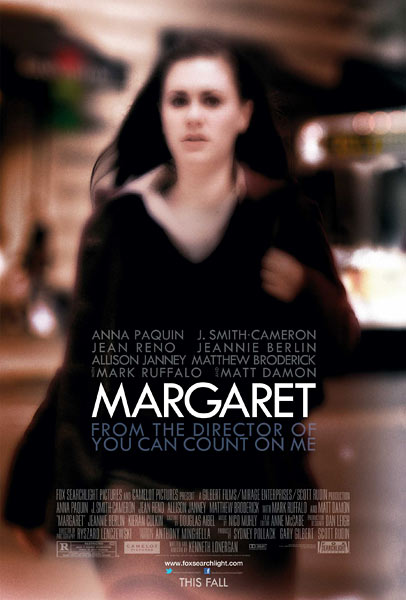
“My Fair Lady” boasts a couple of Oscar winners. You may be surprised to know that “She’s All That” does too. At least as of spring 2025, when Kieran Culkin joined the ranks. Anna Paquin, who has a limited role as Mackenzie in “That,” already had. They are the siblings/support staff of the dual protagonists, likable characters who should’ve been given a few more lines at the expense of the tiresome school jerks. (Later, Paquin and Culkin would appear in “Margaret.”) Paquin’s role is crucial on the socially conscious level — by endorsing and spearheading Laney’s makeover, it is not quite a situation where Zack is dressing her.
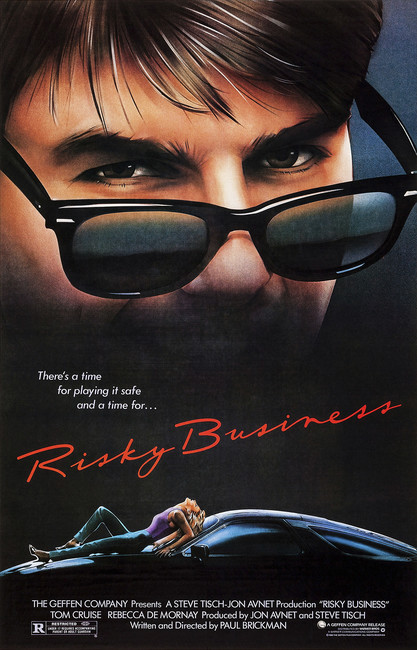
Cook’s Laney (apparently Laney’s two names are an inside joke on Winona Ryder movie character names) will be more successful than Freddie Prinze Jr.’s Zack, partly because Prinze is handed a straddle assignment. In many teen dramas, such as “90210,” you have the centrist, rock-solid “captain” of the group such as Brandon, and then a Dylan. Zack in “She’s All That” has to merge both personas and doesn’t have enough time to “grow.” Prinze, who was 22 at the time of the film’s release and in hot demand, did not quite achieve superstardom and in this film does not have the kind of “Old Time Rock & Roll” moment of Tom Cruise in “Risky Business.” Prinze’s subdued emotions, though, are perfect for letting the film’s revelation, Cook, flourish.
Zack’s motivation is not really a bet, it’s pride — he was publicly dumped, he’s bruised, so he has to save face. To cope with the humiliation, he insists that he’s so successful with women that just his presence could make even the school’s homeliest girl into a prom queen, a result that presumably would prompt the obnoxious ex-girlfriend whom he shouldn’t care about anyway into realizing she was wrong. The script is handing him a very mixed message, that his very dubious project actually succeeds in making his target a better person, to the point she’s actually in his league for romance. (Which is a contrast with 2010’s “She’s Out of My League,” in which Alice Eve simply accepts Jay Baruchel’s geek TSA agent for all his flaws.)
Released in January 1999, “She’s All That” finds itself at an interesting crossroads of pop culture. It was made before there was much of anything on the internet and before every teenager was carrying a smartphone. Instead, it identifies with the heyday of MTV, an entity featured prominently. Iscove described the film as “quintessential ’90s” and “of the time.”
Gene Siskel, in what was apparently, sadly, his last review, gave it three stars; his headline says it’s a “refreshing” take on “My Fair Lady.”
Mick LaSalle calls it “pleasing but routine.” His online review, 26 years old as of 2025, still spells Cook’s first name as “Rachel” in multiple spots.
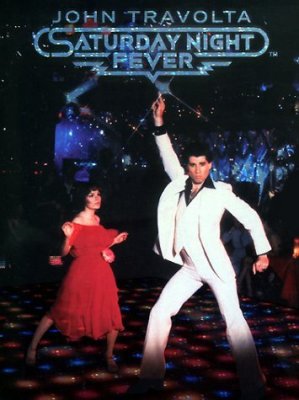
Irking critics more than anything appears to be an unnecessary group dancing sequence. They’re right. Does such a scene convey some sense of togetherness among socially distant groups? Not really. The funny thing about scenes like these, even in the sizzling “Saturday Night Fever,” is that they’re meant to look spontaneous but take days or more to choreograph; there’s no way human beings in real life, even those adept at dancing, can wander onto a crowded dance floor and suddenly execute perfect moves in unison. Artistic license. Choreography can be beautiful but expensive. Iscove admits that he wanted “a big dance number” while Weinstein saw no need. Iscove even quotes Weinstein as correctly wondering “How come all these dancers know how to do this dance in the middle of the prom?” Apparently, using it to give Usher an expanded role placated Weinstein.
While not a director, Weinstein, by this point, was quite good at making something out of a movie. Iscove said, in 2015 comments before the #MeToo era, “He was very hands-on with all the casting — arm-twisting as only Harvey can — and got us an amazing cast.” Those actors included Usher, Paul Walker, Dulé Hill, Lil’ Kim, Tim Matheson, Gabrielle Union. Sarah Michelle Gellar makes a cameo. Despite Weinstein having that kind of influence, “He was actually very hands-off when we were shooting.” Weinstein gave the movie some musical chops. After shooting was complete, Iscove and the other filmmakers were “sweating bullets” during Weinstein’s review of the “rough assemblage.” Weinstein’s response was to promise $12 million in marketing, more than the movie’s budget. (Family, associates, friends ... when someone this successful is quietly engaging in under-the-radar criminal or deplorable personal behavior, you have to intervene, somehow, to prevent the outcome experienced by his victims, and himself.)
Echoing the critical consensus for “She’s All That,” Roger Ebert writes that it “is not a great movie, but it has its moments.” In fact, those moments — not the ones he actually mentions — do make it a great movie.
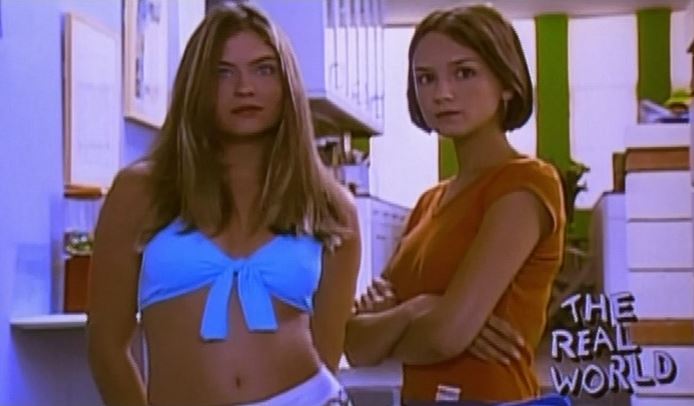
The most interesting decision by Iscove is to include a dream sequence that lasts all of about 43 seconds. Zack finds that he’s falling for Laney and suddenly has a nightmare that he, and not Laney, is the one being played for a bet, and it’s all being televised on MTV.
This scene is remarkable because it shows Cook out of character. For just a moment, we see that she could just as easily be playing another member of the cast; she’s better at their snark than they are.
Think about that decision. What if, for example, in “Rain Man,” Charlie Babbitt has a dream. Raymond does not have autism, and the brothers are attending a Reds game together. Would that type of scene, of a life that did not happen, be powerful, or disturbing, or something else? The stakes aren’t nearly as high for Iscove. He is having fun with his concept — and ramping up tenfold our already high interest in Laney’s makeover. What if the Laney Boggses of our world were not shy bookworms but confident, assertive, maybe even treacherous people. On this level, it’s only fun. Provocative on many others.
According to Cook’s Wikipedia page, “She’s All That” is her most financially successful film. She was 19 when it was released but had already appeared in at least 10 others. She said on a recent podcast that “She’s All That” didn’t feel like doing anything different than what she’d been doing, until she started hearing about it making money and that a lot of people were seeing it.
Perhaps Cook, like Laney, somehow didn’t realize what she had going.
The film’s signature moment will be Laney’s “debut” down the staircase, to the tune of “Kiss Me,” a previously released song that soared with its inclusion in this film. (It should’ve gotten one more stanza, but that’s quibbling.)
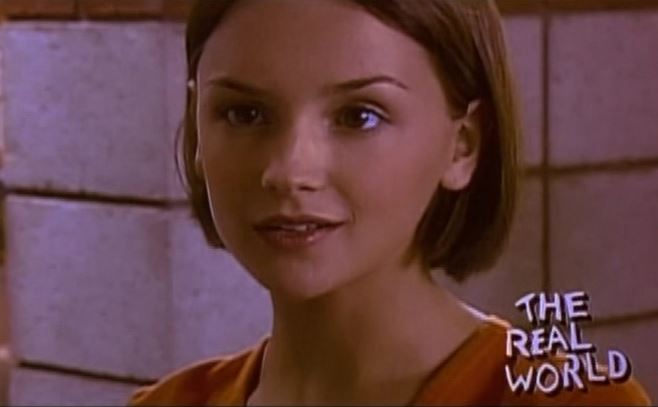
We have already seen the dress, and we could’ve guessed from the beginning of the film that we will eventually see Laney in a beautiful dress. It’s what it does to the faces that matters. The group of three observers gather around the stairway as the music begins. We see the shoes, and then we see her. We first see Laney’s anxiety. And then the rest of the actors (keep in mind that two of them have Oscars) more than earn their pay.
Think “Norma Rae” — it’s not all about what she’s doing, it’s what’s on the faces watching her. These expressions are not over the top, they’re simple, sincere ... there is awe. Even Laney’s brother is impressed. Then a very subtle change of expression by Cook, and we have one of the most spectacular scenes of the ’90s, a young woman realizing she is beautiful.
3.5 stars
(June 2025)
“She’s All That” (1999)
Starring
Rachael Leigh Cook as
Laney Boggs ♦
Freddie Prinze Jr. as
Zack Siler ♦
Matthew Lillard as
Brock Hudson ♦
Paul Walker as
Dean Sampson ♦
Jodi Lyn O’Keefe as
Taylor Vaughan ♦
Kevin Pollak as
Wayne Boggs ♦
Anna Paquin as
Mackenzie Siler ♦
Kieran Culkin as
Simon Boggs ♦
Elden Henson as
Jesse Jackson ♦
Usher Raymond as
Campus D.J. ♦
Kimberly ‘Lil’ Kim’ Jones as
Alex ♦
Gabrielle Union as
Katie ♦
Dulé Hill as
Preston ♦
Tamara Mello as
Chandler ♦
Clea DuVall as
Misty ♦
Tim Matheson as
Harlan Siler ♦
Debbi Morgan as
Ms. Rousseau ♦
Alexis Arquette as
Mitch ♦
Dave Buzzotta as
Jeffrey Munge Rylander ♦
Chris Owen as
Derek Funkhouser Rutley ♦
Charlie Dell as
Man in Falafel Barn ♦
Michael Milhoan as
Principal Stickley ♦
Carlos Jacott as
Prom Photographer ♦
Ashlee Levitch as
Melissa ♦
Vanessa Lee Chester as
Girl #2 ♦
Patricia Charbonneau as
Lois Siler ♦
Katharine Towne as
Savannah ♦
Wendy Fowler as
Harmony ♦
Flex Alexander as
Kadeem ♦
Bob Baglia as
Beatnik ♦
Debbie Lee Carrington as
Felicity ♦
Clay Rivers as
Gustave ♦
Sara Rivas as
Vampire Girl ♦
Amon Bourne as
‘She’s All That’ Rapper ♦
Takbir Bashir as
‘She’s All That’ Rapper ♦
Anthony ‘Click’Rivera as
‘She’s All That’ Rapper ♦
Jarrett Lennon as
Naylon ♦
Brandon Smith as
JV Cleaning Boy ♦
Milo Ventimiglia as
Soccer Player ♦
Kenté Scott as
Sophomore Boy ♦
Kim Cottom as
Dancer ♦
T.J. Espinoza as
Dancer ♦
Brian Friedman as
Dancer ♦
Tony Fugate as
Dancer ♦
Caroline Girvin as
Dancer ♦
Alicia Gilley as
Dancer ♦
Scott Hislop as
Dancer ♦
Jennifer Keyes as
Dancer ♦
Richard Kim as
Dancer ♦
Stephanie Landwehr as
Dancer ♦
Dani Lee as
Dancer ♦
Joe Loera as
Dancer ♦
Mayah McCoy as
Dancer ♦
Yesha Orange as
Dancer ♦
Robert Schultz as
Dancer ♦
Josh Seffinger as
Dancer ♦
Sarah Smith as
Dancer ♦
Christopher Smith as
Dancer ♦
Bree Turner as
Dancer ♦
Christine Vincent as
Dancer ♦
Jerry ‘Flo’ Randolph as
Dancer
Directed by: Robert Iscove
Written by: R. Lee Fleming Jr.
Producer: Peter Abrams
Producer: Robert L. Levy
Producer: Richard N. Gladstein
Executive producer: Harvey Weinstein
Executive producer: Bob Weinstein
Co-producer: Jennifer Gibgot
Co-producer: Richard Hull
Co-producer / line producer: Louise Rosner
Co-executive producer: Jeremy Kramer
Co-executive producer: Jill Sobel Messick
Associate producer: Kyle Ham
Associate producer: Lila Yacoub
Music: Stewart Copeland
Cinematography: Francis Kenny
Editor: Casey O. Rohrs
Casting: Robin Ray, Ed Mitchell
Production design: Charles Breen
Art direction: Gary Diamond
Set decoration: Jeffrey Kushon
Costumes: Denise Wingate
Makeup and hair: Thomas Real, Felicity Bowring, Patricia Vecchio, Raqueli Dahan-Gonen, Jane Galli, Lisa Layman
Unit production manager: Louise Rosner
Post-production supervisor: Maggie Cone
Set production manager: Shaheed Qaasim
Executive in charge of production: Tracy McGrath
Stunts: Gil Combs, Don Ruffin