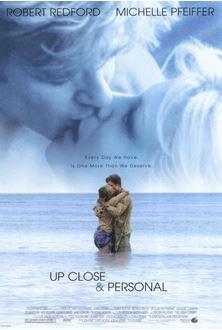

The making of ‘Up Close & Personal’ reveals how Hollywood doesn’t always stick to the script
Apparently, Hollywood needs “A Star Is Born” about every 20 years. The first (officially) was in 1937, then another in 1954, then another in 1976, and then ... 2018?
What happened in the ’90s?
Filling in that gap, somehow, is “Up Close & Personal,” the work of screenwriting power couple Joan Didion and John Gregory Dunne, who not coincidentally were the screenwriters of the 1976 version of “A Star Is Born.”
This time, by Dunne’s own account in his book Monster: Living Off the Big Screen, Didion and Dunne were supposedly writing a biopic about Jessica Savitch, the NBC weekend anchor who led a tumultuous life and died at 35. In a curious twist, the only taker for the concept was Disney — except that other than the character being a TV anchor, Disney wasn’t interested in Savitch either. Writes Dunne, “When we left Burbank that day, this is what we knew: that as long as WDPc was footing the bills, Jessica Savitch would cease to be a factor in the Jessica Savitch screenplay.”
What turned into “Up Close & Personal” probably wasn’t worth the eight-year wait, though Dunne writes that it ultimately made Disney a “small profit.”
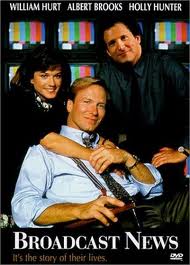
The movie isn’t funny. There’s no drama. If you look up a contemporary review (there aren’t actually that many available, because the movie was released in 1996 at the beginning of the internet age, and the limited pool of snippets at Rotten Tomatoes generally contains dead links), you will see references to “A Star Is Born” meets “Broadcast News” with maybe a little “Way We Were” thrown in.
All fair comparisons, even if “Up Close” is the weakest film of that batch. It might be best described as a Pygmalion, a term Dunne mentions in his book. You have a man giving a woman a makeover, though it’s not for a bet. It’s for no obvious reason. Maybe he thinks she’ll be a credit to the profession, maybe it’s an act of charity, maybe it’s an “F”-you to the business he once venerated. Roger Ebert guesses that the reason is “because if she wants it that much, she may have something.”
In a promotional clip for “Up Close,” Redford explains, “He makes her and then he becomes a liability to her forward movement,” calling Warren and Tally “two people on the raw edge of life.”
That he “makes her” doesn’t seem to be an act of love, although we know we’ll eventually get there, and that Robert Redford will somehow deliver, except getting there requires a series of clumsy relocations (different city apparently; same TV studio) and backstory recitations and scenes in offices and kitchens. How did this picture ever achieve a “small profit”?
Thank Diane Warren. Dunne’s book is all about the writers, but it’s all about the wrong writers. He devotes one whole sentence, on Page 199 of a 203-page book, to Warren’s majestic hit “Because You Loved Me,” one of filmdom’s most prominent songs and perhaps responsible for maybe a third of the “Up Close” box office. It plays around the 56-minute mark, or about midway through, during the predictable montage of falling-in-love scenes, and then again in the closing credits. Nobody associated with this film should’ve, or would’ve, looked this gift horse in the mouth, but someone had to be thinking, “This song is way too good for this movie.”
Warren in 2016 said that Epic Records exec Polly Anthony wasn’t necessarily sold on the song and that director Jon Avnet somehow also wasn’t immediately convinced. Warren said Anthony later admitted, “I was wrong.” Warren said the song put her on a “whole different level,” and she remembers thinking, “This song is better than me right now.”
“Because You Loved Me” was the film’s lone Oscar nomination. It lost to Madonna’s “You Must Love Me,” a fine if forgettable work for “Evita,” a much more aspirational film (released at Christmastime) than “Up Close” (released in March) and one that, despite some skeptics, enjoys a higher Rotten Tomatoes percentage. That Oscar contest raises an interesting question about criteria similar to baseball’s endless Most Valuable Player definition debate — should a voter choose a great song from a bad movie over a good song from a good movie? Remember, the Oscar technically is awarded to the film; the individual receiving it is officially incidental.
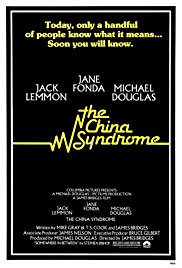
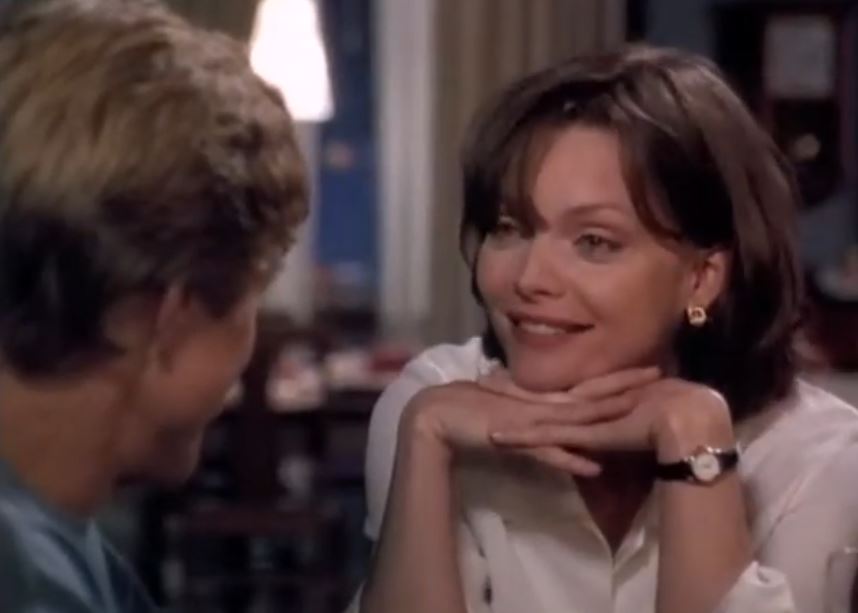
Michelle Pfeiffer has three Oscar acting nominations. That is two more than Robert Redford. Pfeiffer does not fail here but she doesn’t thrive, either. In numerous movies, elite actors demonstrate that they could be awesome at the TV news thing had they only chosen that path. Peter Finch in “Network,” Jane Fonda in “The China Syndrome,” “William Hurt in “Broadcast News.” Pfeiffer is passable but doesn’t succeed like those actors. The Internet Movie Database suggests she is most known for “The Fabulous Baker Boys,” but she actually is probably best known for either “Scarface” (her most successful role for sure), “Batman Returns” or even the abominable “Grease 2,” always near the top of the leaderboard of Worst-Sequels-Ever lists. Whatever the movie, she is talented, effective and prolific. Take a look at her credits. She always finds work. Which is probably how she found herself in “Up Close.”
“Up Close” is the type of movie, a comedy for grownups, that could make money as late as the ’90s, but not anymore, it would need some edge or hook beyond two megastars (and they don’t make megastars like they used to) to avoid going straight to streaming. Roger Ebert somehow gave this film 3 stars, conceding the “cliches and melodrama” but asserting it “undeniably works as what it really is — a love story.” Gene Siskel, who argued with Ebert about it on their TV show, complains in his print capsule that “everything” about the movie “rings false” and correctly assigns it 1 star.
A lot of famous movies have spurred either a book about the production, or a book chapter about the production, or at least an extensive magazine article about the production. A humdrum, highly forgettable picture such as “Up Close & Personal” is a very unlikely candidate to get a making-of book by an elite writer.
But somehow that happened, because credited screenwriter John Gregory Dunne convinced a publisher that, through his notes about this project, he had a statement to make about the life of a Hollywood writer. He really doesn’t. It’s not a guide for young screenwriters because he shares almost nothing about breaking into the business and limits his descriptions mostly to the veterans and legends who have earned the title of “script doctor.” His book also is not funny, which may explain why the movie is not funny either. He describes why the book is titled Monster (with a strange inclusion of a definition at the beginning), which is of far less interest than why the movie is titled “Up Close & Personal,” a decision he somehow never explains. What does that title even mean? That two stars are going to confide things in tight quarters?
That detail and others probably could’ve been provided had Dunne attempted reporting in his book. He doesn’t. It is only his recollection, his years’ worth of notes of the process. In preparing this book, did Dunne call Redford, Pfeiffer, Scott Rudin, Jon Avnet — and his own wife — to compare notes and perspectives? It seems not. Which makes some passages dubious, such as when it’s Dunne and not Joan opining that “The presence of a woman at a studio meeting tends to make male executives uneasy.” Dunne writes that as far as his and Didion’s screenwriting partnership, “One of us equals both,” but not when it comes to this book, strictly Dunne’s notes and notably without any description of which of them did the most work on “Up Close” or whether they sat in a room together to write. Monster is a literary equivalent of a reality TV show where very little happens for eight years. After about 20 pages of interesting “Industry” commentary, Monster is mostly about complimenting colleagues.
Michael Crichton, who is mentioned in the book, reviewed it for the L.A. Times and somehow calls it a “very funny horror story.” Crichton notes that Monster includes names of Katzenberg, Hoberman, DeLine, Rudin, Simpson, Bruckheimer, Avnet, Pfeiffer and Redford but concludes, “I doubt that any of them will feel they’ve been treated unfairly.” Why would they, when Dunne is repeatedly giving them an A for effort. (To sort of balance that, he does observe that some of them can stretch truths or be late for meetings.)
Monster surely explains why so many movies seem like they’re made by committees. Because they are.
We learn that “everyone in the business thinks he or she can write,” but there is a long-entrenched contractual system that protects writers. So the wealthiest big shots — or the big shots with the most access to money — can and do basically dictate what the script should say, but they can’t legally write the words on the page without losing arbitration battles, so that’s why the writers are needed. It’s a little like people writing pop songs and having to hire the Monkees, who sort of think they’re a real band, to perform the songs on TV.
Early, there are hints that a Savitch project may draw little interest and not be worth an elite writer’s time. Dunne writes that a beloved producer friend, John Foreman, had experienced “hard times” but now had a project he was shopping — the film rights to Golden Girl, the biography about Savitch by Alanna Nash. And Foreman wanted a writer team such as Didion-Dunne “attached” to the project. Foreman was teaming in this endeavor with E. Gregory Hookstratten, an agent for media elites known as “the Hook.” The Hook controlled the film rights to Golden Girl not through winning a bidding war but because he represented Savitch, which sounds like an example of found money. Dunne freely admits that in a different time, he wouldn’t have been interested, but in the wake of cancellations from the Writers strike of 1988 and facing a deadline for union health insurance, he was eager to get to work. “Had it not been for the strike and the dumping of our other film projects, it is unlikely that we would have even opened the Golden Girl galleys,” Dunne admits in Monster.
Several things about the “Up Close & Personal” scripting must apply to most movies. The names of the characters were somehow the “first order of business,” even though exactly what these characters do in the movie and how nice/mean they are may change considerably during the production process. Dunne claims that Justice is a “common surname in the South,” but how many people can you name with that name ... baseball’s David Justice, yes ... ? ... “Justice” would make a lot of sense if the character was a lawyer hoping to be appointed to the Supreme Court.
“Names have great implicit resonance,” Dunne writes, and that may be overstating it a little bit. But maybe not. Performers and public figures change their names all the time. What resonates implicitly about “Tally Atwater,” who knows. “Warren Justice” isn’t bad.
A big question from Disney brass in an early pitch is whether the “Jessica Savitch” character has to die in the film. Dunne writes their response: “If the character was not called Jessica Savitch, we answered carefully, then it was not necessary that she die.”
That was just the beginning of the rewriting of history. Savitch’s real-life significant other, Ron Kershaw, was apparently a talented TV figure but not the Warren Justice we see in the film but an “antisocial alcoholic” who “regularly beat her black and blue,” according to Dunne, citing Golden Girl, and is credited with the line “You’ve got to show teeth.”
Even in this fairly short book (hardcover, about 200 pages), some of the passages are tedious. Dunne-Didion are constantly traveling from/to New York, L.A., Hawaii, and Europe, pre-cellphone and pre-email. They have to make time for weddings and funerals, as we all do. There’s evidently an art in Hollywood about leaving messages for people in ways designed to avoid without offending. As a matter of fact, there are many references in Dunne’s book about not offending people. Hollywood people learn to respond to tough questions the same way ballplayers learn to respond to sportswriters. That makes sense. Hollywood is nothing if not rejection. Meryl Streep basically said so in a Charlie Rose interview.
Throughout the process, Disney curiously stood by the project. Dunne never mentions this, but “Disney” for these purposes does not mean Mickey Mouse, but “Touchstone,” the banner that Walt Disney Productions Co. uses when it wants to make a movie in which Robert Redford actually says the “F” word. Dunne indicates a few times that “turnaround,” in which one studio picks up another studio’s stalled but somewhat-promising script and covers the expenses (almost like a trade in baseball), would be welcomed. But Disney brass, apparently inspired by the makeover given to “Pretty Woman,” wouldn’t give up on it.
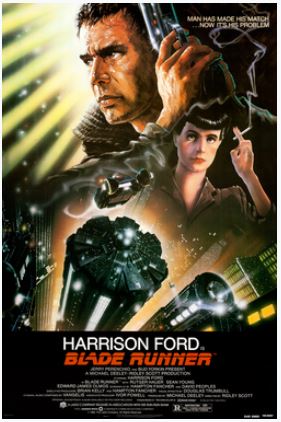
The book is completely chronological; still, it goes ’round in circles, no project seemingly any bigger or more important than another, other than maybe the jobs that come available just when health insurance is about to expire. Dunne is obsessed with constantly telling us how many years and months it’s been since he and Joan began this project, even though many Hollywood projects (including far more famous works such as “Blade Runner” or Francis Coppola’s recent “Megalopolis”) spend an eternity in development. Dunne’s book is also obsessed with the phone calls, who called who when, and who left a message for when. Basically Dunne has emptied eight years worth of his calendar into a book.
Virtually everyone who touched “Up Close & Personal” eventually is regarded at least semi-warmly in Monster. Dunne does identify a few villains, but those are basically execs on other projects who tried to screw Dunne-Didion out of payment. Throughout the book, we see that writers are often dismissed, overlooked, belittled. Dunne never says writers are underpaid — in fact, he often suggests the opposite — but still he implies they are screwed by a process for two main reasons, that their hard work is often redone by someone else for no reason, and that the system despite its rules seems to compel one uncompensated rewrite after another. It seems that people wanting to make it big as a Hollywood writer would be best served viewing themselves as a mechanic, not DeLorean.
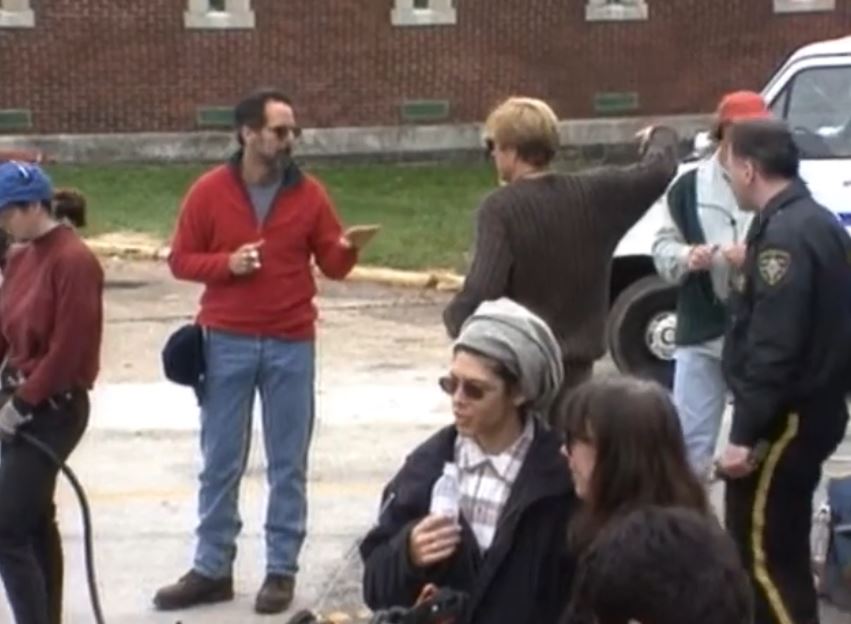
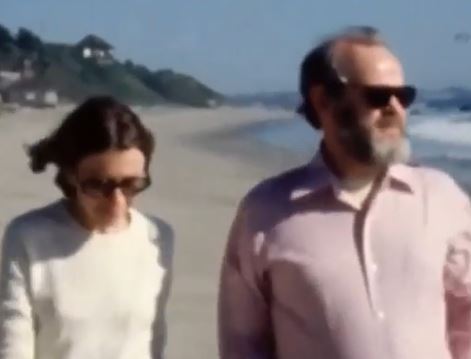
Director Jon Avnet with Robert Redford.
“Up Close” surely was never an aspirational, boom-bust type of movie, for anyone involved, though Dunne writes that the Savitch story might have been perceived that way in the ’60s. What interested Disney and Rudin is likely the fairly high floor — a couple very popular stars (with both women and men) in a run-of-the-mill romance with simple tensions to deal with, it probably has a good chance to make at least a little money. Redford a decade earlier did the same with “Legal Eagles,” a flawed (Siskel & Ebert decried the number of fires) but still highly watchable movie because of Debra Winger’s fabulous push-pull with Redford. Everyone always says in Hollywood that “nobody believed” in some ultimately successful project, but usually, someone always does. In the case of “Up Close,” it was Disney and Scott Rudin, who happen to be Hollywood heavyweights.
Those hoping for a little gossip from Monster will be disappointed. Dunne reveals that Jane Fonda has “tenacity.” The book’s most damning comment comes not from Dunne but his quoting of David Brinkley, who apparently said that Jessica Savitch was “the dumbest woman I ever met.” Dunne somehow has little to say about Disney execs David Hoberman and Donald DeLine, but he describes Scott Rudin, who would champion the “Up Close” project and correctly deem it simply a movie “about two movie stars,” as “Overweight, overbearing, with a black beard and a huge, booming laugh, the bully boy’s bully boy, both impossibly demanding, even cruel, to subordinates (to equals and superiors too, if he thinks he can get away with it, and even when he knows he can’t), and impossibly funny, a jovial Mephistopheles.” Dunne writes that he and Didion did not initally warm to Jon Avnet, the director of “Up Close” who “did not suffer from an ego deficiency” and was a “control freak,” but we get a very happy ending in that Avnet actually asked Dunne-Didion to oversee cuts in the editing room, a responsibility allowed to few writers.
Even though the final script had far more changes to the Dunne-Didion original ideas than anyone could possibly count (though Dunne seemed to try), it seems Dunne felt a particular satisfaction from Avnet’s request for input. That’s either a nice tribute to the director ... or a sign that the movie is episodic and doesn’t really mean anything and was only finished because someone thought it could make money.
Don Simpson and Jerry Bruckheimer, who were interested in Dunne-Didion for a different project, were “better known for their bad-boy excesses, especially Simpson,” an “exhibitionist,” and “word was they were difficult to work with.” But Dunne found their faults offset by their presence as hard-nosed buffers with producers, as people like them are “usually smart.”
Alanna Nash, the author of Golden Girl, got the stiff arm only because Dunne-Didion believed it “rash” to communicate with authors whose work they were adapting, a fair point. When Nash pushed for a meeting, Dunne-Didion decided they had to reply (always don’t want to offend) but simply mailed a postcard telling Nash the project is “more fun than work” and sorry that their paths didn’t cross in New York (see, even the writers aren’t always telling the truth).
Otto Preminger — who had died in 1986 — was the “all-time top-seeded Hollywood bully boy,” according to Dunne.
Despite its lack of tips, Monster makes clear some of the realities of screenwriting. Every script, apparently, is seen/read/handled by numerous people, many of whom will at some point rewrite it. A script seems like a haircut that is constantly recut about once a week. Dunne attaches big dollar amounts to the elites hired to polish a script at the last minute. It seems an enormous waste to be spending so much on rewriting, but as Dunne points out, movies are huge investments, and allotments to writing are a fairly small percentage of the budget, so even if the expenditurs seem obscene, that extra rewritten scene tacked on by Robert Towne or Carrie Fisher or Steve Zaillian might well pay off.
Dunne’s book mentions Elaine May; she probably should’ve worked on “Up Close.”
Evidently, people associated with a film project and also the dreaded “CEs” (a mild villain in Monster) are more than happy to flood writers with “research” that the writers should presumably be digging up themselves; magazine articles, Nexis cache, VHS tapes, book bibliographies. If that’s where Dunne-Didion/Avnet got their ideas for their prison riot scene, shame on them. There could be some great ideas, but in general, most likely, it comes down to turning a phrase.
In a significant passage, Dunne mentions talking with William Goldman, the Oscar-winning screenwriter of “All the President’s Men” who had a falling-out with Redford over that movie but still had nice things to say about him. Goldman, though, apparently didn’t hand Dunne any good quotes. Goldman succeeded mightily in “All the President’s Men” in ways that Dunne-Didion did not, coining a few treasured expressions such as “Follow the money,” deploying his stars outside of the newsroom and relaying very important conversations through phone calls, where you see Woodward and Bernstein on the phone but cannot see the person at the other end who is revealing both important financial secrets and also how amateurish the Nixon campaign operation actually was. Goldman is also credited for establishing the timeline of that movie, an underrated necessity.
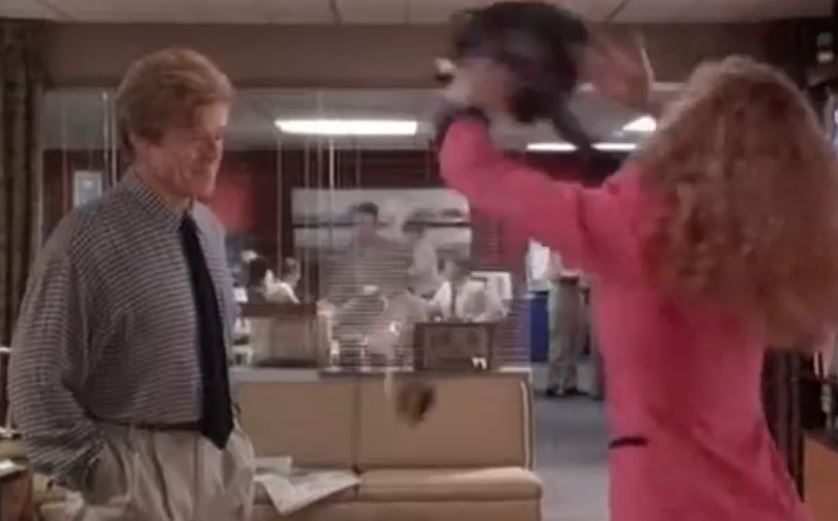
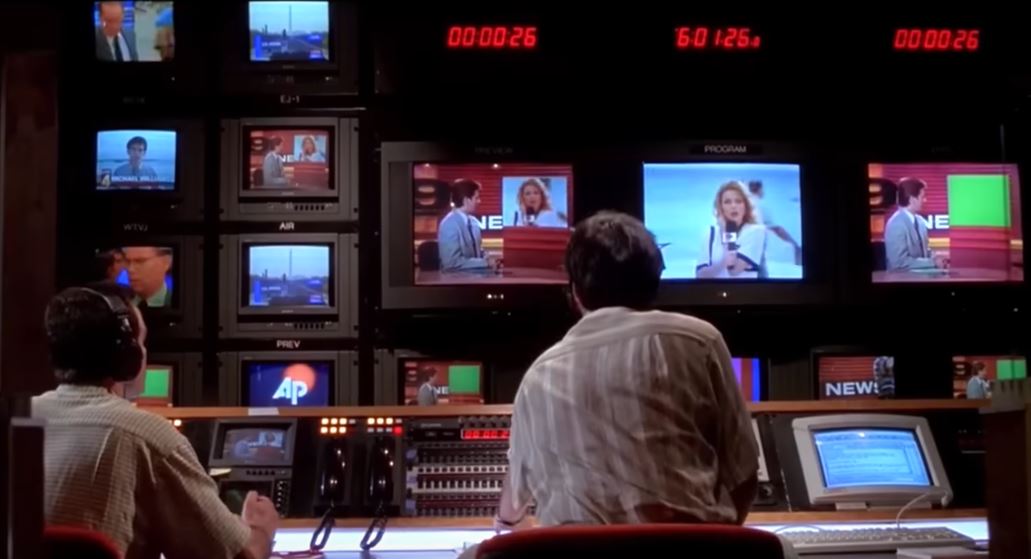
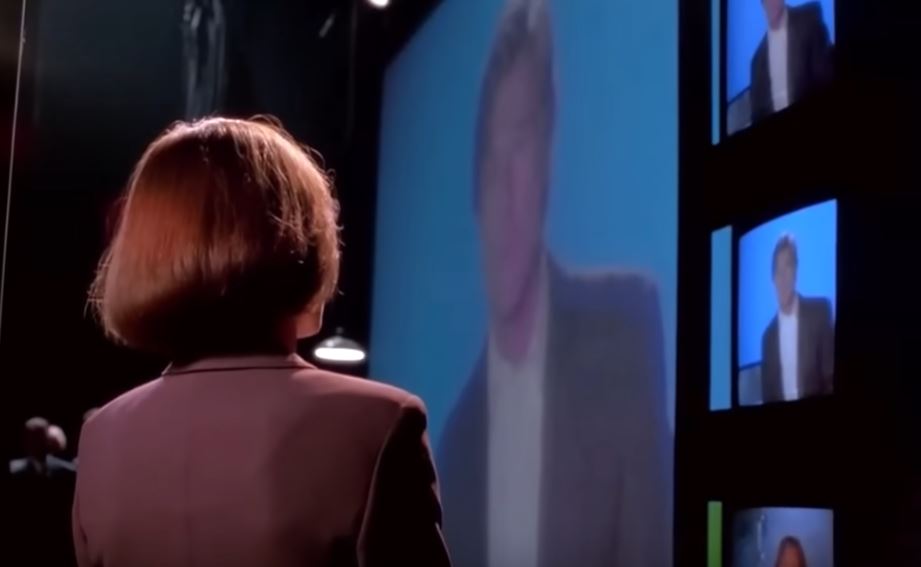
Dunne-Didion (and their various replacements/successors) break no new ground in TV-news observations but rely on the tropes, if a few effective ones. From the beginning, we see the TV visual that film directors just love: the anchor or reporter face on multiple TV screens. That’s not a bad start. But then we get the slapstick; she trips in high heels and spills her purse (the scene clumsily looks like she’s deliberately throwing the bag on the floor) and rips her clothing. A live weather report will be botched; anchors will jaw at each other as the credits roll, and people will be phonies. Maybe there’s a statement somewhere in Dunne-Didion’s script that TV news isn’t a calling, but a product.
The Roger Ebert “meet cute” involves Tally’s arrival at the newsroom, one mini-disaster after another as she chases ultra-high-energy Warren around the newsroom. She chides him for calling her “sweetheart” and requesting coffee. He finishes her sentences and embarrasses her with pop quizzes. But she doesn’t fold completely, so he gives her a chance. He’s finally convinced during her snatching-victory-from-jaws-of-defeat weather report and observes, in the movie’s most famous line, “She eats the lens.”
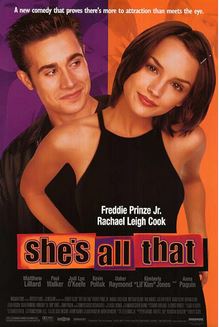
From there we have a slice of “Pygmalion,” a term Dunne mentions in his book. The most famous Pygmalion movie is probably still “My Fair Lady,” but that was 60 years ago, at the end of Old Hollywood, and a more recent take, “She’s All That,” drew a teen audience and made a lot of money just a few years after “Up Close.” Early in Monster, Dunne references the notion of “ugly duckling,” but the end result was an inexperienced, not ugly, duckling. Perhaps the writers/producers found it somehow too implausible that a less-than-gorgeous woman could rise to the top of network TV or even land a local gig. Or maybe a full Pygmalion seemed too patronizing.
Warren still takes Tally shopping and oversees her clothes and hair. (Curiously, the higher up the food chain Tally gets, the shorter the hair.) A key observation was made by “She’s All That” director Robert Iscove in 2015 — that in a good makeover plot, audiences will buy that the ugly duckling was beautiful all along.
“Up Close & Personal” opts to open not at the beginning but the end, Tally narrating her life story. (James Karen, also a TV exec in “The China Syndrome,” is presenting the news.) This is a common approach but rarely seems necessary. And it reveals something important to the discerning viewer — Tally alone is providing her backstory, suggesting that she’ll be alone by the end of the movie.
For Redford, Pfeiffer, Dunne-Didion, Avnet, Rudin & Disney, “Up Close & Personal” is, or should be, just a paycheck. For Diane Warren, on behalf of all those whose names appear farther down the list of movie credits in general, it’s a statement, proof that you don’t need a great movie to land an Oscar nomination. Collectively, a lot of talent marshaled around a mediocre idea and not only came up with a small profit but a reason to attend the Academy Awards. That is not insignificant. Roger Ebert liked to note that accuracy is no excuse for drama — effectiveness is. The end credits of “Up Close” note that the movie is “Suggested by the book ‘Golden Girl’ by Alanna Nash.” Well, true.
1 star
(July 2025)
“Up Close & Personal” (1996)
Starring
Robert Redford as
Warren Justice ♦
Michelle Pfeiffer as
Tally Atwater ♦
Stockard Channing as
Marcia McGrath ♦
Joe Mantegna as
Bucky Terranova ♦
Kate Nelligan as
Joanna Kennelly ♦
Glenn Plummer as
Ned Jackson ♦
James Rebhorn as
John Merino ♦
Scott Bryce as
Rob Sullivan ♦
Raymond Cruz as
Fernando Buttanda ♦
Dedee Pfeiffer as
Luanne Atwater ♦
Miguel Sandoval as
Dan Duarte ♦
Noble Willingham as
Buford Sells ♦
James Karen as
Tom Orr ♦
Brian Markinson as
Vic Nash ♦
Michael Laskin as
IBS Director ♦
Robert Keith Watson as
IBS Makeup Man ♦
Lily Nicksay as
Star Atwater ♦
Joanna Sanchez as
Ileana ♦
Daniel Zacapa as
Harvey Harris ♦
Heidi Swedberg as
Sheila ♦
Fern Buchner as
WMIA Makeup Woman ♦
Miguel Pérez as
WMIA Floor Manager ♦
Nicholas Cascone as
WMIA Director ♦
Kenneth Fuchs as
WMIA Assistant Director ♦
Julie Foreman as
WMIA Producer ♦
Edwina Moore as
WMIA Co-Anchor ♦
Patti Davis Suarez as
WMIA Reporter ♦
Marc Macaulay as
Police Spokesman ♦
Ed Amatrudo as
Miami Reporter ♦
Ana Azcuy as
Miami Reporter ♦
Peter D’Oench as
Miami Reporter ♦
Dave Game as
Miami Reporter ♦
Michelle Gillen as
Miami Reporter ♦
Eliott Rodriguez as
Miami Reporter ♦
Jennifer Valoppi as
Miami Reporter ♦
Yareli Arizmendi as
Inez Cifuentes, Fashion Consultant ♦
Salvador Levy as
Congressman Jorge Diaz ♦
Manny Suárez as
Diaz’ Aide ♦
Neil Giuntoli as
Trailer Park Manager ♦
Jason Sanford as
Photographer ♦
Michael Villani as
Doug Dunning ♦
Elizabeth Ruscio as
Lulu Delano ♦
Michael Shamus Wiles as
WFIL Cameraman ♦
Nigel Gibbs as
WFIL Floor Manager ♦
Mary Elizabeth Sheridan as
98-Year-Old Twin ♦
Marian Lamb Bechtelheimer as
98-Year-Old Twin ♦
Natalie Barish as
Focus Group Member ♦
Wanda Lee Evans as
Focus Group Member ♦
Charles Noland as
Focus Group Member ♦
Charles Martiniz as
Focus Group Member ♦
Charles C. Stevenson Jr. as
Focus Group Member ♦
Cynthia Szigeti as
Focus Group Member ♦
Guillermo Gentile as
Chess Player ♦
Richard Alliger as
Right-to-Life Protestor ♦
Fabian as
Fabian ♦
Ginny Graham as
Homeless Woman ♦
Frederick Strother as
City Councilman ♦
Larry John Meyers as
Murray Gordon ♦
Andy Prosky as
Cord Otavio ♦
Bruce Gray as
Gabe Lawrence - IBS Executive ♦
Norman Parker as
Mark Linder, IBS Executive ♦
Lori New as
Merino’s Secretary ♦
Charlie Holliday as
Priest ♦
Leontine Guilliard as
Guard Shay ♦
Johnnie Hobbs Jr. as
Holmesburg Prison Warden ♦
Tom McCarthy as
Negotiator ♦
Roger Rathburn as
Gary Logan ♦
Dennis Dun as
Satellite Van Technician ♦
Rhonda Overby as
Self - WFIL Reporter ♦
Lexie Bigham as
Convict ♦
Jack Shearer as
Prison Expert ♦
Andrew Glassman as
Shouting Questioner ♦
Rick Warner as
Spokesman ♦
Joe B. Shapiro as
Waiter ♦
Rosie Malek-Yonan as
American Airlines Boarding Agent ♦
Chris Stone as
Backstage Floor Manager
Directed by: Jon Avnet
Written by: Joan Didion
Written by: John Gregory Dunne
Producer: Jon Avnet
Producer: Jordan Kerner
Producer: David Nicksay
Co-producer: Martin Huberty
Co-producer: Lisa Lindstrom
Executive producer: John Foreman
Executive producer: Ed Hookstratten
Music: Thomas Newman
Cinematography: Karl Walter Lindenlaub
Editor: Debra Neil-Fisher
Casting: David Rubin
Production design: Jeremy Conway
Art direction: Mark W. Mansbridge, Bruce Alan Miller
Set decoration: Doree Cooper
Costumes: Albert Wolsky
Unit production manager: D. Scott Easton
Makeup and hair: Fern Buchner, Alex Proctor, Alan D’Angerio, Peter Owen, C. Jene Fielder, Gary D. Liddiard, Bunny Parker, Ronnie Specter, Jasen Joseph Sica, Susan J. Lipson