Red rock — ‘Deliver Me from Nowhere’ delves into Bruce Springsteen’s ‘state’ of mind
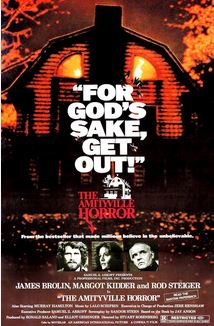
Some places have a stigma. Just ask anyone what they know about the upscale community of Amityville, New York. Chances are, the answer’s going to be something about a haunted house.
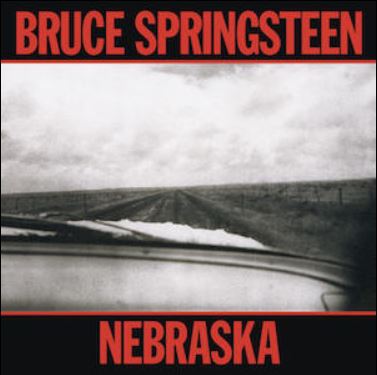
Bruce Springsteen named his song, album and troubled state of mind “Nebraska.” He didn’t, at least according to official accounts, live in the state nor visit there, but he was familiar with the Charles Starkweather murder rampage and apparently sensed a certain truth about geography, a vision seen on the album’s cover.
Critics and many fans have come to revere this unconventional project. What did the (roughly 1.5 million, in the early 1980s) people of Nebraska think of their association with this landmark rock-music effort? It’s a bit of a surprise that no one in the movie “Springsteen: Deliver Me from Nowhere” tells us. Because they tell us everything else — from the Wikipedia highlights of The Boss’ career to all the things that he is not going to do (hence, we have drama). There is so much telling and so little showing. It almost seems like Springsteen’s better option (he endorsed and consulted on this movie) would’ve been to make a new album, not movie, about the process of making “Nebraska.” That would’ve broken musical ground, if with likely claims of indulgence. But if the subject merits a feature film, surely it could merit an album?
There are superhero movies. There are cheap horror films. After that, few things at the cinema are as reliable as the music biopic. The material may be heavily vetted by the artist. The ending may already be well-known. But the A-list actor will incredibly resemble the mannerisms of the star, sing at least some of the songs credibly, and the boomers will go.
Like most music biopics, “Deliver Me from Nowhere” (the “Springsteen” portion was apparently added at studio’s request) comes from a lyric (that’s the case here) or song title of the artist that seems to encapsulate the artist’s career — or portion of the career that inspired the movie. A year earlier, Bob Dylan was dubbed “A Complete Unknown,” though that film is about a well-respected niche artist going mainstream, whereas “Deliver Me” is the reverse.
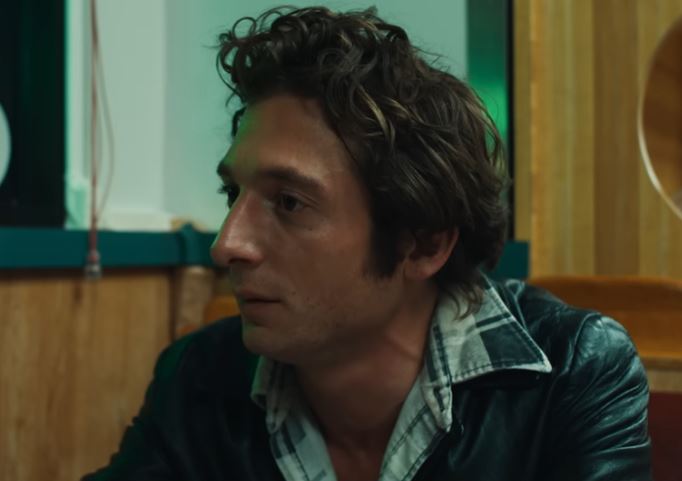
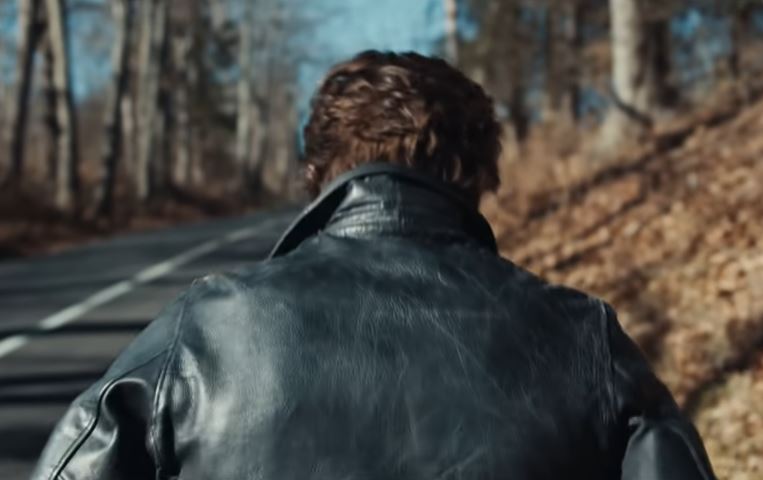
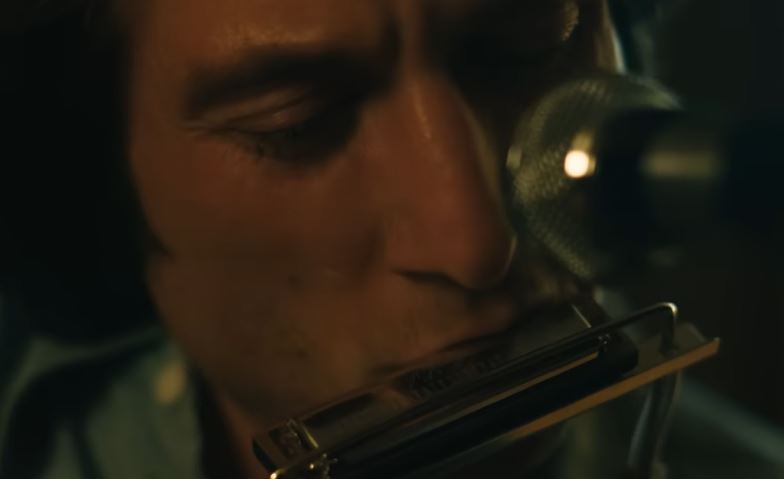
Jeremy Allen White, as generally happens in these movies, is cinematically a better Springsteen than Springsteen himself, because rock stars in general don’t look like movie stars and aren’t highly trained at acting. White is close enough in resemblance to The Boss, but there’s a seriousness about the eyes that resembles Al Pacino. White was miscast in the underrated wrestling-family drama “The Iron Claw,” and his still-buff physique for a “Nebraska”-era Springsteen is noted by fans. The role is only demanding — much so — when he’s performing music. The rest of the time, he’s an ordinary person, bit of an ego but not enough to make things exciting, a mundane role. His choice of vehicle is not, refreshingly, a motorcycle, but a Camaro. (However, there is a leather jacket.)
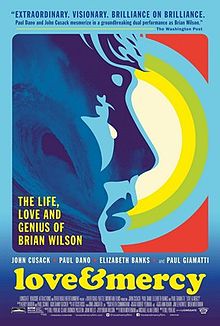
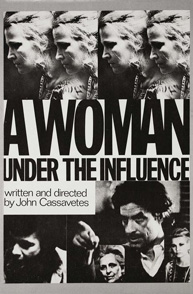
Many music biopic subjects struggle with substance abuse and/or women. Springsteen, somewhat like Brian Wilson in “Love & Mercy,” in the early 1980s is dealing with the prospect of a serious depression (it’s not really clinically diagnosed in the film), a visual challenge so enormous for a filmmaker that “Deliver Me” director Scott Cooper doesn’t even bother. We’re told that Springsteen is not showing up for events he said he would show up to, and he gets testy with the audio engineering. He is not unusually thin, or fat, or disheveled; he is not behaving like Gena Rowlands in “A Woman Under the Influence.” Unlike Brian Wilson, Springfield is not rescued by a woman but by his devotion to work; the presence of the movie’s lone love interest, a composite character played by Odessa Young, promises more than it delivers and quickly grows tiresome actually reaching for the cliché of the superstar who falls short domestically. Eventually, a couple of associates — probably the real heroes of the film — who maintained Springsteen’s trust by defending his work see enough signs to gently guide the superstar toward therapy that presumably set the stage for even bigger things to come.
It’s only in the latter stages that “Deliver Me” barely enters the realm of Movies About Psychology, a fascinating subset that includes “The Snake Pit” and “Ordinary People” and “Good Will Hunting.” Those movies thrive on the drama of therapists taking an unusual interest and perhaps crossing lines in order to get through to someone, while perhaps, if needed, a “bad guy” pushes the subject to be something they’re not. “Deliver Me” is not at all interested in the therapy, only that Bruce went. Most of these movies suggest that talking is the greatest healer; you realize certain things, and you can’t OD.
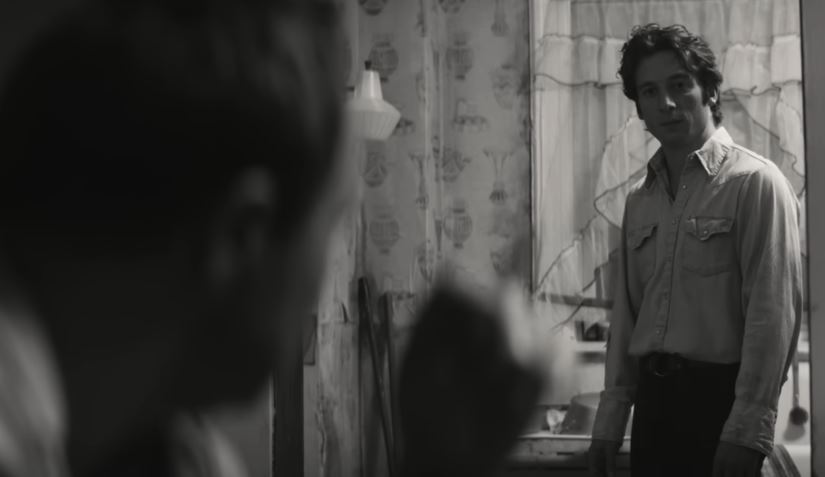
The movie’s biggest stumble is its series of black-and-white flashbacks that assert the cause of Springsteen’s depression is not stress or biological factors but latent recollections of the abusive nature of his father, Douglas “Dutch” Springsteen. It is shown that Bruce stood up to his father, but what should’ve been a happy American childhood was marred, if not ruined. “Deliver Me” indicates that Springsteen’s journey to peace will have to involve some kind of showdown with his father and some sort of understanding (his father died in 1998 and can’t question the portrayal). It seems that in many films, the activity in the black-and-white scenes would only get worse, but here, it starts to become ambiguous. Springsteen in the movie does not have children (those would arrive years later). Thankfully this was not fictionalized. However, the comparison of his own fatherhood with scenes of his childhood would’ve offered interesting potential.
The time frame of “Deliver Me” is curious. It’s too late for a coming-of-age tale but too early for a mid-life crisis. Then again, this is a rock star we’re talking about, so 32 is kinda old age. Springsteen’s apparent breakdown-in-progress happens quickly and quietly, and characters have to tell each other that he’s really depressed, but unlike in Bradley Cooper-Lady Gaga’s version of “A Star Is Born,” we already know the outcome.
People who remember Springsteen taking the music world by storm in the ’70s and ’80s and vigorously playing 140 (that’s correct, 140) concerts in 12 months may be surprised to learn that, according to this movie, he nearly lost it. He’s long had a reputation as a down-to-earth superstar unencumbered by the tabloid nonsense of many rock figures. One of the strange things about “Deliver Me” is its apparent insistence on informing us that, despite whatever we may have thought, “This guy was kinda screwed up.”
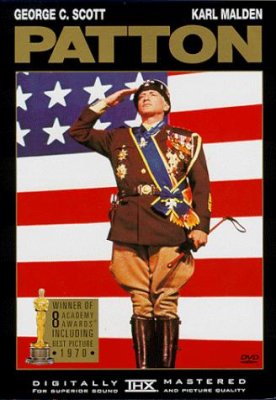
Springsteen in “Deliver Me” finds catharsis in his work, but it is work of his choosing, solitary. There are two classic films, “Good Will Hunting” and “Patton,” expressing differing views on productivity. “Patton” implies that damaged people do great things when driven; “Hunting” tells us that the damage requires healing, and then the great things will presumably happen. “Deliver Me” of course leans Will Hunting but interestingly does not slam the door on George Patton. The suggested new projects and requested assignments give Bruce a lot to tackle, but he thrives on it, to the point he appears to be making a megahit follow-up album by accident.
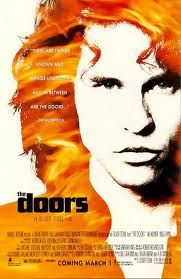
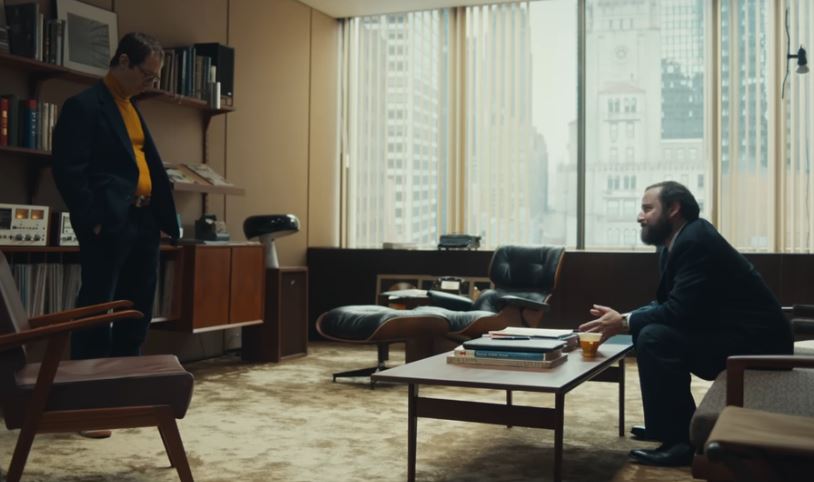
Despite its often subdued tone, “Deliver Me,” like “The Doors,” delivers enough of a highlight reel for the fans who aren’t interested in mental illness. We see a few concert performances, some intense solo songwriting and the origins of “Born in the U.S.A.” The spare environment is illustrated by a cassette tape (without a box) that constantly gets passed around to the people who need to hear it. The revelations of what it plays are some of the movie’s strongest scenes. So is the work of Jeremy Strong, who as Jon Landau has to assume the delicate role of informing both the label and the artist that this next project may not be their most appreciated or commercially viable and earning the trust of both sides.
The music world has a complicated relationship with works that stray. The Beatles’ most celebrated album (generally) is “Sgt. Pepper’s Lonely Hearts Club Band,” even though more people have listened to “Yesterday,” “Hey Jude” and “I Want to Hold Your Hand.” Brian Wilson also won over the serious-critic crowd with “Pet Sounds” as the Beach Boys were slipping from the front lines of popular music. Radiohead’s “Kid A,” initially derided by many, surfaces on some lists as the band’s greatest work. Wilco’s “Yankee Hotel Foxtrot” was famously denied by the band’s label, to the outrage of fans, and because of this became perhaps Wilco’s most famous album.
Some might view “Deliver Me” as a stiff-arm to the suits who reject music that might be great but is seen as non-commercial, and maybe it is. Contrary to the depiction in the film, it seems the suits were more into it than the fans. The Wiki page for “Nebraska” says Columbia execs were “ecstatic” about the album and “loved the music.” It says the album “confused both casual and serious fans” but sold well, reaching No. 3 on the Billboard chart.
But suppose the suit characters in the film were proved correct. Is it some sort of tragedy if an artist disappoints their fans? Why shouldn’t more artists branch out, as Springsteen did? “Nebraska” was his sixth album, not first. He already had several megahits. It’s true that music labels will never, ever get enough credit in the movies for all the artists they championed who couldn’t sell, but it seems in the case of “Nebraska,” they weren’t going to go under if the record underperformed.
Just like how Steven Spielberg or Alfred Hitchcock can’t/couldn’t make a bad movie, the problem for the “Nebraska” naysayers is that Bruce Springsteen simply cannot write a bad song. This album may be brooding. It’s dark. The songs may not be radio hits. They’re still great songs. It’s material best appreciated not once, but many times.
The messaging may trouble. The title song is perceived first-person recollections of Charles Starkweather. Horrific crimes happen everywhere — including Amityville, New York — but the song specifically mentions two states, and the name of the song is one of those states. Throughout the album, somewhat like the previous “The River,” lyrics suggest blue-collar people with not-so-bright futures tempted by trouble and finding it, confrontations with authorities, and family members who disappoint. The movie, to its credit, is underscoring the gentle but grinding nature of the album. Maybe most people listen to music for the purpose of being happy, but they reverentially listen to Gordon Lightfoot’s “The Wreck of the Edmund Fitzgerald,” and they go to heartbreaking movies. It may not be conventional, but it’s still, for lack of a better word, “entertainment.”
“Let it Be,” much like “Deliver Me” actually, reveals that sensational songs for a follow-up to a polarizing album actually originated from the same frustrating recording sessions. Springsteen band members have complained about “Born in the U.S.A.” being mistakenly identified as a chest-thumping anthem, but just listen to the song and tune out the lyrics; how is it not a feel-good title. It may be a rare song that is a massive success on one level and a spectacular fail in terms of perception. The second biggest hit was “Dancing in the Dark.” “Born in the U.S.A.” is not the first song/album in which certain lyrics were sort of co-opted by pop culture into something different than the underlying story. There are worse distortions in life.
“Deliver Me” raises interesting questions about an artist’s relationship with fans — or the fans’ relationship with each other. This can be a sensitive topic among long-running performers. Original Deadheads have been known to groan about the “Greyheads” — the younger crowd that only discovered the Grateful Dead with the 1987 release of the band’s rare Top 40 hit “Touch of Grey” and came along for the partying. The Boss’ most well-known work, by far, occurred in a much narrower 10-year span, but his following is still multigenerational. Springsteen fandom is the subject of a curious 1985 episode of the “Growing Pains” sitcom, its second episode in fact and undeniably inspired by the success of “Born in the U.S.A.,” in which father and son attend a Springsteen concert and dad marvels about how he and his teen son both appreciate The Boss.
Springsteen is not a credited producer of “Deliver Me,” but it only happens with his consent. He has done numerous documentary projects. Is there some reason he favored a feature film about “Nebraska” rather than “Born in the U.S.A.”? There is surely an uneasiness for an artist accustomed to a certain level of notoriety, whose fans are familiar with virtually all of his work, suddenly becoming a hit among the masses, many of whom had never heard of “Darkness on the Edge of Town.”
As this movie was being pitched, someone at the studios had to be saying, “You DO realize that if this movie is about the making of ‘Born in the U.S.A.,’ the box office would be double or triple or quadruple.” Springsteen’s staunchest fans will appreciate the making-of nature of “Deliver Me.” They’re into the process. Even for a lot of them, repeat viewings will be a tough sell. Those who aren’t into Springsteen are unlikely to discover this movie. Not enough drama, not enough action, a retelling of a decades-old album they never listened to in the first place.
Geography is a statement of Springsteen. It’s a statement in movies too, just not this particular movie. In “Giant,” we see the clash over the future of the land, old money vs. new money; in “Saturday Night Fever,” we see the presumed and/or hoped-for change to Tony’s life if he would simply cross that bridge to Manhattan. Then there is Alexander Payne’s 2013 movie “Nebraska,” a genteel Western about people with family and community grievances who happen to be quirky, which is why the movie takes place across the Plains rather than from Cape Cod to Boston. Nebraska is a heavily white state. Kevin Hart at “The Roast of Tom Brady” made a similar observation about Springsteen’s audience. It’s reflected in the demographics of this movie (and perhaps explains a curious set of scenes in Chinatown).
Song lyrics, it must be noted, are just storytelling. Madonna probably really isn’t a Material Girl. But they are statements of something. The energy of the music that Springsteen puts together often belies what his lyrics are saying, which sometimes seems, life itself is no reward, if you’re in a rural area or got sent to Vietnam, you drew the short straw.
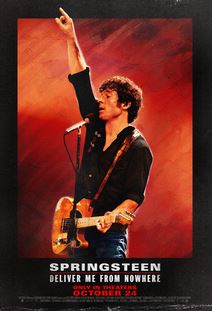
That album cover. It’s a very rural setting. An artist uses red and black for Springsteen’s name and the title. “It was all just very bloody in its own way,” Springsteen is quoted as saying.
Nebraska is actually far better known for another red — Big Red football. The way the program is going now, maybe that’s fading fast, but when “Nebraska” was being made, the Cornhuskers were the most awe-inspiring team in the nation, the boys from the heartland blocking for the Heisman winners from the East Coast, Academic All-Americans up and down the lineup playing old-school college football. Nebraska is home to the world’s greatest business mogul who, for a long time, happened to be the World’s Richest Man. Looks can be deceiving. It’s not so bleak out there.
2.5 stars
(November 2025)
“Springsteen: Deliver Me from Nowhere” (2025)
Cast:
Jeremy Allen White as
Bruce Springsteen ♦
Jeremy Strong as
Jon Landau ♦
Paul Walter Hauser as
Mike Batlan ♦
Stephen Graham as
Douglas Springsteen ♦
Odessa Young as
Faye Romano ♦
David Krumholtz as
Al Teller ♦
Gaby Hoffmann as
Adele Springsteen ♦
Harrison Sloan Gilbertson as
Matt Delia ♦
Grace Gummer as
Barbara Landau ♦
Marc Maron as
Chuck Plotkin ♦
Matthew Pellicano Jr. as
Young Bruce Springsteen ♦
Jayne Houdyshell as
Viv ♦
Jeff Adler as
Joey Romano ♦
Jimmy Iovine as
Jimmy Iovine ♦
Chris Jaymes as
Dennis King ♦
Bartley Booz as
Toby Scott ♦
Craig Geraghty as
Faye’s Father ♦
Laura Sametz as
Faye’s Mother ♦
Vienna Barrus as
Haley ♦
Vivienne Barrus as
Haley ♦
Arabella Olivia Clark as
Virginia Springsteen ♦
T. Ryder Smith as
New Car Dealer ♦
Clem Cheung as
Bartender ♦
Stephen Singer as
Psychiatrist ♦
Judah L. Sealy as
Clarence Clemons ♦
Johnny Cannizzaro as
Steve Van Zandt ♦
Brian Chase as
Max Weinberg ♦
Charlie Savage as
Roy Bittan ♦
Andrew Fisher as
Danny Federici ♦
Mike Chiavaro as
Garry Tallent ♦
Pappy Faulkner as
Fan Passing in Taxi ♦
Lynn Adrianna Freedman as
Gladys ♦
Jay Buchanan as
Cats on a Smooth Surface - Lead Singer ♦
Jake Kiszka as
Cats on a Smooth Surface - Guitarist ♦
Sam F. Kiszka as
Cats on a Smooth Surface - Bassist ♦
Aksel Coe as
Cats on a Smooth Surface - Drummer ♦
Henry Hey as
Cats on a Smooth Surface - Keyboards ♦
Matt Gorsky as
Fair Goer (voice) ♦
Eddie Matthews as
Texas Band - Bass ♦
Joe Pess as
Texas Band - Drummer ♦
Sam Popkin as
Texas Band- Pedal Steel ♦
Noah Rauchwerk as
Texas Band - Guitar #2 ♦
Andrew Weiss as
Texas Band - Guitar
Directed by: Scott Cooper
Written by: Scott Cooper (screenplay)
Written by: Warren Zanes (book)
Producer: Scott Cooper
Producer: Scott Stuber
Producer: Eric Robinson
Producer: Ellen Goldsmith-Vein
Co-producer: Richard Mirisch
Co-producer: Christopher Surgent
Executive producer: Tracey Landon
Executive producer: Warren Zanes
EVP: Scott Aversano
Music: Jeremiah Fraites
Cinematographer: Masanobu Takayanagi
Editor: Pamela Martin
Casting: Francine Maisler
Production design: Stefania Cella
Art direction: Christopher J. Morris
Set decoration: Kris Moran, Cheryl C. Murphy
Costumes: Kasia Walicka Maimone, Brittany Loar
Makeup and hair: Jameson Eaton, Lori Guidroz, Jackie Risotto, Angie Johnson, Elisa Tallerico, Kim Shriver, Deedra Smith, Greg Cooper-Spencer, Jason J Dougherty, Daria Y Wright, Kristen Alimena, Jessica Nelson, Brett Schmidt, Greg Pikulski, Zachary Ripps
Production supervisor: Michael Hall
Unit production manager: Tracey Landon
Unit production manager: L.A. line producer: Haley Sweet
Assistant production manager: Liv Banks
Executive in charge of production: 20th Century Studios: Mylan Stepanovich
Stunts: Stephen A. Pope, Adam Hart, Kevin Rogers, Chris Barnes, Gavin Barnes, Scott Burik, Christopher Place, Luke Vexler
Special thanks/the producers wish to thank: Caroline Vein