


‘Street Smart’ fails fact-check
but passes the act-check
A movie about a writer is a bad idea. But Hollywood never stops trying. Sometimes, it can work, if there’s enough “there there”; witness “Sunset Blvd.” and “In a Lonely Place” and “All the President’s Men.” Since viewers can’t actually see the writer’s work in the film, we have to take the conversation’s word for it whether it’s any good. 90% of the time, we’re going to end up with a movie in which the characters will have to tell us what’s going on.
Why, then, does Hollywood often lean on writers as protagonists? They tend to represent a few convenient things, among them, a character who travels for work or doesn’t have to report to the office every day, as well as characters of intellect/culture/sophistication/curiosity.
According to Pauline Kael, the “often underrated” director of “Street Smart,” Jerry Schatzberg (now 99), “knows how to tell a story visually,” which actually should be a prerequisite for all film directors, and makes the script “look and play better than it deserves.”
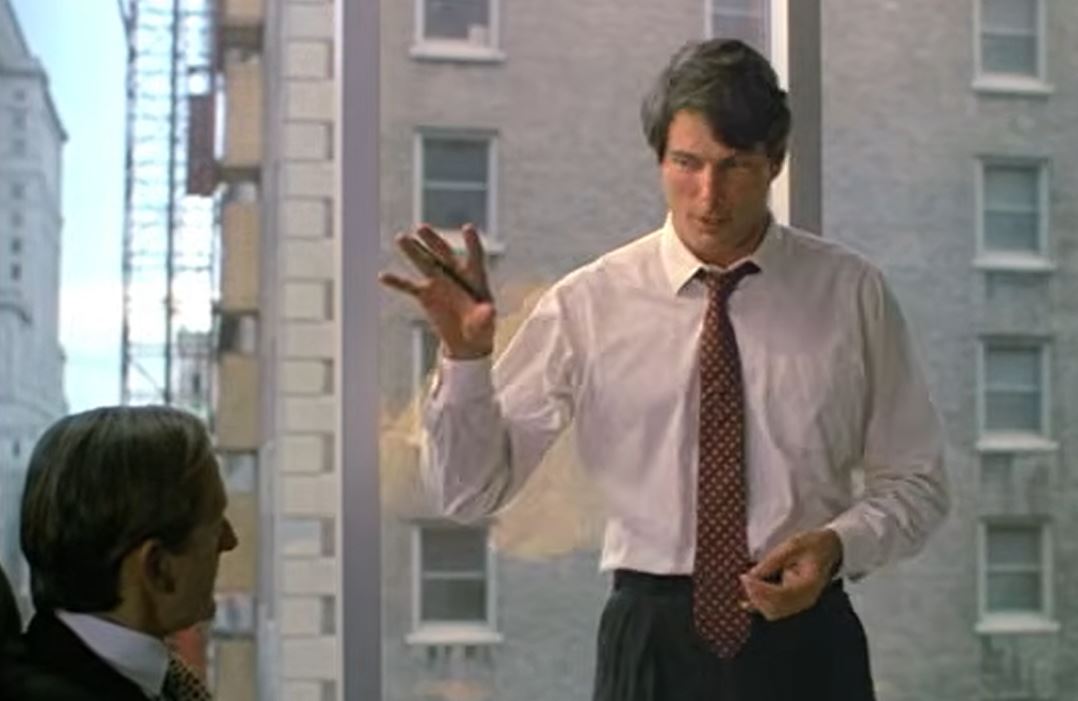
One of the problems of “Street Smart” is that Christopher Reeve, as the hero, Jonathan Fisher, does not remotely resemble an urban gonzo journalist. But he does represent fish-out-of-water possibilities, the Harvard guy (“Harvard” is heard probably at least three times; he says “I did time there”) who’s a professional failure until he is suddenly motivated to use all that pricey intelligence to get himself out of a jam and outsmart the gangster in a ghetto battle. Fisher comes across as a guy who’s never done journalism and never written a news article and couldn’t interview someone to save his life — he apparently hopes some street thugs will simply hand him a great story. By “Monday morning,” according to the dialogue.
Consider the story “ideas” that Jonathan poses to the chortling boss, Ted Avery (played by André Gregory): One is a truck driver from Florida, a “real sweathog kind of guy” who comes to New York and has to figure out, “What does he do with himself.” Another is about some guy well-known for corruption on Staten Island. The third is about the safety record of construction cranes. Avery advises Fisher to “write the way you used to,” and of course we have no idea how he used to write (this is not someone with gray hair) or writes now. Reeve then uncorks the idea of a Times Square pimp and how this person “thinks about things in general.” Reeve says the whole account would be “2,000 words,” which isn’t really very long for a magazine profile.
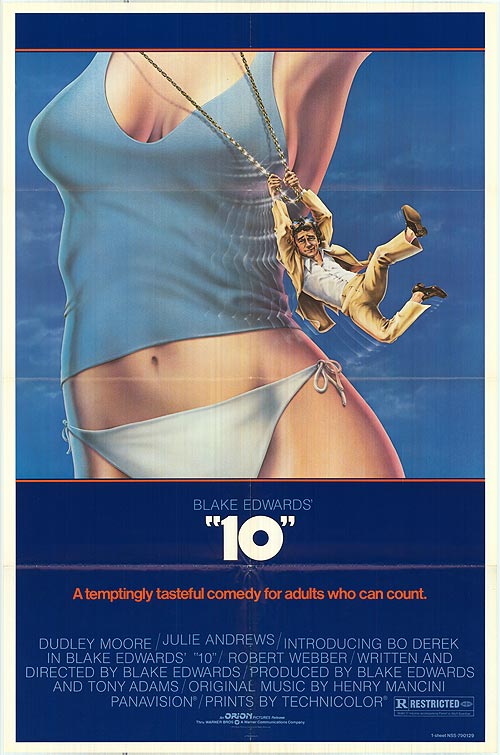
You might think this plot is so quirky, it must be based on someone’s experience. Kael writes that the screenwriter, David Freeman, wrote a fabricated story “The Lifestyle of a Pimp” for New York magazine on May 5, 1969. Evidently, the fact it was fabricated wasn’t revealed for decades, but Kael notes that the revelation “created no big stir” and had “no dire results” and “no big-time benefits, either,” thus, Kael suggests “Street Smart” is a vehicle for the “screenwriter’s fantasies of all the things that could or should have happened.” Certainly not the first time that’s happened. Didn’t Blake Edwards see a beautiful bride in a car who prompted him to envision a “10”?
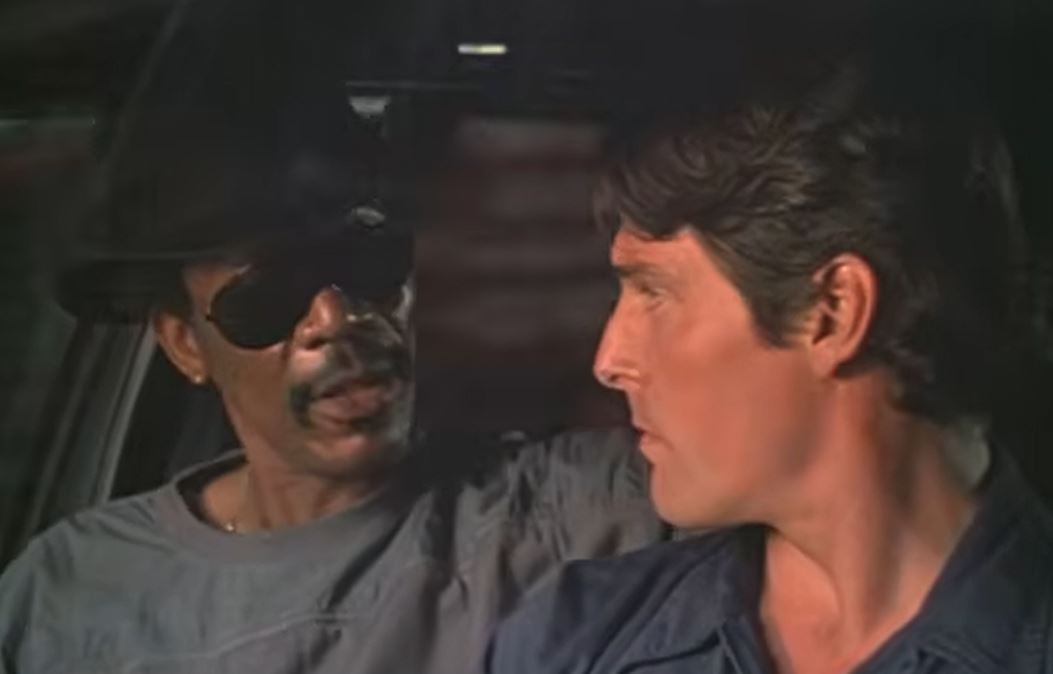
“Street Smart” is significant in that it’s the first Oscar nomination for Morgan Freeman and one of the non-Superman movies of Christopher Reeve. For the latter reason, it’s impossible not to watch it nowadays with a sense of tragedy. According to AFI Catalog, Reeve in 1985 “was looking for his next film” and found the script on his shelf, which he apparently received four years earlier and never read. (That’s how it works in Hollywood.) He wanted to do the movie, but he apparently had to agree to play Superman yet again in order to get Cannon Films to finance “Street Smart.” So we have one tired film concept milked for money to support a fresh one. You might consider that noble. Or dubious.
Clearly, “Street Smart” is a Christopher Reeve project. But it ended up someone else’s movie.
Pauline Kael begings her review of “Street Smart” asking, “Is Morgan Freeman the greatest American actor?” She says she first had that thought after seeing “Brubaker,” and eight years later, doesn’t think she is “too far off.”
Kael writes that Freeman (Morgan, not David) brings a “scary, sordid magnetism” to the film that gives it “some bite.”
But Reeve, says Kael, is “a big nothing.” In this movie, “He doesn’t seem to do anything but play what’s on paper.”
Even worse, Kael writes, is that Jonathan Fisher is not the “lug,” it’s Reeve who’s the lug.
Roger Ebert, on his TV show with Gene Siskel, does not disagree. Ebert declares “Morgan Freeman is amazing in this movie” and likens the performance to De Niro in “Mean Streets” and Pacino in “Scarface.”
Conceding that the Reeve character didn’t quite bowl him over, Ebert somehow seriously calls the movie an “ingenious plot,” though he complains the last 10 minutes are something like a “phone-in from screenwriter’s heaven.”
Neither Kael nor Ebert suggests the very strange tone that this movie — it seems more a collection than a movie — takes. Someone thought they were making a light farce, and someone else didn’t get the (fictitious) notes.
On the one hand, we’ve got the jazzy soundtrack, we’ve got “My Girl” and “A Natural Woman,” we’ve got a cackling editor, we’ve got the funny hooker encounters, and we’ve got the bemused Harvard guy lamenting woe is me before shrugging into a big hit that he has trouble celebrating. Drugs are not featured in this movie. It seems like we’ve got the kind of lightness seen in the street “violence” of “The Secret of My Success” and “Pretty Woman.” (Kael says the film was largely made in Montreal.)
On the other hand, we’ve kind of got an urban dystopia with some deservedly R-rated material that doesn’t jibe with Christopher Reeve’s low-energy Harvard clowning.
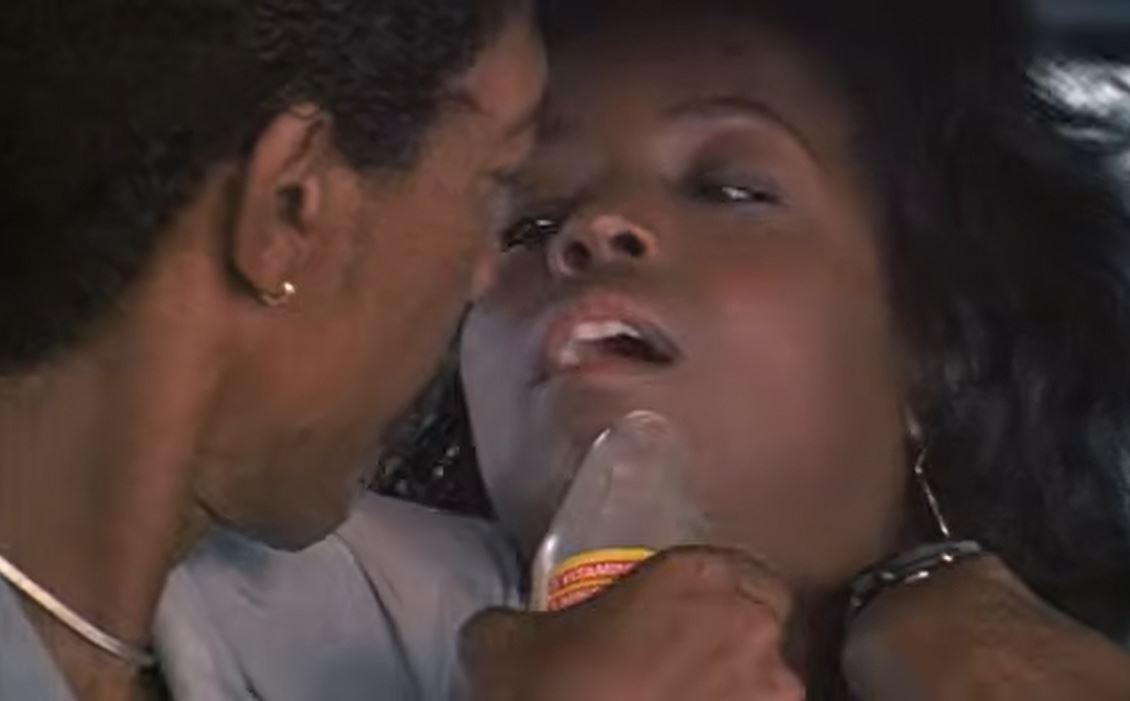
We realize in the 14th minute that “Street Smart” is not going to be the farce it suggests when a pimp named Solo manhandles Mimi Rogers’ Alison, Fisher’s girlfriend, who is unaccompanied in the bar where Fisher is sitting idly thinking about this story that he hopes will somehow find him by Monday morning.
Neither Kael nor Ebert nor Siskel in the late 1980s mentioned something about the movie that likely wouldn’t fly now — the violence against women. This is an R-rated movie, but it often feels PG, yet multiple women are choked and have sharp edges held up to the edge of their faces and are struck in the face. Women in this film exist as sex objects, income streams or leverage. “Pretty Woman” does have one rough skirmish, but ...
Revelations of fabricated articles used to gain attention in media circles. Nowadays, there are so many “articles” online, read by all levels of consumers, it seems unlikely that any busted piece of literature would gain that much attention, and one can only guess in our world of AI how many seeming legitimate articles could have elements of bogusness.
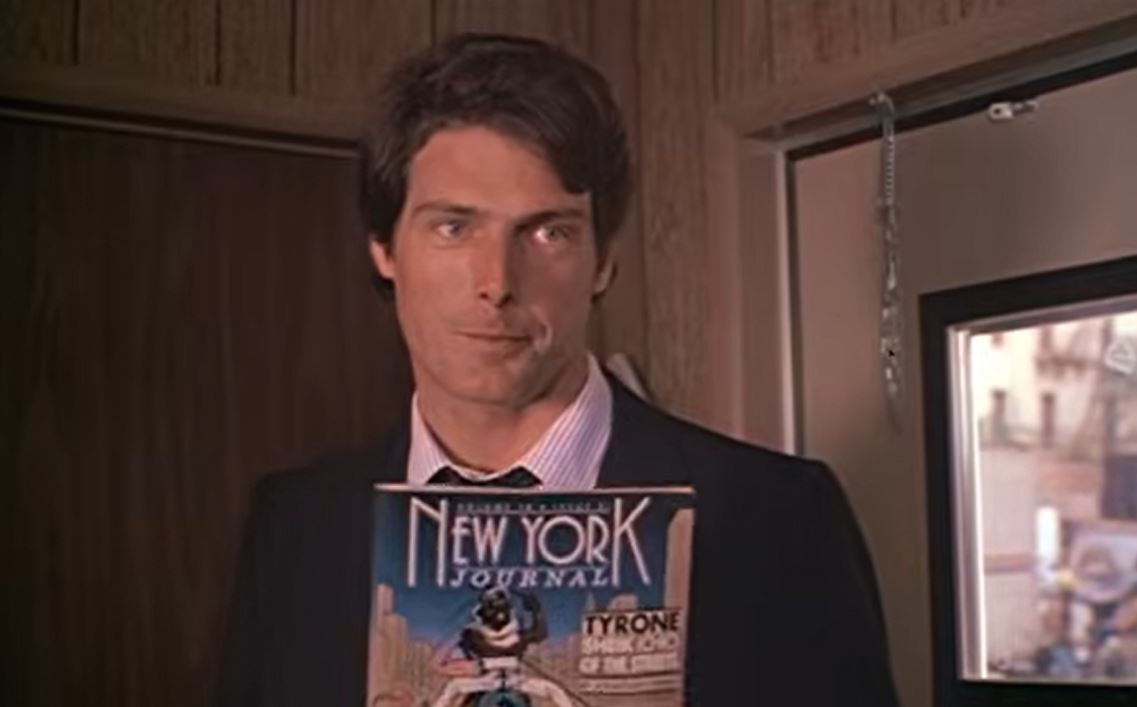
In “Street Smart,” despite hardly spending any time in this environment of which he’s writing, Jonathan’s article is evidently so airtight to convince an assistant D.A. that Jonathan is writing about a real defendant whom the D.A. knows well. Here’s one place where David Freeman’s script needs more imagination. Other than the nonexistent “Tyrone” apparently having real estate in Maui, we don’t really know what Fisher wrote. It would help if the ADA found the story “mostly b.s.” except for one accidental reference to a real element of the Fast Black case, and then the ADA can’t be convinced otherwise, kind of like the bad guys stalking Cary Grant in “North by Northwest.”
If you appreciate the tributes to journalism in films such as “All the President’s Men,” “Spotlight” and “The Social Reckoning,” you’ll be horrified when Reeve is asked by Mimi Rogers, who’s reading his fiction, where he got “all this stuff,” and he points to his head and says “Easy.” The “easy” means he can invent b.s. and write about the ghetto the way a Harvard fellow might, not “easy” in the sense that he is actually familiar with this lifestyle.
One correct determination of the movie is that it’s a lot easier for a magazine writer than a TV reporter to fake a story. However, it’s also a lot easier for a TV reporter than a magazine writer to catch someone on hidden camera. That’s why Reeve first must be a writer (for a publication called New York Journal) before accepting an upgrade to the 6/11 p.m. newscast, though he somehow spends zero time in a TV newsroom. The script could’ve skipped the mag and simply handed Reeve the William Hurt-like “Broadcast News” role of manufacturing something for the camera. But an inside look at the life of a completely fictitious but successful pimp isn't something a TV reporter could reaslistically pull off, so Reeve is a magazine scribe for a ripoff of The New Yorker.
Journalism junkies hoping for a legal question something like in “Absence of Malice” over a reporter’s “sources” will come up empty. The legal wrangling in “Street Smart” is beyond laughable as an excuse needed to twice throw Jonathan behind bars. The in-house mag lawyer notes that while the reporter has the First Amendment on his side, the defendant can point to the Sixth Amendment. There are some slim gems that could be mulled, such as whether a reporter writing about any person facing legal trouble is at risk of having to turn over notes. Questions of that nature are well beyond the scope of this film. Murder 2 seems the correct charge. A criminal was seen by at least three people entering the motel room of a man who died, and at least two people saw a beating, but apparently the case hinges on non-notes. “I’m going to jail,” Jonathan says.
André Gregory, who seriously entertained the most ridiculous musings about life in “My Dinner With Andre, is the laughing beast Ted Avery in “Street Smart,” much like James Karen in “Wall Street.” Ted regards you only of the caliber of your most recent work. He doesn’t have any ideas of his own, and it’s hard to believe a guy like Jonathan wouldn’t begin the movie in deep depression over having to beg for this person’s approval in order to put food on the table.
Reeve was born in New York and grew up in the Northeast and probably relished the opportunity to spotlight some staples of the city’s tabloid journalism. Jonathan will expose graft schemes where cabbies are instructed to hand over cash to make potential inspection problems go away. In another sting, expensive stereo equipment is looted from towed cars. There’s a dig at public policy, as Jonathan reports that the city says there are homes for the homeless, but “The ACLU continues to defend their right not to go.”
Is “Street Smart” making the point that prostitution should be legal, that vice happens, to the point police don’t even seem interested, and vulnerable women end up tethered to monsters like “Fast Black” Leo Smalls Jr. The movie is telling us that the prostitutes like the work, it pays better than other professions, and that they don’t have an issue with the business model, only temper tantrums. The movie could veer down the path of a “Traffic,” but the activity isn’t even portrayed as dubious. Kael writes that the script is “out to show that everybody is corrupt” and that “everybody uses everybody.”
Prostitution has fascinated the most elite directors. Jerry Schatzberg may not be top of mind of that category, but well before “Street Smart,” he had several impressive credits: “Honeysuckle Rose,” “The Panic in Needle Park” and “Scarecrow” atop the list. One of the typical messages, or even refrains, of a prostitution movie is that those pointing the finger at this generally illegal activity are no better themselves. (“We both screw people for a living,” is basically what Julia Roberts observes in “Pretty Woman.”)
Schatzberg does put together an impressive bedroom scene in which Punchy seduces Jonathan to the tune of “A Natural Woman” while we’re alarmed that Jonathan would betray a woman who practically gave her life (and later nearly does) for his stupid assignment. But there is a deep cliché pool of cinematic prostitution, and Schatzberg can’t resist, the hooker who is more articulate than other characters in the film opens up and “gets real” to the client who adores her. Punchy reveals she was a beautician in a small town in Pennsylvania until she found a higher-paying job. “Street Smart” won’t quite tell us whether the actions of Fast Black are traumatizing for life, or just the course of everyday business.
Even though Freeman plays a very vicious individual, his Fast is like other cinematic underworld figures who are fun to be around. He’s smart, he’s funny, he’s informed (he watched the news, he declares, because “I got to know what the f--- is going on, right”), he’s wealthy and he’s tough. Who wouldn’t want to hang out with him. It’s maybe — maybe — within artistic license that he would attend a party of magazine elites as the star guest. But farce clouds this portrayal. For such a powerful guy who deals in large amounts of cash, Fast doesn’t have much muscle around him; in fact, his enforcer looks like one of the characters of “Fame.” Fast appears to have no gang affiliation or protection. He is of slight build, and he is not young. The movie is far too frivolous to allow for the Denzel-like reveal in “Training Day.” In a lot of movies with these echoes, Fast Black would not be the worst guy. Like Hannibal Lecter, we’d see his viciousness, but his savvy and charm are needed to stop an even WORSE character. This would’ve surely been an appealing option for Freeman’s script — have Fast be wrongly accused but able to straighten out Jonathan’s story and unveil the real killer. Instead, Fast is actually not unlike Ordell Robbie (who is a lot funnier) in “Jackie Brown,” a sole-proprietor gangster who is big trouble for anyone in his orbit and makes the mistake of thinking Fast is a friend.
In contrast to Roger Ebert’s enthusiasm, Gene Siskel says “Street Smart” has a “very bad beginning” and the premise “rang totally false” and that James Woods would’ve been the “equal” of Morgan Freeman’s intensity and better sold the film, whereas Christopher Reeve is “playing this as more of a matinee idol.” Oddly, Roger describes the Jonathan Fisher character as a “white bread sorta guy without too many smarts upstairs” even though we’re repeatedly told he attended Harvard for four years, still, he’s someone who “made a dumb mistake and then made a series of other dumb mistakes,” Ebert says.
Freeman was probably not famous yet but quickly getting there. Nominated for Best Supporting Actor, he lost the Oscar to Sean Connery (“The Untouchables”). It was the lone Academy Award nomination of “Street Smart,” but being this actor’s first, it’s a biggie. Freeman would earn four more nominations (as of now) and win a Best Supporting Actor Oscar for “Million Dollar Baby.” His enormous list of credits is filled with many a genteel, wise character. Fast Black has to be his most disturbing.
Christopher Reeve, on the other hand, in this film is scrawny in his polo shirts, not nearly resembling the most prominent character he ever portrayed. Reeve was prolific on stage and somehow kept that going during the “Superman” years. But his non-Superman movie choices, typically dramas for adults, failed to resonate. He was unable or unwilling to convert his Superman success into the type of ’80s action hero perfected by Stallone and Schwarzenegger and maybe a few others. He was never nominated for an Oscar or Tony. To even get “Street Smart” made, Reeve agreed to take a deal that actors typically loathe — reprising a character they’re already tired of and/or want to break free of. While perhaps filmdom’s first really famous superhero actor, he would incredibly become even more famous as a tragic figure. Audiences rooted for Reeve as Superman, moreso as a human being.
2 stars
(June 2026)
“Street Smart” (1987)
Cast:
Christopher Reeve as
Jonathan Fisher ♦
Kathy Baker as
Punchy ♦
Mimi Rogers as
Alison Parker ♦
Jay Patterson as
Leonard Pike ♦
Andre Gregory as
Ted Avery ♦
Morgan Freeman as
Fast Black ♦
Anna Maria Horsford as
Harriet ♦
Frederick Rolf as
Joel Davis ♦
Erik King as
Reggie ♦
Michael J. Reynolds as
Art Sheffield ♦
Shari Hilton as
Darlene ♦
Donna Bailey as
Yvonne ♦
Ed Van Nuys as
Judge ♦
Daniel Nalbach as
Singer ♦
Rick Aviles as
Solo ♦
Les Carlson as
Marty ♦
Bill Torre as
Hotel clerk ♦
Richard Mullally as
Suburban john ♦
Marie Barrientos as
Hispanic prostitute ♦
Eddie Earl Hatch as
Flashy man ♦
Dorian Joe Clark as
Transvestite ♦
Grace Garland as
Black prostitute ♦
Wally Martin as
Lowlife ♦
Robert Morelli as
Undercover Cop ♦
Shawn Lawrence as
Bartender ♦
Kelly Ricard as
Woman Magistrate ♦
David Glen as
Jay ♦
Ulla Moreland as
Ted’s Wife ♦
Francisco Gonzáles as
Pablo ♦
Lynne Adams as
Reporter ♦
Claudette Roach as
Reporter ♦
Audi Adler as
Reporter ♦
Melba Archer as
Reporter ♦
Ian Braton as
Reporter ♦
Victor Bowen as
Reporter ♦
Lois Dellar as
Reporter ♦
Chiu-Liw Mark as
Reporter ♦
Manon Vallee as
Reporter ♦
Carole Zeller as
Reporter ♦
Danny Brainin as
TV Cameraman ♦
Ernest Deveaux as
Kid ♦
Walter Allen Bennet Jr. as
Ball Player ♦
Steve Michaels as
Taxi Inspector ♦
Margarita Stocker as
Intellectual Woman ♦
Eve Napier as
Trish ♦
Ruth Dahan as
Mrs. Silverbeard ♦
Vera Miller as
Party Guest ♦
Nadia Rona as
Party Guest ♦
Linda Lee Tracey as
Court Reporter ♦
Terry Haig as
Marshall ♦
Donald Lamoureux as
Prison Reporter ♦
Carol Ann Francis as
Susan ♦
Ann Pearl Gary as
Waitress ♦
Emmanuelle LaSalle as
Waitress
Directed by: Jerry Schatzberg
Written by: David Freeman
Producer: Yoram Globus
Producer: Menahem Golan
Associate producer: Evzen Kolar
Music: Robert Irving III
Cinematography: Adam Holender
Editor: Priscilla Nedd
Casting: Joy Todd
Production Design: Dan Leigh
Art direction: Serge Jacques
Set decoration: Bill Stabile
Costumes: Jo Ynocencio
Makeup and hair: Constant Natale, Gigi Williams, Joan Issacson
Production manager: Mychèle Boudrias
Unit manager: Mario Nadeau
Unit manager: Richard Schlesinger
Post-production supervisor: Michael R. Sloan
Unit production manager: Mark Slater
Executive in charge of production: Rony Yacov
