The sequel that made
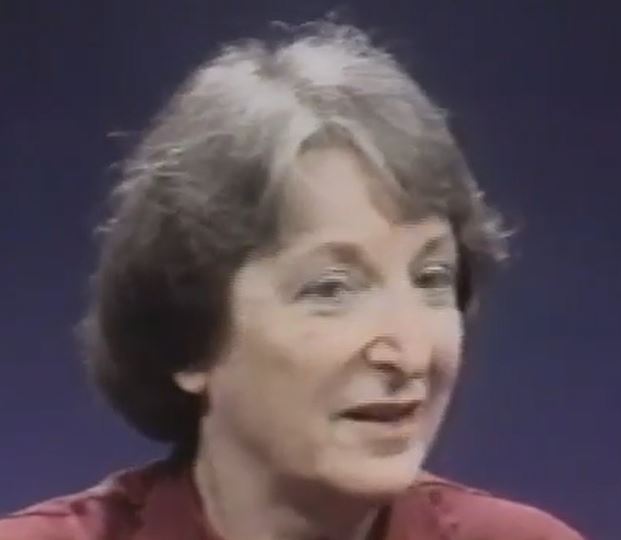
Pauline Kael fall ‘out of like’
with Barbra Streisand
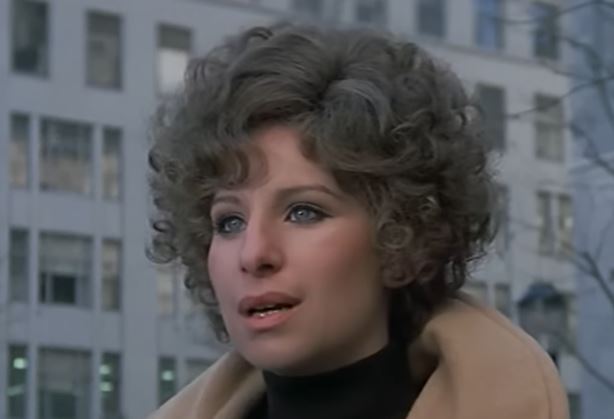
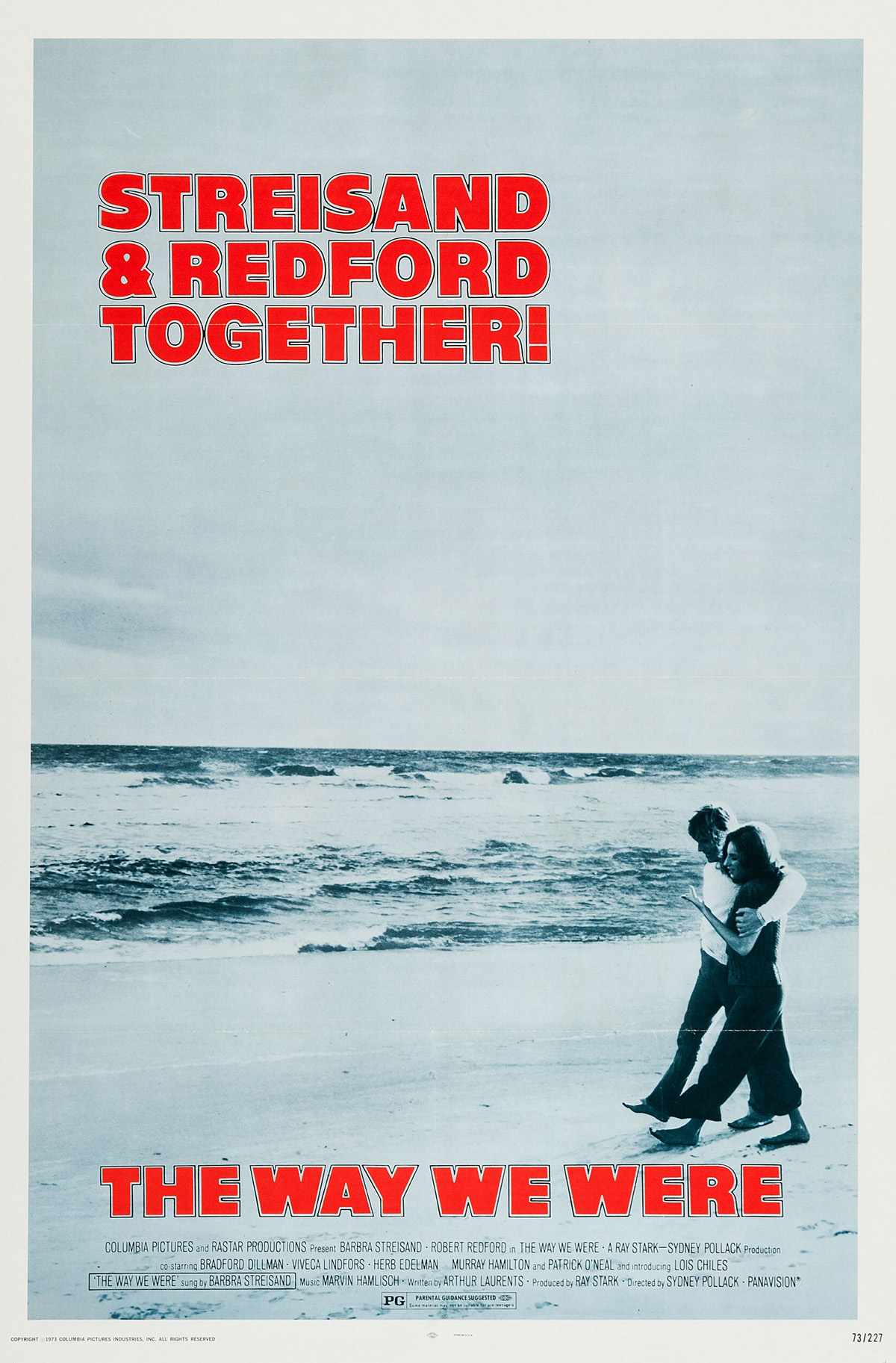
“The Way We Were” is Barbra Streisand’s finest hour.
Pauline Kael doesn’t specifically say so. But she kind of admits as much in asserting, “There is just about every reason for this film to be a disaster.”
It’s not.
Most lead film roles are earned after years of ascent. Barbra took an express trip. She may have been an aspiring actress from a young age, but singing was her meal ticket. It got her booked at Manhattan clubs, on Broadway and on TV shows before an astonishing parade of albums. Her musical notoriety precedes Beatlemania. It was years later when she first got a feature film. And she only won an Oscar.
Talk about a natural.
That seems to be what Kael thought. Kael’s heyday, late ’60s through the ’70s, coincides with Streisand’s, and history’s most vaunted film critic often found herself passing judgment on the “other” part of Streisand’s prodigious career. Earning effusive praise from Pauline Kael is a major achievement. Barbra evidently did it too easily.
For a while.
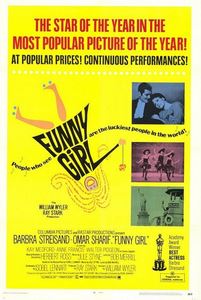
“Funny Girl,” that first Streisand film, is probably most famous today for the tie vote she received in the Oscars with Katharine Hepburn. (Both were declared winners.) (In case you think that every vote doesn’t count at the Oscars.) At the time, though, when Broadway productions were routinely a source of prominent movies, it was the top-grossing film of the year. It was also critically acclaimed, receiving eight Academy Award nominations.
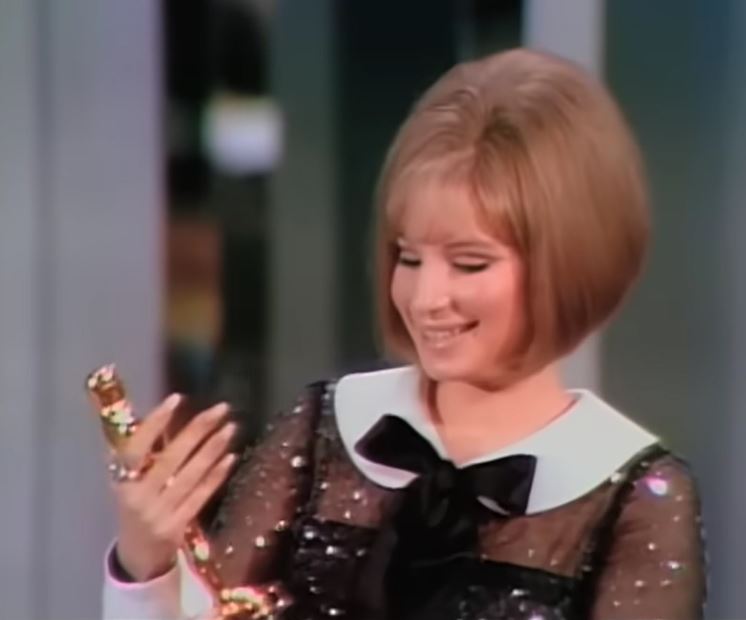
Kael was undoubtedly part of the acclaim. In her review, she bluntly writes, “Barbra Streisand arrives on the scene, in ‘Funny Girl,’ when the movies are in desperate need of her.”
Kael observes that the star resembles Monica Vitti and gushes, “Barbra Streisand is much more beautiful than pretty people ... she can probably do more for a line than any screen comedienne since Jean Arthur, in the thirties.”
Implying that Streisand is a fantastic, developing, raw screen force, Kael asserts that “she conceals nothing; she’s fiercely, almost frighteningly direct” and is the reason for the film’s success; “whenever Streisand is not on the screen, the movie is stodgy.”
Kael’s conclusion couldn’t be stronger: “The end of the movie, in a long single take, is a bravura stroke, a gorgeous piece of showing off, that makes one intensely, brilliantly aware of the star as performer and of the star’s pride in herself as performer. The pride is justified.”
Roger Ebert says much the same. “She is magnificent ... It is impossible to praise Miss Streisand too highly ... She does things with her hands and face that are simply individual; that’s the only way to describe them. They haven’t been done before. She sings, and you’re really happy you’re there.”
What to do for an encore?
That appears to be the problem.
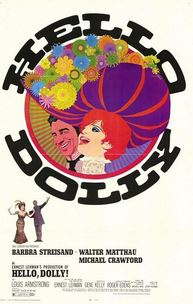
Streisand in her 1969 follow-up, “Hello, Dolly!,” again impressed Kael. The movie did not. It was the “biggest movie musical yet,” Kael explains, but “Streisand has almost nothing to work with.”
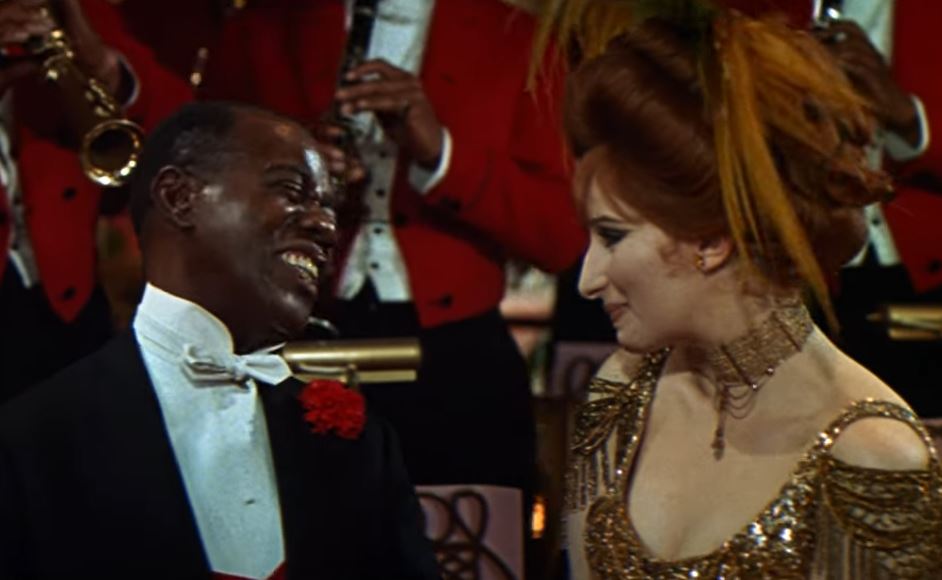
Just as the reign of the traditional Hollywood musical was abruptly ending, Kael decides it needs not retirement but a reinvention, led by the “Dolly!” star: “Barbra Streisand has a protean, volatile talent that calls for a new era in movie musicals ... She doesn’t seem to have any limitations, but this dominance could become one. It’s impossible to tell from her first two movies whether she can act with people, because that hasn’t yet been required. ... She’s a very sexy lady, which is what keeps this show from withering away on the screen.”
Kael warns what might become of Streisand’s career if the movies fail to keep up: “Streisand could inaugurate a new kind of musical, because she uses song as Astaire used dance, expressively, to complete a role and make it a myth. I can’t think of any single greater waste of screen talent than there would be if, because of the new economic calculations about musicals, this actress-singer decided to turn to straight acting roles.”
Barbra Streisand’s film career is certainly underappreciated. Most of it actually does not involve singing. She is funny. Superb timing. Adorable. Serious, too. For a decade, she averaged about a film a year, which is a great pace: steady work, not overdoing it. A lot of her credits, you won’t recognize. Put together, it’s a very impressive acting range, a connection with the camera that few have. In “Up the Sandbox,” a 1972 dramedy that was actually directed by George Lucas’ USC teacher Irvin Kershner (“The Empire Strikes Back”), Streisand conducts a fantasy conversation with a woman who, perhaps, could be having an affair with Streisand’s character’s husband; the woman’s explanationas, and Streisand’s reactions, are golden. Kael in her review finds Barbra to be no less than “the greatest camera subject on the contemporary American screen.”
Kael even decides that “she’s a complete reason for going to a movie, as Garbo was” and that Streisand “is discovering a craft of her own ... You admire her not for her acting — or singing — but for herself, which is what you feel she gives you in both.” Even years into her career, Streisand, per Kael, is “a great undeveloped actress.”
Perhaps development is what changed things.
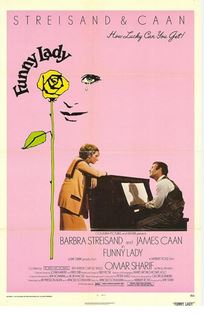
Streisand, Ray Stark and others from the “Funny Girl” team reunited for 1975’s “Funny Lady,” a probably ill-advised sequel. Suddenly, Kael is no longer impressed.
“The main problem I had with ‘Funny Lady’ is that I fell out of like with Barbra Streisand,” Kael reveals.
Kael explains that “when she’s easy in scenes ... she has that softness without looking like a gauzy ad. It’s called sensitivity. She doesn’t show any here. And her volatility is gone ... She may have gone past the time when she could play a character; maybe that’s why she turns Fanny Brice into a sacred monster. Has Streisand lost sight of the actress she could be?”
Ouch.
Big league stars sometimes strike out. All-Pro quarterbacks sometimes throw interceptions. Here we have an acclaimed actress who simply made one bad movie, and the nation’s preeminent critic suggests the actress has “lost sight” of her ability.
“Let’s Hear It For Me” was “destined to be a jukebox favorite in every gay bar in the world,” Kael writes, adding a footnote in her book collection, “*I guessed wrong. It wasn’t ‘Let’s Hear It For Me’ that became the gay-bar smash; it was ‘How Lucky Can You Get?’ ”
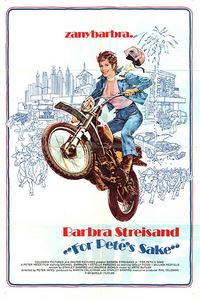
In the same review, Kael references another Streisand film that Kael did not review. “Her instinct played her false when she decided to do ‘For Pete’s Sake,” in which she earned her detractors’ criticism of “shrill,” Kael writes.
Kael, who in her “Funny Lady” review has a lot to say here about an unimpressive film, even uses said review to jab a TV show, the 1973 “Barbra Streisand ... and Other Musical Instruments,” in which “her voice was pure and she looked lovely, but the show was sterile.”
Roger Ebert had issued this bit of a warning in his “Funny Girl” review, writing, “She wants her way on the set, they say; and Miss Streisand has been heard to claim William Wyler didn’t direct her, she directed herself.”
Years later, Ebert gives “Funny Lady” only 1 star out of 4 and complains that Streisand since “Funny Girl” has “nurtured her talent all too carefully.”
Ebert notes that “Funny Girl” had the benefit of being directed by Wyler, “who was strong enough to make the movie he wanted, and one that worked.” He observes, “Since then, Streisand has frequently preferred directors who would go along with her, who’ll let her call the shots. She has a prodigious talent — that big voice and the comic timing, too — but it’s embalmed here.” Then this damning conclusion: “Performers, no matter how gifted, can’t fail on such a spectacular scale very often before they stop getting the opportunity.”
Ebert won a Pulitzer. He cranked out a necessary high volume of reviews for a daily newspaper and had lifetime job security. Kael had anything but. In the ’60s, she fought with editors at McCall’s and The New Republic before settling into a very unique, alternating six-month arrangement with The New Yorker in which critic duties were generally shared with Penelope Gilliatt. Ebert was a superior writer and TV pundit to Kael. However, his fascination with her suggests she had him beat in terms of eliteness. Extremely well-read, she wrote about movie productions with an authority, referencing the classics, and with a frequent disdain for mass market hits. In an industry full of people willing to supply a quote for a movie poster, Kael enjoyed providing the opposite. In the same way that we care more about what the cool kids think about our clothes than what other kids do, Kael was the gold standard of opinion for auteur filmmakers. It was even rumored a few years ago that Quentin Tarantino’s “final” film was going to be about Kael. (It’s not.)
Because of her schedule, Kael did not review every Streisand film. It is disappointing that in her series of lengthy essays, even in that for “Yentl,” Kael does not opine on Streisand’s ethnic appeal. That is voiced by Arthur Laurents, the creator of “The Way We Were” who calls Streisand “the first and I think only openly Jewish movie star.” That may in some ways be role-limiting, but it’s beautiful. She’s vintage Brooklyn. It’s virtually the whole plot of “The Way We Were” as well as “The Prince of Tides.”
Nor does Kael opine on Streisand’s appeal specifically to male or female audiences, or other demographics, urban/suburban, young/old. If there is no great divide, fine. But maybe there is. Musicals and romantic comedies, in general, are going to draw more female viewers. Barbra may have, in some important ways, struggled to connect with male viewers. Consider some of the biggest roles of the ’70s ... Could Streisand effectively have been Princess Leia, or Laurie in “American Graffiti” or Kay Adams in “The Godfather” or Chris MacNeil in “The Exorcist” or Mrs. Mulwray in “Chinatown”? Perhaps not. But could she have been Annie Hall, or Norma Rae, or Nurse Ratched? Don’t bet against her.
Streisand has forever gotten attention for her first name, because of how she spells it. There isn’t enough discussion of her last name. It’s grand, it has a ring to it, it conveys the highest standard among entertainers. It’s unique. Look through the list of actress greats. Hepburn (there were two), Davis, Streep, McDormand, Blanchett, Bergman, Stone. All fine names. None that resonates like “Streisand.” (Which is, actually, the subject of a humorous conversation in Paul Thomas Anderson’s “Licorice Pizza.”)
Surely, throughout Streisand’s film career, there had to be internal debate over how much to sing. To take roles without singing seems like an enormous missed opportunity. On the other hand, exclusively taking singing roles is limiting and surely cements typecasting. Maybe despite the success of “Funny Girl,” there were times Streisand preferred to just act. Sometimes there could be a compromise — she is not a singer in “What’s Up, Doc?” and “The Way We Were,” except for performing songs heard in the intro/credits, the latter title track being one of filmdom’s most unforgettable.
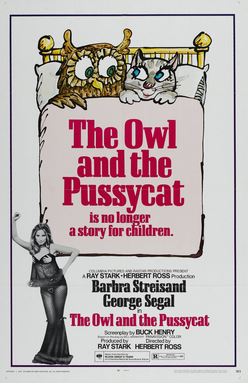
Kael seems to think Streisand and singing are inseparable. Of “The Owl and the Pussycat,” Kael opines, “Though she doesn’t sing in this picture, she’s still a singing actress; she makes her lines funny musically, and she can ring more changes on a line than anybody since W. C. Fields, who was also a master of inflection.”
Barbra is a ranking member of a Hollywood subset not often explored — famous singers who venture into movies.
It seems like an obvious crossover. A lot of kids who audition for roles or perform in talent shows can act, sing and dance. At the most elite levels, it’s awfully tough to excel at more than one. Doing both at the same time? Extremely difficult. It’s like playing both Major League Baseball and NFL football. Ask Deion Sanders. Scheduling is only part of it. It’s about priorities too.
The most successful singing movie stars have to be Sinatra and Crosby. They are 1A and 1B. Each made dozens of films, won an Oscar and received multiple nominations. The movies only enhanced their stature. Sinatra even hosted the Oscars and earned the Jean Hersholt Humanitarian Award, which is among those Academy Awards that Streisand could still receive.
Nat King Cole has an uncredited contribution to “Citizen Kane,” and he made a host of film appearances, generally as himself and often in short subjects or revues.
Sinatra and Crosby and Cole were from a much different era, starting when movies were being cranked out and performers appeared in several each year. Pre-television, pre-rock and roll, then early television and early rock and roll. Cole died in 1965 as big changes to the entertainment landscape were emerging, while Sinatra and Crosby remained legendary figures with built-in audiences for decades more.
There’s Elvis. A few of his films resonated in pop culture, but most were panned and seemed engineered for easy money; they asked very little of him besides singing a couple songs, and by the end of the ’60s, he was done with film, only in his mid-30s, having a host of issues. Frankie Avalon? He was hot for a decade and to some, he’s actually probably more well known for films than for music. Like Elvis, Avalon is of the late-old-school music and film world, before realism set in during the late 1960s.
Judy Garland ... that’s a gray area. She and her sisters were a popular song-and-dance vaudeville act. She was discovered by MGM at 13. She was highly trained, and productive, in film well before performing concerts and releasing albums. But she is most famous for song, her signature movie performance, at age 16, eclipsing any of Sinatra, Crosby or anyone else.
After New Hollywood, the crossover is much tougher.
Cher pulled it off. A widely lauded movie star, two-time Oscar nominee and robustly celebrated winner for “Moonstruck,” the only complaint about her acting is that she never did it enough. The same is probably true for Diana Ross, who scooped up an Oscar nomination — for acting — for “Lady Sings the Blues,” her first film, but only did two more.
Whitney Houston and Dolly Parton have had hit film roles. Willie Nelson, Mac Davis and Dwight Yoakam and Justin Timberlake have tried it with success. Ariana Grande is now known as a “Wicked” star.
More recently, four comparisons with Streisand’s career stand out: Madonna, Jennifer Lopez, Jennifer Hudson and Lady Gaga. Lopez of the four is probably the one most known for film though, despite dozens of acting credits, she has no Oscar nominations. Neither does Madonna, who made numerous movies in the ’80s that were mostly panned. She started turning things around on the critical front in “Dick Tracy,” “A League of Their Own” and “Evita.” Hudson came up big in her first role, winning a supporting Oscar for “Dreamgirls,” which gives her EGOT status. Gaga, who has four Oscar nominations (three for original song with a win for “A Star is Born,” one for best actress in the same film), is associated particularly with three films, “House of Gucci,” “Joker: Folie à Deux” and, a common thread here, “A Star is Born.”
Singing stars may not necessarily be the best candidates for prominent film roles. What matters to Hollywood is that they presumably bring a lot of their audience to the box office. But then there’s the question of how much they will sing, or whether they sing at all, and whether they can be more than a supporting character. Willie Nelson’s character in “The Electric Horseman” does not sing, but Willie’s songs are heard throughout.
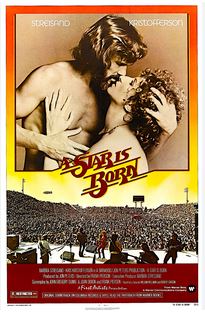
Back to Kael. After falling out of like with Streisand over “Funny Lady,” Kael got a crack at the 1976 “A Star is Born” and, noting the pre-release publicity was some of the most dubious in Hollywood history, isn’t exactly impressed: “She seems at half-mast, out of it.”
Rather than suggesting, as in earlier reviews, that the rest of the movie wasn’t up to Streisand’s performance, Kael seems to blame the results of “Star” on Barbra. “The sinking feeling one gets from the picture relates largely to her. One is never really comfortable with her, because even when she’s singing, she isn’t fully involved in the music; she’s trying to manage our responses. ... There’s contempt implicit in Streisand’s awareness of how she wants us to react to her. She wants more from us than she’s giving out ...”
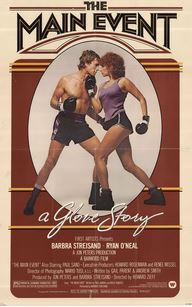
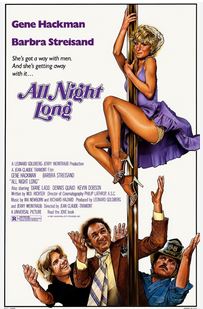
Kael did not review 1979’s “The Main Event,” but a couple years later, reviewing the quirky comedy “All Night Long,” Kael decides, “We don’t know who Streisand is ... a subdued Streisand doesn’t seem quite Streisand ... There were times when I couldn’t tell whether Streisand was uncomfortable with the confused, frightened character she was playing or trying to indicate Cheryl’s discomfort with herself. It’s a Marilyn Monroe flower-child, crazy-lady role ... The character came out of Monroe; with Streisand it isn’t clear what it comes out of.”
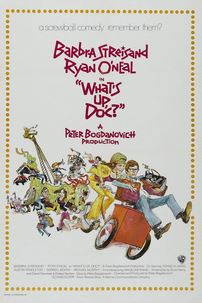
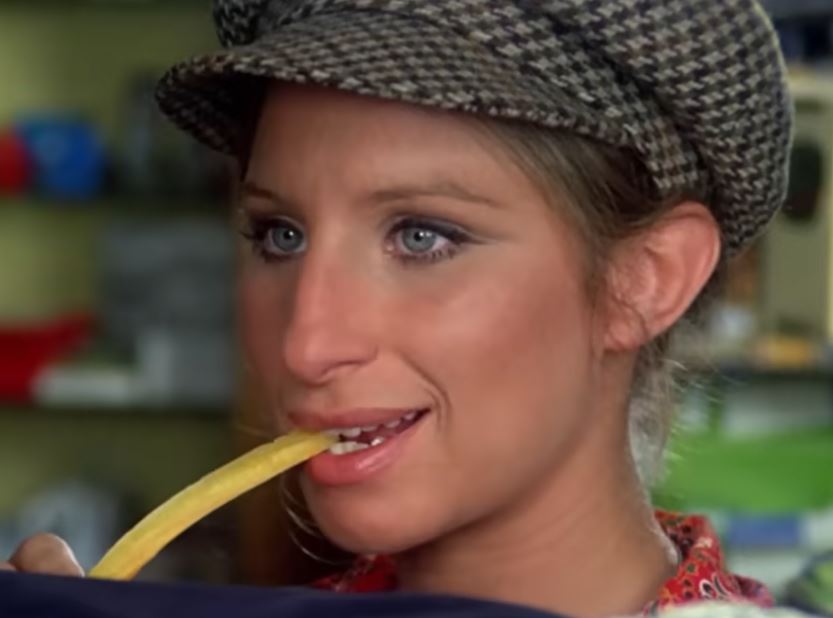
Some of Kael’s observations of Streisand are contradictory. In “Up the Sandbox,” “You admire her not for her acting — or singing — but for herself, which is what you feel she gives you in both,” Kael says, but for “What’s Up, Doc?,” “She’s playing herself — and it’s awfully soon for that.” Both movies are successful. They’re experimental. Not eveything worked. “Doc,” remarkably, is so much about how Streisand looks in a hat. These are two great film credits.
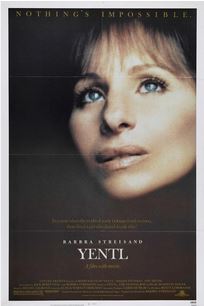
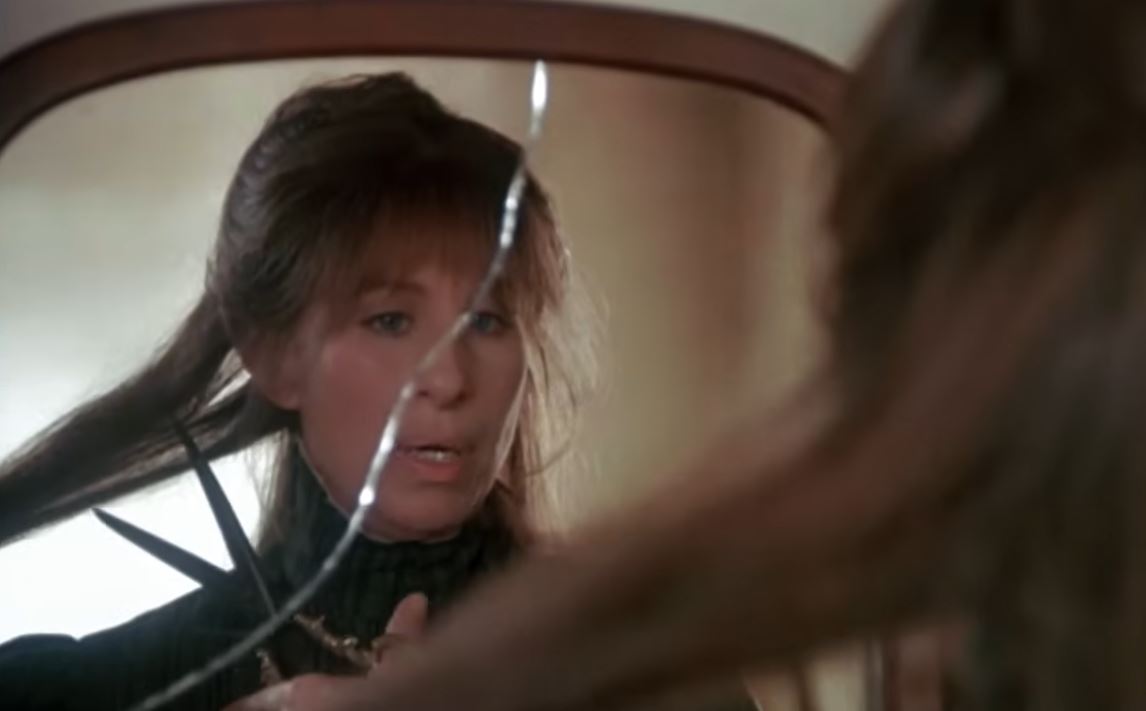
If Kael was disenchanted by Streisand’s work by the ’80s, “Yentl&rdquo provided a sort of détente. A very ambitious and ethnic and gender-bending film, the first directed by Streisand, it did have assurances of her singing but no assurance of male audiences. It takes a massive risk, as a handful of films have done, by having its star cut her beauuuuuuutiful hair during the movie. Roger Ebert writes that there was “speculation” in Hollywood about the movie being “too Jewish,” but Ebert sees “universal sorts of feelings.” (Neither Ebert nor Kael mentions a significant decision that does not affect the movie but reflects the sensitivities of those making it: When Streisand makes a big reveal by unbuttoning her clothing, the body parts in question are not shown.)
Kael finds the beginning “shaky” and the ending to be a “flat-out mistake.” But the middle is “glorious.”
On those descriptions, she would find complete agreement from Ebert, who sees “a great middle,” but a “too heavy-handed” beginning and an ending that seems “like a cheat.”
However, Kael’s review will opine more on the original Isaac Bashevis Singer story, Yentl the Yeshiva Boy, than with Streisand’s film. Nor does Kael seem to think that Streisand serving as director is any more than a one-off (it would’ve been fair to note that directing has different demands than acting and that despite her good calls on parts of this movie, Streisand probably contributes far more to a film by performing in it rather than directing it). Much of Kael’s film review is simply what happens. For a while, it seems like Kael’s reaction is only humdrum: “The movie loses its sureness of touch now and then, but it’s unassuming. It’s a homey, brightly lighted fantasy.” Then she alternates between knocking the ending that differs with Singer’s and praising the director for bold instinct. “Streisand tries to turn a story about repressed, entangled characters into a sisterhood fable about learning to be a free woman. She tries to transform a quirky folktale into a fairy tale. And it feels almost like a marketing choice,” Pauline laments, but it’s “by no means a playing it safe movie.”
“And even when the characters’ sex roles are blurred — when they’re lost in a multitude of roles — Streisand as director keeps them all clear. Her vision is sustained — until the end. The closing shipboard sequence seems a blatant lift from the ‘Don’t Rain on My Parade’ tugboat scene in ‘Funny Girl’; it feels like a production number, and it violates the whole musical scheme of the movie.” But then Kael will say that “Streisand has made a technically admirable movie, with lovely diffuse, poetic lighting and silky-smooth editing. And she brings out the other performers’ most appealing qualities.”
Where Ebert years earlier had suggested dubiously that Streisand “wants her way on the set, they say” and “has frequently preferred directors who would go along with her, who’ll let her call the shots,” Kael in her “Yentl” review deems that approach the correct one. “Whatever the box-office results, her instinct was sound. It is the right material for her. And now that she has made her formal debut as a director, her work explains why she, notoriously, asks so many questions of writers and directors and everyone else: that’s her method of learning. And it also explains why she has sometimes been unhappy with her directors: she really did know better.”
Oscar voters weren’t as impressed. “Yentl” did receive five Academy Award nominations, but none for Streisand’s directing or acting. Fans weren’t happy. In his recap of the Oscars, Gene Siskel writes that “many pickets were sighted” in protest of Streisand not receiving any nominations. The composing trio of the film was Alan and Marilyn Bergman, Streisand’s collaborators on “The Way We Were,” and Michel Legrand, who was faulted by Kael for the “sameness” of the songs. Yet they got three Oscar nominations, two for original song and one for score, which was the film’s lone win (just the title of the score category back then was filled with too many qualifiers to list here). Other nominees were the art direction/set decoration team of Roy Walker, Leslie Tomkins and Tessa Davies, and Amy Irving, for her supporting role as Hadass, who lost to Linda Hunt, who was actually playing a male character, apparently in the spirit of the year.
In the category of cross-dressing, not many films come to mind, even though by far the most famous, “Some Like It hot,” was a massive hit. Like “Yentl,” it was from an earlier era when this kind of material, for mainstream audiences, had to be played straight. There’s a risk that the character falling for the character-in-disguise is pitiable. It would be much more awkward though if Avigdor had become infatuated with a man posing as a woman rather than the other way around.
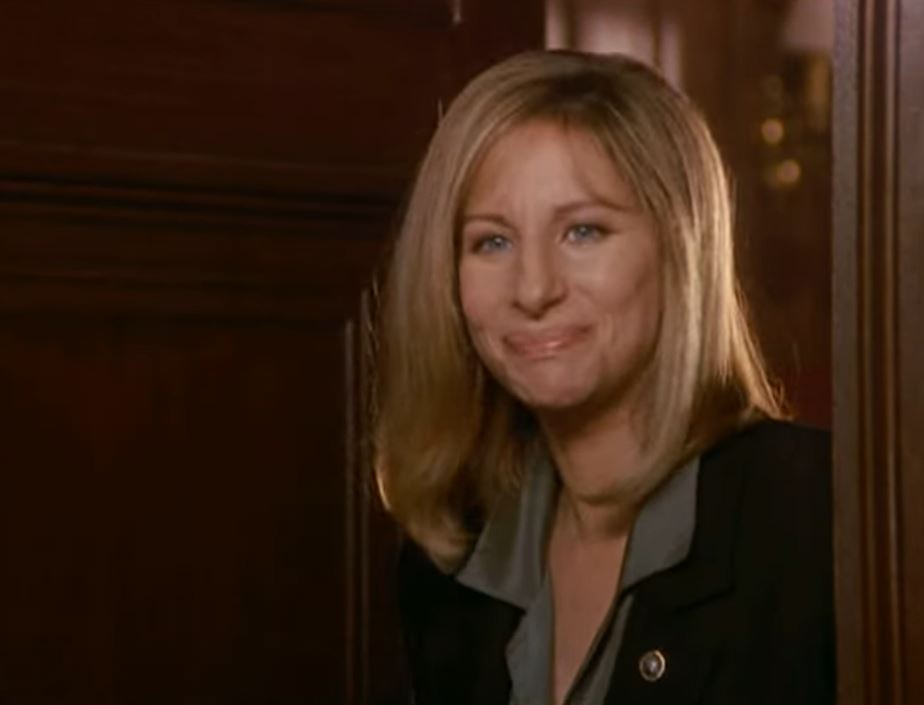
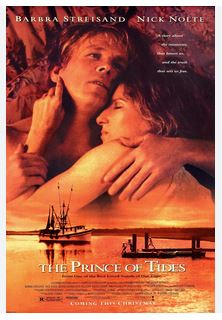
Finally, we have “The Prince of Tides,” Streisand’s 1991 film of the Pat Conroy novel that she directed and starred in. Streisand evidently was as interested in Pauline’s opinion as ever, perhaps to Barbra’s dismay, according to a Kael biographer: “I think Streisand had undying respect for her and the story that I was told, which I wasn’t able to confirm, was that she (Kael) really gave it to her over ‘Prince of Tides.’ Streisand had arranged for Pauline to see the film and Pauline really leveled with her how disappointed she was in her. And I think Streisand would take it from her; I think she really had that much regard for her.”
Kael was virtually retired by this time, and exactly what about “Tides” may have disappointed her isn’t known. Streisand had reasons to want Kael’s reaction and expect a better one: It was only Barbra’s second time as a director, and “Tides” would go on to collect seven Oscar nominations and score big at the box office. It is perhaps the most “watchable” of Streisand’s films today. It successfully differs slightly from the novel in emphasizing the relationship between Nick Nolte’s Tom Wingo and Streisand’s Dr. Susan Lowenstein. There are some clichés used, but they are used very well, specifically the therapist crossing personal boundaries and also the fish-out-of-water scenarios that the Southerner finds in New York City. The actual therapy would likely be questioned by real psychiatrists. Yet it reminds us that there are things we need to tell someone, if we could only trust them to listen. Is the movie perhaps way too rosy in thinking that merely coming clean solves our problems? Yes, but most people would say it’s a necessary step.
Meanwhile, “Tides” delivers one of the most chilling dinner-party scenes you’ll ever witness, when Tom pleasantly accepts an invite only to encounter public humiliation from Jeroen Krabbé’s Herbert Woodruff before cleverly figuring out a way to even the score. Streisand’s secret here is including the table reactions of the other dinner guests, alarmed by what Herbert is saying, and the viewer pulls for Tom even more.
Unlike most Oscar-nominated actresses, including Cher, Barbra didn’t have to be “discovered” and work her way up. Meryl Streep started with “Julia,” “The Deer Hunter,” “Manhattan,” all supporting roles, even “Kramer vs. Kramer” too (there’s some Oscar category fraud there, it prevented her from going up against “Norma Rae” at the Academy Awards, but it’s technically supporting).
Probably Streisand’s biggest shortcoming in film is that from Day 1, she always had to take the “big” role. It’s not that she should be faulted for doing so. It’s just that it’s so hard to pull off. Even once. It’s like a big-league batting average. Critics take note of expectations. Do enough films, you’re going to have some highs and lows, something Pauline didn’t hesitate to point out. The influence Kael carried in 1968 had waned by 1991. At the twilight of her career, a superstar still wanted to know, “What’d ya think?”
(June 2026)