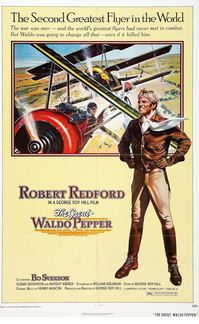

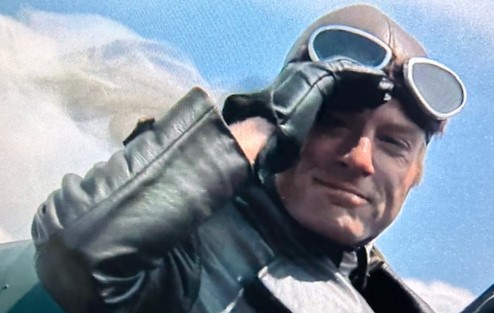
In ‘The Great Waldo Pepper,’ characters are disappointed there’s not a world war going on
The message of “The Great Waldo Pepper” is that life is cheap. That people die all the time. And even if you’re not dead, you’re probably somewhere in Nowhereville. So get your thrill while you can.
Maybe that’s not the intent of George Roy Hill, who after fashioning a couple megahits with Robert Redford and Paul Newman had the wherewithal to go back into the past one more time with ... and this is a big red flag of many filmmakers ... something that fascinated him in his youth.
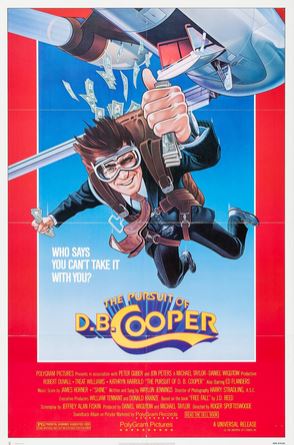
Hill correctly assumes, in the spirit of Howard Hughes, that filming biplane stunts will give him plenty of great footage. But that’s all he’s got. The correct approach is to create the drama, and fill in the blanks with the air show. Not the other way around. “Pepper” belongs in the dreaded category of Movies With No Drama That Fill The Space With Plane Stunts And Car Chases. In “Midnight Run,” it’s a small part of the movie; in “The Pursuit of D.B. Cooper,” it’s a big chunk of the movie, and in “The Great Waldo Pepper,” it’s the entire movie.
It’s “two hours of grown men playing with toys,” complains Ed Hayman of the Flint Journal in 1975. As a positive, Hayman writes that “Universal Studios promises there are no trick shots in the wing-walking, mid-air transfers, World War I dogfight, outside loop or pickup from a moving car, and that actors seen in cockpits are really in the air, not in mock-ups.”
Vernon Scott of UPI writes in 1975, “That’s really Robert Redford several thousand feet in the air wing-walking on an ancient biplane.”
So the stunts are real. But the characters aren’t. Pauline Kael, in a decent-sized review, curiously never notes that, nor does Roger Ebert nor Gene Siskel, nor do they fault the atrocious title. A handful of other well-known movies have used a fictional character’s full name in the title, ranging from “Annie Hall” to “Michael Clayton” to “Good Will Hunting” to “Emilia Pérez,” as well as some that came from novels like “Mildred Pierce,” “Barry Lyndon” and “What’s Eating Gilbert Grape?” (By the time of “Rocky Balboa,” he may as well have been real.) “Pepper,” by its title and advertising, more than any of those others sort of implies that this was an actual, overlooked person. A lot of moviegoers may have actually assumed that Waldo Pepper and Ernst Kessler were real World War I aces who ended up as Hollywood stuntmen.
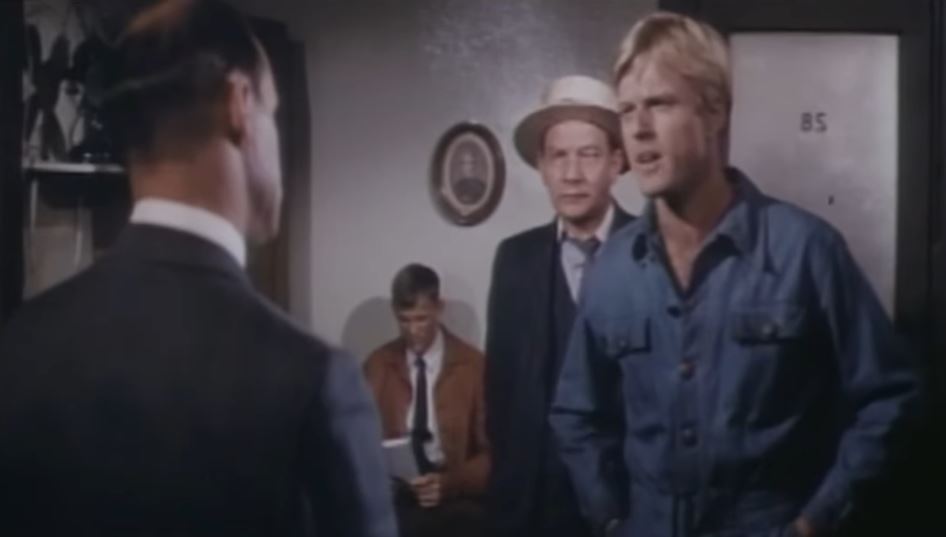
And maybe Hill likes that. Because his screenplay, written by William Goldman, desperately tries to inform us of what makes Waldo tick not by showing us something, but telling us, repeatedly, with laborious anecdotes. In his review of “My Dinner with Andre,” Siskel writes that “our minds supply the pictures” from the conversation. That doesn’t happen in “Pepper,” as the audience is forced to memorize who shot down who in which squadron and who was or wasn’t there, and which of these characters is in the lead in the race to perform the first outside loop (exactly what that entails is unclear) while at the same time gauging whether the person telling the story is full of it.
Not only that, but the characters’ interest in the future also requires speeches. Edward Herrmann plays Waldo’s childhood friend and sorta business partner Ezra Stiles who has to explain to the audience, moreso than Waldo, why his monoplane will make the biplane obsolete and the maneuver he believes it will perform as a means to that end. But just as the plane has been completed, Waldo is grounded, so Ezra, obviously a lesser pilot than Waldo, is compelled to hurry up and accomplish the outside loop immediately by taking it up at a carnival.
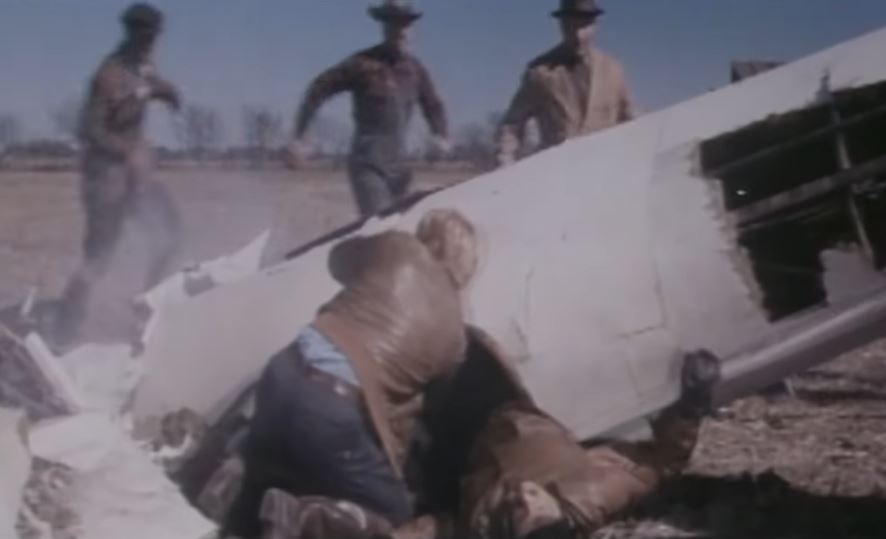
That leads to one of the strangest sequences of 1970s cinema. Ezra crashes the plane on carnival grounds. We should just see a giant explosion. Instead it’s only a small amount of smoke, and Ezra is miraculously alive and talking after an impact that would surely have pulverized him. Waldo rushes to the scene and is about to pull Ezra to safety. Ezra expresses alarm not at his injuries, but that one of the onlookers — who are not attempting to help, but merely gawking — is smoking. In the commotion that follows, a cigarette is dropped right near the plane’s fuel, and in barely one or two seconds, the plane and Ezra are engulfed in flames. Utterly no one helps Waldo pull Ezra out of the cockpit, prompting a very bizarre moment of euthanasia. It’s not the pilot’s fault — it’s the bystanders’. Then it only gets crazier. Promoter Doc Dillhoefer has ordered engines started on the other planes, presumably either to keep entertaining and distract the crowd from the accident, or to get the whole crew out of town in a hurry. An enraged Waldo throws Axel out of one of the planes, jumps in, and then repeatedly buzzes the “goddam vultures” who declined to help Ezra, only to clip half of the carnival tents and crash-land.
Imagine Tom Cruise in “Top Gun” launching missiles at San Diego after Goose’s demise. (One wonders what kind of insurance policies were needed for the “Pepper” extras in this scene and whether they had to sign a lengthy waiver.)
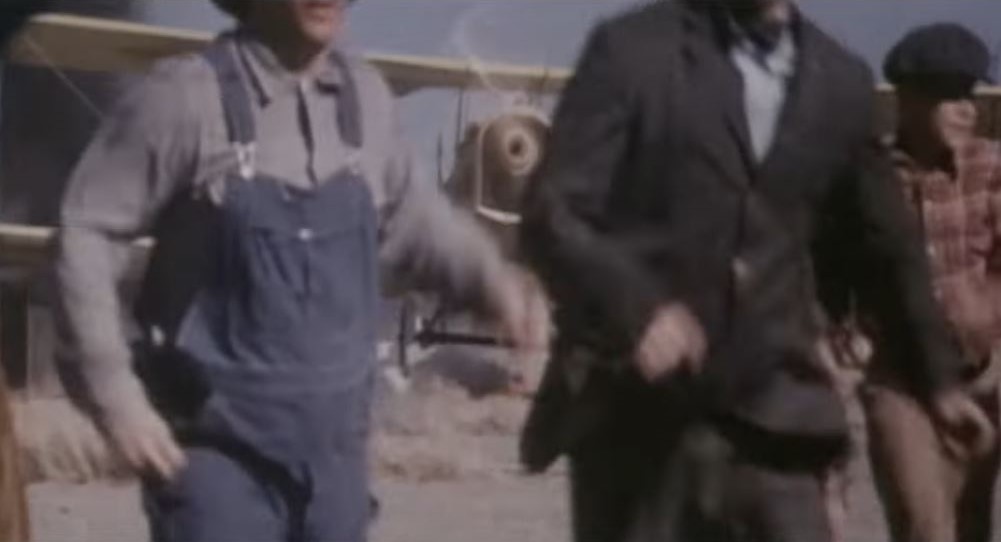
Pauline Kael writes that “Pepper” has “contempt for the common folk down below” and that “Hill and Goldman, both big-city boys, show their contempt for Midwesterners.”
Like in “The Sting,” there is a constant undercurrent in “Waldo” of people being taken advantage of; if you don’t stick it to the other guy first, he’ll stick it to you. Just in the opening scenes, an idolizing boy thinks he may have been tricked by Waldo. Kael says “we’re meant to think that the boy is Waldo as he once was,” and though the boy does very much resemble a young Redford, he almost certainly is meant to represent Hill, not Waldo.
During a consequential and alarming sequence, Dillhoefer is lamenting that audiences are growing jaded from the typical airshow carnival barkery and declares, “Sex! That’s what’s gonna pull us through.” The idea is to have Susan Sarandon’s Mary Beth, the show’s lone female, wing walk, rip off some of her clothes and scream for help while Bo Svenson’s Axel flies down Main Street of a town of probably 2,000 people (which appears to have numerous much-newer-than-1930 buildings from the aerial view). Indeed, residents stop to observe the commotion, and after the fly-through, it’s the way Axel laughs maniacally about the results: “They’re coming out!” (Svenson is oddly one of two actors prominent in this ’70s movie named “Bo,” and one of them is not Derek.)
Despite all the other conversation, characters actually do not say enough about the physics problem of Mary Beth on the wing. Waldo will blurt, “He can’t land with her out there; he’ll cartwheel,” a very helpful comment to the audience. But he doesn’t explain why the plane wouldn’t be balanced if he climbs up on the right-side wing. Nor is it clear why Waldo attempts to rescue Mary Beth while they are so high up, when if they did it much lower and/or over water, presumably anyone falling would have a chance to survive.
As Waldo climbs aboard the wing and makes his way across, Axel informs him, “I can’t keep it level with both of you out there.” Waldo says to “put it into a shallow dive.” Apparently, a pilot as seasoned as Axel does not know this. “OK,” he quickly says, and that’s that. Mary Beth suddenly takes both hands off the pole when only one is needed; obviously she is under great duress. Elevated freeze-ups certainly elevate drama, but at a sad price — the shaking characters seem a little pathetic and permanently tainted, whether it’s Cougar in “Top Gun” or the young helper in Lee Majors’ sensational “Steel.”
“The Great Waldo Pepper” is hardly lacking in talent. Check out the credits. It’s not just great actors. It’s Edith Head, Henry Mancini, Robert Surtees. An obvious question is whether the movie would’ve thrived as the previous Hill-Redford productions did with their famous co-star. “The picture might have been saved if Paul Newman had played the German,” Kael writes, but maybe Newman would’ve preferred to play Axel.
Stanley Eichelbaum writes in 1975 in the San Francisco Examiner that evidently, “Paul Newman wisely ran the other way.”
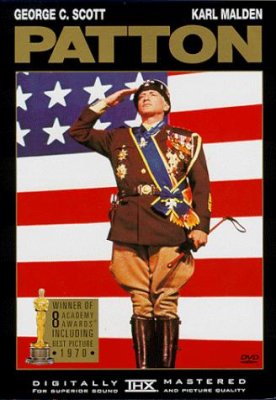
“Pepper” makes the common mistake of having characters talk about an important character well before the audience has even seen the character. Ernst Kessler, we’re told, is a global big shot, but once we meet him, he hardly looks or sounds imposing. And even he has to give a speech about his financial situation. We’re only impressed by his chivalry. Kessler surely represents Hill’s vision of the fraternity of flying aces as a subset of fighters who are more loyal to their craft than anything else. That impression is not restricted to pilots — Patton perhaps had more admiration for Rommel than for Montgomery. Ernst Kessler in “Pepper” will declare, “In the sky I found even in my enemies, courage, honor and chivalry. On the ground,” he continues, before shrugging.
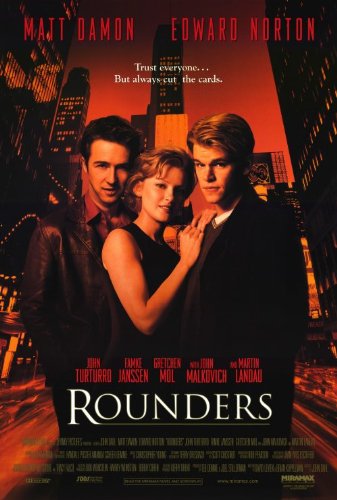
Kessler, with his accent and appearance and presumed greatness, slightly resembles a future completely unrelated movie character, John Malkovich’s “KGB” in “Rounders.” Someone from a not-always-friendly country who plays by the rules, usually wins, and respects the opponent. In a major difference, the battle alone with Kessler is the victory, unlike with KGB.
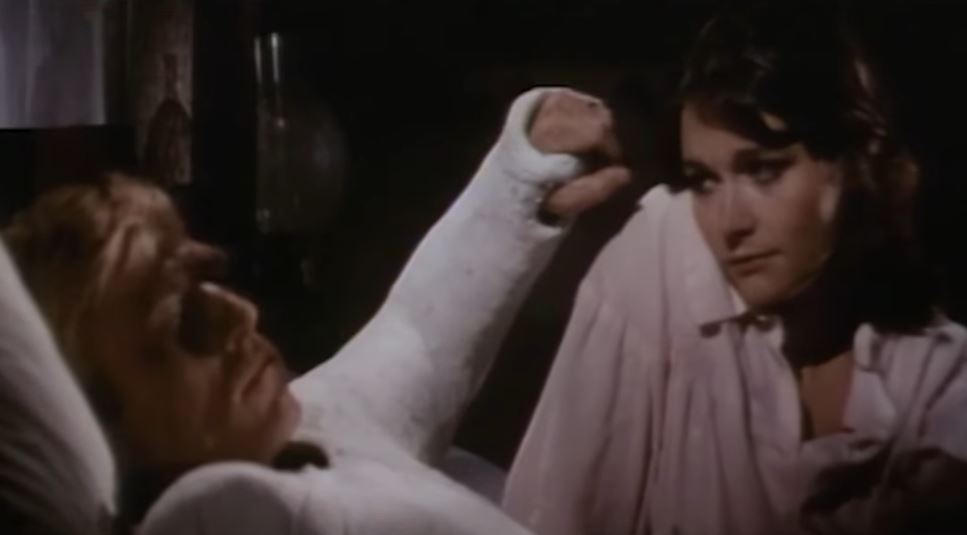
Pauline Kael regarded the mutual admiration society in “Pepper” with amusement. She writes that Waldo and Kessler “salute each other like lovers,” but because Hill’s filmmaking is so straight, “even this choice bit of homoeroticism has no kick.” Margot Kidder, as the always-available Maude whom Waldo can seek out whenever he’s injured, is wasted in a brief scene. Kael explains, “She’s there to prove that Waldo can — not that he wants to.”
The dismissing of female characters in “Pepper” is not unlike the next big movie written by William Goldman, “All the President’s Men,” which of course also starred Robert Redford. No females are in the room making Page 1 decisions, two female reporters contribute only information they acquire from dates with Nixon campaign figures, and venerable Washington Post owner Katharine Graham is only mentioned once or twice by name and never shown. (In fairness, Graham apparently waffled as to whether she wanted to be in the movie and only decided in the affirmative too late in the process.) Is that a Goldman trend? Doesn’t seem like it. The “Men” script was heavily tinkered/redone. Heavy hands were involved in both works; in fact, Goldman would have a falling out with both Hill over “Pepper” and then Redford over “Men.” Still, he received an Oscar for “Men.”
Some people could never make a bad movie. Robert Redford is on that list. He comes close though in “Pepper,” an outlier during his scorching run of the mid-’70s. In 1972 he had “The Candidate” and “Jeremiah Johnson,” then “The Sting” and “The Way We Were” in 1973, the controversial “Gatsby” in ’74; with “Pepper,” Redford curiously starred in back to back years as characters titled as “Great.” He had the sizzling “Three Days of the Condor” in ’75, then “All the President’s Men.” With that kind of production, “Pepper” is kind of an irrelevant swing and a miss, assuming nobody got hurt, and apparently nobody did.
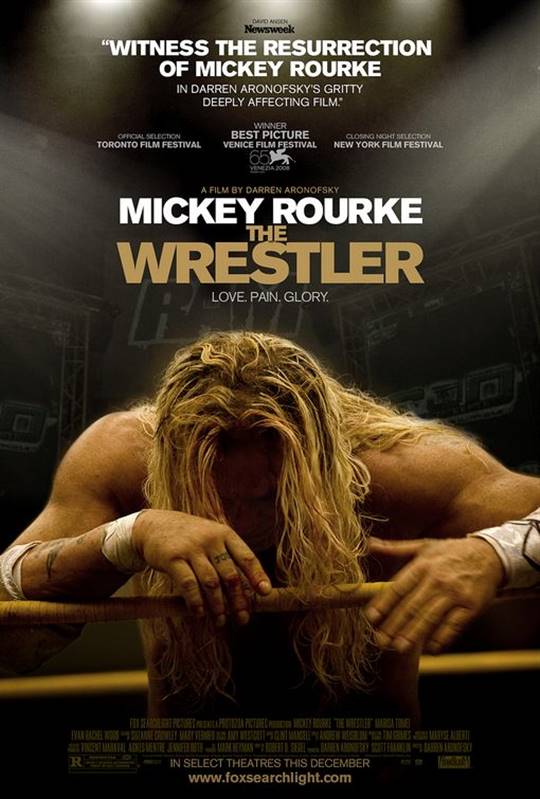
“Pepper” relies on a couple familiar themes, one of them being a veteran performer who finds his way of life is going out of style but can’t accept it. That’s not too far off from another 1975 film, Gene Hackman’s “Night Moves,” or a recent work such as Pamela Anderson’s “The Last Showgirl.” All of those films feature savvy veteran professionals who are great at work but aren’t so good with regular domestic life. “Pepper” is not interested in harping on that angle; Waldo has no children or wives to deal with, but like Mickey Rourke in “The Wrestler,” he gets an adrenaline rush from the physical pounding he takes at his job, seems to have written off being part of regular society and keeps coming back for more.
A lot of Hollywood folks are fascinated by flying. You’ve seen those movies about and by Howard Hughes and those old clips of Hell’s Angels in the air. According to his 2002 obituary in the Sunday Times, Hill earned his pilot’s license at 16, attended Yale and flew in World War II and the Korean War. Were his movie about ushering in important policy — typically a boring subject — rather than idolatry, he could’ve made a much stronger point. Aviation improves itself partly through science but also, sadly, partly through trial and error. Someone in a plane dying from an unexpected cause is one thing. Someone dying because of a really stupid, condescending barnstorming stunt is another.
Geoffrey Lewis, who plays Waldo’s old friend and comrade Newt Potts but has crossed over to The Establishment, is the character whom Roger Ebert would call the Reliable Observer. Newt has a soft spot for his old flying buddies who are still making a living the hard way. But he knows they’re idiots who are going to kill people, perhaps themselves. “Why don’t you all grow up,’ he says. Axel will take the hint. He’ll quit, telling Waldo this is “kid’s stuff.”
But “Pepper” has such a curious sentiment that you almost wonder if it even believes in regulation. There is rightful nostalgia here for a “simpler” era in which you didn’t need a license to do everything. The problem is when you get maniacs like Waldo Pepper and Axel giving people rides and buzzing crowds. But Hill seems to think the supposed bloodthirsty 1920s folk who tired of typical flying stunts are even more to blame. This is the very early days of safety, and the movie indicates several times that the way to get around being banned is to simply change your name. The baseball star Joe Jackson apparently adopted this approach. Enforcement was still a long ways away.
Authenticity was maybe Robert Redford’s favorite movie subject, and presumably, he wouldn’t have taken this role if Hill and Goldman didn’t have Waldo telling at least one tall tale. The term “flying ace” seems mostly reserved for World War I pilots, who were among the earliest to fly planes in warfare and are by far the most romanticized, going back to Snoopy in the Peanuts comic strip. World War I was an atrocity, triggered by dubious alliances and settling little except to prompt an even bigger war 20 years later. The comfortable thing about it is that there are no Nazis, so we can toast the Red Baron and others on opposite sides for their admirable skill. Nevertheless, of “The Great Waldo Pepper,” Pauline Kael concludes “Hitler would’ve drunk a toast to it.”
Retro pictures, particularly Depression-era, did great with early ’70s flourish. Not only was there “The Sting,” but “Paper Moon” and “Chinatown” and “The Last Picture Show” and Redford’s own “The Great Gatsby,” heavily criticized but a moneymaker. The “Godfather” films may fall under that category also. Still to come was “Bound for Glory.”
Pauline Kael, not a fan of George Roy Hill, deems “Pepper” to be “100% pure plastic” but shrugs that Hill’s crown jewels, “The Sting” and “Butch Cassidy and the Sundance Kid,” actually “weren’t really much better.” (Maybe not, but note whom Hill beat out for the 1973 Best Director Oscar: Lucas, Friedkin, Bertolucci, Bergman.) Ebert, in a brief and unconvincing three-star review of “Pepper,” even confuses the Geoffrey Lewis and Edward Herrmann characters. Gene Siskel has a provocative suggestion, that “Black-and-white would’ve been much more effective.” He’s wrong. People in the 1920s and 1930s led full-color lives, even if the movies chronicling them were only in black and white. In the completely predictable ending of “Pepper,” there actually may be a big revelation — that while some of these people would continue on to The Greatest Generation, there were just as many idiots then as now.
1.5 stars
(September 2025)
“The Great Waldo Pepper” (1975)
Starring
Robert Redford as
Waldo Pepper ♦
Bo Svenson as
Axel Olsson ♦
Bo Brundin as
Ernst Kessler ♦
Susan Sarandon as
Mary Beth ♦
Geoffrey Lewis as
Newt ♦
Edward Herrmann as
Ezra Stiles ♦
Philip Bruns as
Dillhoefer ♦
Roderick Cook as
Werfel ♦
Kelly Jean Peters as
Patsy ♦
Margot Kidder as
Maude ♦
Scott Newman as
Duke ♦
James S. Appleby as
Ace ♦
Patrick W. Henderson Jr. as
Scooter ♦
James Harrell as
Farmer ♦
Elma Aicklen as
Farmer’s Wife ♦
Deborah Knapp as
Farmer’s Daughter ♦
John A. Zee as
Director, Western Set ♦
John Reilly as
Western Star ♦
Jack Manning as
Director, Spanish Set ♦
Joe Billings as
Policeman ♦
Lawrence Casey as
German Star ♦
Greg Martin as
Assistant Director
Directed by: George Roy Hill
Written by: William Goldman
Written by: George Roy Hill
Producer: George Roy Hill
Associate producer: Robert L. Crawford
Music: Henry Mancini
Cinematography: Robert Surtees
Editor: William Reynolds
Production design: David Mitchell
Art direction: Henry Bumstead
Set decoration: James Payne
Costumes: Edith Head
Makeup: Gary Liddiard
Unit production manager: Lloyd Anderson