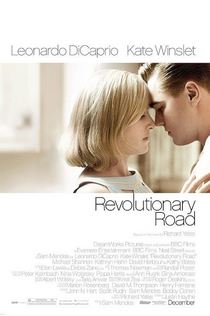
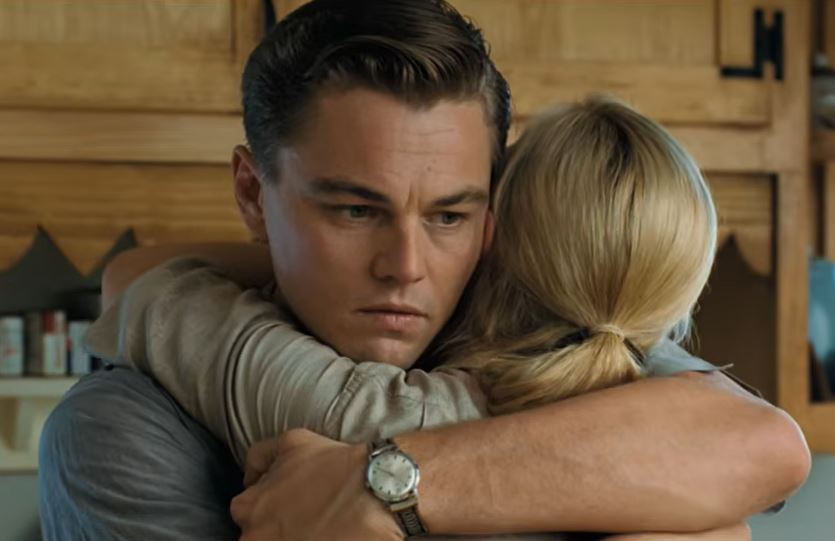
‘Revolutionary Road’ may be less about suburbia, and far more about a hit movie 11 years earlier
“Freedom’s just another word for nothin’ left to lose” — “Me and Bobby McGee”
On the night the Academy Awards would hand “Titanic” 11 Oscars, Leonardo DiCaprio was a no-show. He was not a nominee. Perhaps his absence from the ceremony was a jab at those who didn’t nominate him. Or perhaps “Titanic,” surely his most famous film, is not his favorite project.
His co-star, Kate Winslet, did receive an Oscar nomination and attended the ceremony, but did not win. Both actors were just beginning stupendous careers that would bring enormous fame, wealth and professional recognition.
Many famous movie couples are re-paired. DiCaprio and Winslet were willing. But with an important caveat.
“We fundamentally knew that if we were going to do something together again, we didn’t want to tread on any type of similar territory,” DiCaprio told reporters in 2009. “We just knew it would be a fundamental mistake to try to repeat any of those themes.”
Another way to put it: There is, incredibly, a stigma about starring in a movie as famous as “Titanic.”
Enter “Revolutionary Road,” an acclaimed 1961 book by Richard Yates that never could get made into a feature film. Until BBC Films, not a well-known Hollywood player, stepped in. The script by Justin Haythe found its way to Kate Winslet, who enlisted her then-husband, Sam Mendes, to direct. That may or may not have been a hard sell. Mendes had won an Oscar exploring suburbia in the black comedy “American Beauty.” This was a far less sexier, and far more grim, variation of the theme. Unlike DiCaprio and Winslet, Mendes evidently wasn’t fazed by the “similar territory.”
Exactly what “themes” of “Titanic” DiCaprio and Winslet needed to avoid aren’t obvious. It’s a doomed romance. It’s mass market. It’s a tear-jerker. It’s a tear-jerker but also a crowd-pleaser. It’s a disaster movie. Apparently, one or more of those factors rankles the actors for some reason.
What about this potential “fundamental mistake”? Does DiCaprio fear that if they did some other disaster romance years later, that people would think they’re no good? Or stop watching “Titanic”?
Presumably, he is referring to artistic cred. That one more mass-market production, and it’s typecasting hell; these two actors (currently with seven acting Oscar nominations apiece) could forget about calls from Scorsese, Spielberg, Jane Campion, Charlie Kaufman, Stephen Daldry, Todd Field, Quentin Tarantino and Paul Thomas Anderson. Meaning the biggest — and maybe only — market for a “Revolutionary Road” movie are two actors who want you to know they are much more than “Titanic.”
Their reticence to their own marquee appeal is evidenced by the crediting in “Revolutionary Road.” There is none in the beginning, other than the words “REVOLUTIONARY ROAD” appearing nine minutes in. The ending credits first show the name of Mendes and a host of crew before finally getting to the stars (DiCaprio comes first; he was reportedly the higher paid of the two in this film.)
It’s certainly curious that a project about American suburbia ultimately found no takers among American filmmakers and had to come from Britain. Maybe not when you consider that holding an unsatisfying job is a universal lament, and the macguffin here is moving to Paris. Mendes says in an interview that he sees it as “a movie about a marriage” and not so much about suburban themes of “American Beauty” and Winslet’s project, “Little Children.” Mendes says, “It’s trying to be a sister film to ‘Who’s Afraid of Virginia Woolf?,’ ‘Scenes from a Marriage’ and those sorts of movies.”
Mendes says “Road” was shot in Darien, Conn. “It was all on location: we wanted to get a sense of reality.” But what reality? You have to wonder if they actually asked the locals, “Was your life actually like this?”
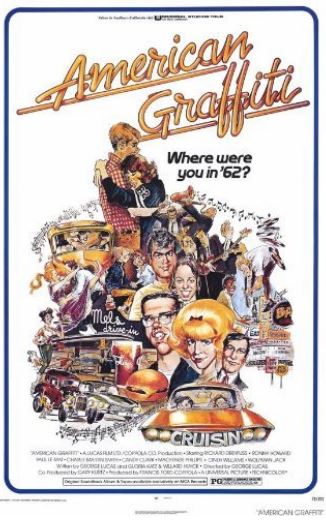
“American Beauty,” starring Kevin Spacey, who was 40 at that film’s release, is smack in a mid-life crisis. “Revolutionary Road” is pre-mid-life crisis. Its characters would be lucky to get there. Winslet was 33 at the release of “Revolutionary Road”; DiCaprio was 34. “Revolutionary Road” falls somewhere between “American Beauty” and “American Graffiti,” whose characters are just beginning to grapple with the issues of settling.
Settling. We all do it. Every day. It’s impossible not to. Not settling carries risks. Say you’ve just landed a great job. Do you try for an even better one a month later? Your car runs well. Is it worth it to trade it in for something better?
Couples are supposed to be attracted to each other, grow together, enhance each other’s life. At a minimum, people will nevertheless forever wonder what life would have been like had we chosen someone else. Some people sadly will wish it had been someone else. We do get restarts — divorce, new town, new job — but not really do-overs. Each decision puts us here and not there. And so here we are today.
An unhappy human being should be able to say “I’m not at Auschwitz” and realize some kind of boost. That whatever my problems now, other people have had far worse.
Reality doesn’t concur. Even though a homeowner in 1950s suburban America was among the best-off human beings, ever, knowledge of how nearly everyone else may have lived is of no emotional help. So what does bring happiness? Maybe a lot of factors. One seems to be some kind of incremental improvement. Nipping at those heels of improvement is the dreaded monotony. Doubling one’s salary is a big lift. But if we spend the next five years at that same new salary, the lift gives way to frustration.
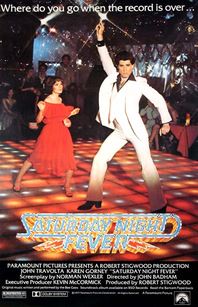
Evidenced by its title, “Revolutionary Road” is fixated on geography. There is a strong parallel to “Saturday Night Fever,” though the latter is based not in Connecticut but Brooklyn. The homes are well-kept, but the neighborhood has a sense of ugliness that hovers over those who live there. One isn’t going to be a sophisticated success in Brooklyn; he’ll have to move to Manhattan to pull that off. It’s a fair question as to how much “Revolutionary Road” is blaming environment for its characters’ dissatisfaction. Frank worked at Knox because his dad did. He’s a legacy hire. April’s one of thousands, maybe tens of thousands, in the New York area attempting a career in acting. What does their address have to do with any of that?
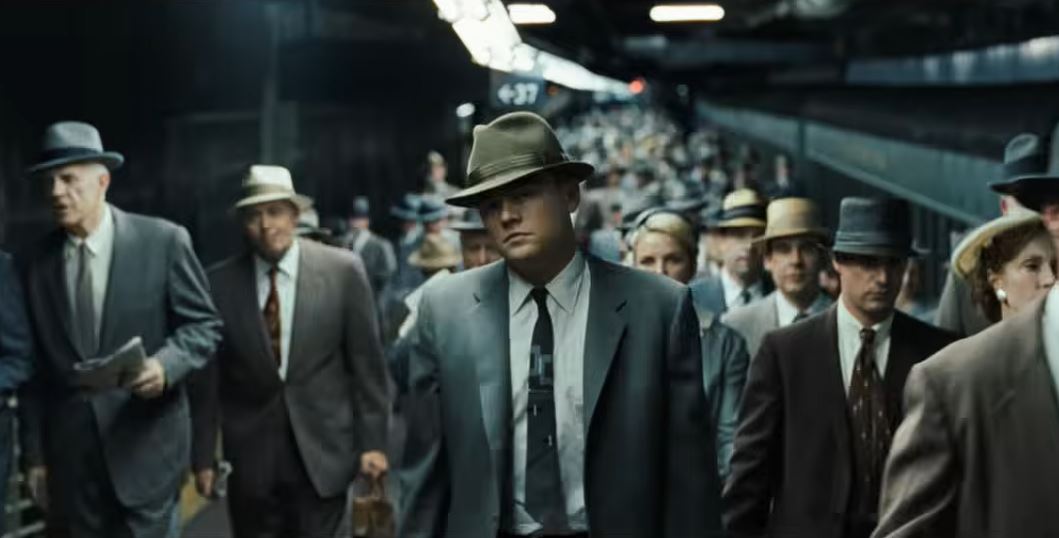
There is a sharper contrast with New York City than in “Saturday Night Fever,” where Tony mostly admires the bridges. We see in “Road” the sea of suits and hats arriving for work, and there is appeal in the styles of that era, when people had to dress up for “regular” jobs, or just to go out in public, or even just visiting friends. Nowadays, Mendes says, “in comparison, we look awful.”
There are basically no non-white characters to be seen in “Revolutionary Road,” not even in New York City. While the filmmakers would certainly argue that it’s a reflection of the characters’ world, it’s not a reflection of modern cinema/TV standards. Perhaps it is just an effect of the filmmakers’ vision. Or it may be a conscious choice to illustrate a world in a small bubble.
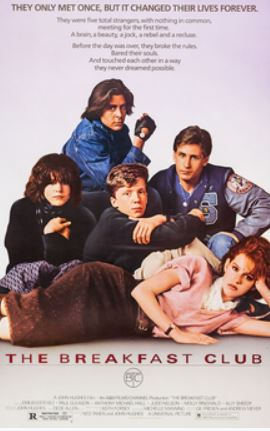
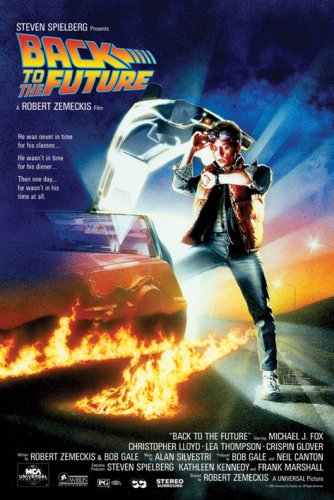
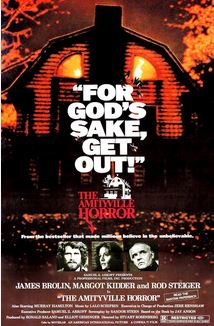
Suburbia served up a host of feel-good sitcoms through the 20th century. Cinema has been busy undoing them ever since with a curious fervor. “American Beauty” is one of the kings of this genre, but the range is vast. There are “Pleasantville,” “All That Heaven Allows,” “The Graduate,” “The Breakfast Club,” “Date Night,” “Ordinary People,” “Husbands,” “The Hangover,” “The Namesake,” and everyone’s favorite, “Back to the Future.” Don’t forget “The Amityville Horror” — even the grounds of this fine residence can be cursed.
One constant of filmdom suburbia is the income level. Most families are comfortable, have enough cars, have health coverage, shop at the mall. The community is safe. The schools are strong. Over thousands of years of human history, this is great progress.
For most of us, it should be Mission Accomplished.
For many, it’s not. It’s entrapment. It means we have arrived. Once there, it doesn’t seem so great an accomplishment. Some of us will find the journey far from over. If incremental gains are crucial to happiness, then suburbia represents a major cliff. Graduating from it, as is briefly attempted in “Revolutionary Road,” could bring fulfillment. The problem comes with the attachments. Spouses and children are supposed to bring joy, companionship, love. The tradeoff is that they turn fulfillment into a group project.
“Revolutionary Road” shows us Frank and April’s meet-cute (at a New York party where everyone is smoking, a motif throughout the film) but otherwise skips what may have been the early happy times. As “The Gypsy” by The Ink Spots plays, we immediately transition to April’s flagging career. She performs in a play that is not well-received. This is the beginning of the show-and-tell problem for “Road,” which most of the time has to resort to “tell,” including in the “Gypsy” lyrics: “’Cause I want to believe the Gypsy, That my lover is true, And will come back to me someday.”
We hear about how bad April’s play apparently was, but we don’t really see it. The film counts on the actors to convey it to us through their expressions and emotions. Elite actors theoretically should be able to portray an ineffective or bad actor. But think about that. Why would you cast Willie Mays to play a bad baseball player?
Mendes does not take the risk of showing Winslet flubbing a line, missing a cue or doing ... whatever a subpar actor may do. Probably because, she’d do it so well, we’d believe the person is really a great actor.
The play is said to be the debut of the Laurel Players. As it ends, there are frowns and grimaces everywhere. April is crying alone in the dressing room in front of a mirror that significantly shows a faded picture of the Eiffel Tower that most viewers will not notice because it is small, but it will figure prominently later in the movie, which is the reason it’s there of course; why would an actress in regional theater bother displaying her husband’s personal pictures at her presumed temporary workplace. Greeted in the dressing room by Frank, April has a look of hope, that maybe he will indicate it was better than she thought. But Frank only chuckles that it wasn’t a “triumph,” confirming her fears.
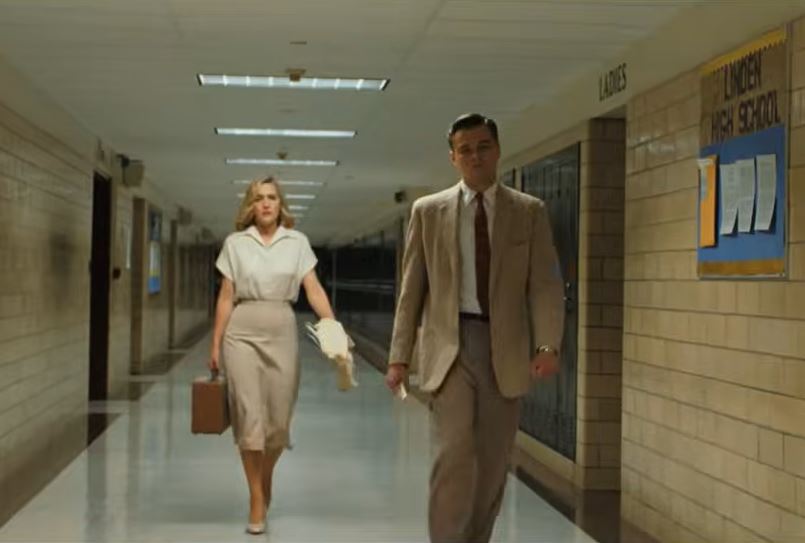
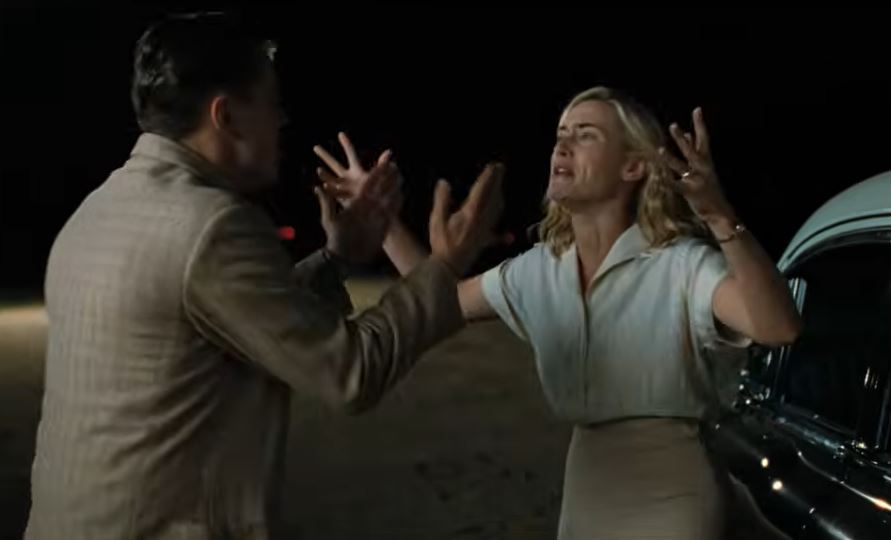
There is an instant argument over whether to go out afterwards with friends, as Frank promised, but April refuses, and as Frank and April leave the venue, slightly apart, we can see the production took place at a high school auditorium, surely light years from Broadway. Mendes will then unleash the film’s most powerful scene, the ride-home argument, even if it does imply that April unfortunately saved her Method Acting for the car.
Frank at first will try to assure April it’s the other actors’ fault, they’re a “bunch of amateurs,” while April has trained for this work. Perhaps sensing insincerity, April orders him to “stop talking about it.” That unleashes actual truth: Frank’s pent-up frustrations and then April’s, as he calls her “sick” and she calls him “disgusting” and implies he’s not much of a man, and he will raise his fist to strike her before holding back.
Then, temporarily exhausted, she suggests they calmly go home and they do, grievances and truths aired.
Despite that setback, the couple is shopping for a home together, curiously with Frank in the front seat next to the Realtor, Helen Givings (Kathy Bates, another “Titanic” veteran) and April alone in back.
Soon we will see that Frank isn’t particularly successful at work either. This is conveyed by a supervisor who admonishes Frank for what is apparently his third lapse of the month. It’s also depicted by Frank’s interest in the secretarial pool and nonchalance toward whatever his job is. Yet not too long after, we’re told out of the blue that Frank has somehow worked his way into a big promotion.
“Road” heavily leans into the young adult fantasy of traveling, seeing exciting places, and somehow figuring out where we’re supposed to be and what we’re supposed to do. Living like a teenager is forever going to be a dream of adults, recalling when we were able to make decisions on our own that, at that time, would not affect anyone else, before “responsibility” sets in. That type of thinking overlooks that it takes money to do things, and that achieving a steady income requires days, months, years, decades of showing up that will not often be sexy. In “Road,” the suggestion is Paris, an angle that is certainly abrupt, coming out of nowhere after scenes that give virtually no indication that this production is ever relocating to Europe.
Reaching a breaking point of boredom and/or frustration, April has a flashback to discovering the photo of Frank in front of the Eiffel Tower and Frank telling her that he’d love to go back, it’s the only place people are “alive.” Back in real time, he comes home from work on his birthday, after a sleazy afternoon affair, but April’s mood is upbeat. She announces her idea to him at night. And he is perplexed. She insists, “What’s stopping us?” and goes on to explain that he will not have to work, she will get a high-paying secretarial job, and they will have at least six months, probably more to “figure it out.”
She reminds him that he had been to Paris and “you always said it was the only place you’d ever been that you wanted to go back to, the only place that was worth living.”
She is handing him what appears to be an enormous gift. Her instincts are correct, change — on some level — is important to keeping us fresh. But here again, April will have to tell viewers things that are best if conveyed visually. She announces that they’ve bought in to the “ridiculous delusion” that you have to “resign from life and settle down the moment you have children.”
Frank says such a move is unrealistic. April counters that “This is what’s unrealistic,” even though their life seems completely realistic. He says maybe if he were an artist or writer, moving would make sense. She insists they don’t really know what he is; “it’s what you are” that is being “denied.”
Another curious comment from this important exchange is April stating that they want to think they are “special and superior” but are really like everyone else. Where is there any indication this couple feels superior to others because they live on Revolutionary Road?
Two characters will serve as Roger Ebert’s Reliable Observer. The most significant is Michael Shannon’s John Givings Jr., the son of their Realtor friend Helen Givings who is a brilliant math mind but undergoing intensive psychiatric treatment. You may expect his observations would be unfiltered, and they are. Why his mother thinks that meeting Frank and April would be therapeutic for John Jr. isn’t supported by the rest of the film; it would make more sense to meet by chance. It’s debatable whether Helen admitting John’s problem is a sign of progress in this neighborhood or her playing it down is a signal of how far she still has to go. The more cynical Reliable Observer is Frank’s co-worker, Jack, who is equally disdainful of the job and is not clouded by any aspirations. He correctly questions the logic of a move to France and asks Frank, if there really is a “true vocation” for you, “wouldn’t you be just as likely to discover it here as there?”
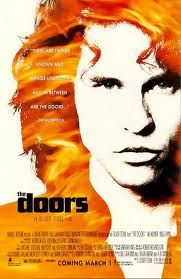
All movies isolate characters’ lives in certain ways. But in “Revolutionary Road,” where are the in-laws. Or old friends. A jump from Connecticut to Paris — with really no idea of what anyone’s going to do there (it almost sounds a bit like Jim Morrison’s final/fatal venture in “The Doors”) — is far more complicated than purchasing advance tickets. The grandparents won’t get to see the grandkids. Old friends, assuming there are any, are left behind. There seem to be no attempts to contact anyone who may have moved to Paris who could tell them what to expect. Whether either of the principal characters can even adequately speak French is unknown. (Roger Ebert writes that April will work as a “translator at the American Embassy.”) But what the heck. They’re doin’ it. Whether a big move such as this would “work,” we never know, because the plot will be upended by an unplanned pregnancy.
The “Revolutionary Road” filmmakers’ credentials are impeccable, but however well-made the movie, it’s still up to them to justify how a 1961 book about Americana is relevant in 2008. Probably the biggest societal change in that time span, very relevant to this film, is the emergence of feminism and women working outside the home and achieving greater financial independence. Mendes seems adamant about not featuring the highlights of the ’50s — the cars, the music, the emergence of television, a country blissfully finding itself not in a war. The Wheeler kids whose presence is such a source of frustration are barely seen, to prevent viewers from questioning how April and Frank would possibly want to uproot beautiful children and not be at the center of their lives.
Though “Revolutionary Road” pulled in a decent box office and received awards nominations, many of the critic reviews on Rotten Tomatoes are not kind. Mick LaSalle’s is one that is. He calls it “the best American film of 2008” and says it nails the “timeless torment of the unhappy marriage.” He calls the film a “tribute” to the housewives of the 1950s who were told by culture they should be happy in “domestic servitude” but weren’t. He says the film “should be seen more than once.”
LaSalle protests the comparisons to “Mad Men,” pointing out “Revolutionary Road” is about the 1950s while “Mad Men” is about the ’60s. But Mendes says, “I met the guy who wrote and created ‘Mad Men,’ and he told me ‘Revolutionary Road’ was the great novel of that era, and that it was an inspiration for the series.”
In his four-star review, Roger Ebert writes that the film is “so good it is devastating.” He notes, “Don’t think they smoke too much in this movie. In the 1950s everybody smoked everywhere all the time.”
Many actresses have married directors or had long-term relationships with them. Big projects together, however, are not that common. The combination seems to work — Frances McDormand won an Oscar in Joel Coen’s “Fargo,” and Susan Sarandon won an Oscar for Tim Robbins’ “Dead Man Walking.” Orson Welles made “The Lady from Shanghai” with Rita Hayworth, with whom he shared an apparently uninspiring marriage. That film is most famous for Welles' decision to bleach and cut Hayworth’s hair.
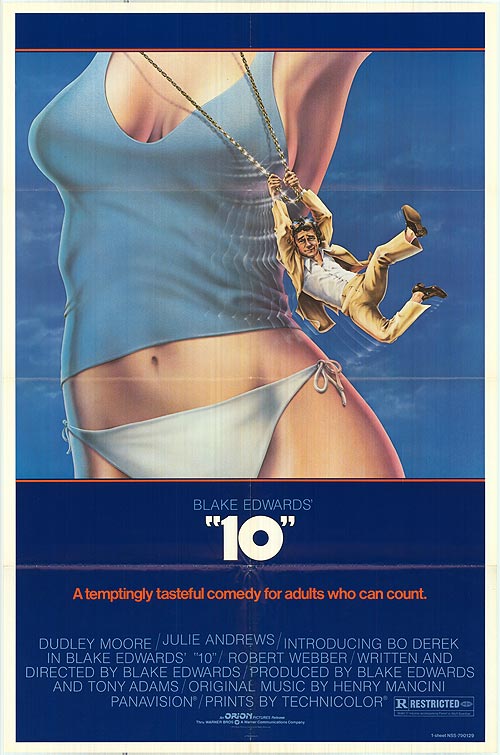
Julie Andrews did several movies with husband Blake Edwards, “10” being one of them. “10” is not about suburbia but Beverly Hills, and it is considered comedy. However, it is a story about a tired relationship. That relationship is tested, then rejuvenated, by the man’s pursuit of an impossible young woman. Too bad the boredom in “Revolutionary Road” extends to Frank Wheeler’s office indulgences.
“Road” received three Oscar nominations, one for Shannon for Best Supporting Actor (he lost to Heath Ledger, “The Dark Knight”), and for Albert Wolsky’s costumes (lost to “The Duchess,” Michael O’Connor) and the art direction/set decoration of Kristi Zea and Debra Schutt (lost to “The Curious Case of Benjamin Button,” Donald Graham Burt, Victor J. Zolfo). Winslet got the big prize that Oscar night, but it wasn’t for “Revolutionary Road” — she picked up Best Actress for “The Reader,” her lone Oscar win to this date after being the youngest to receive five nominations. (She scored a rare double at the Golden Globes, winning Best Actress (Drama) for “Revolutionary Road” and Best Supporting Actress (Drama) for “The Reader.”)
Interest in 1950s America will continue for a long time. Cinematically, it’s a tougher and tougher sell. The amount of people who even know that Revolutionary Road is a Richard Yates novel has to be fading fast. Suburbia has changed. Interest in Winslet and DiCaprio is also bound to continue for as long as they act. They may have enhanced our understanding of this familiar subject or simply doled out elite acting riffs. Their interest in this project makes sense. It’s hard to imagine too many A-listers wanting this kind of material. “Revolutionary Road,” made for an estimated $45 million, reportedly grossed $85 million, and it seems unfathomable that any production of this material that did not feature these two particular actors in their first reunion since “Titanic” would’ve reached that amount. Ebert calls it a “sad ending to the romance in ‘Titanic.’” Or their second straight film without a life raft.
3 stars
(September 2026)
“Revolutionary Road” (2008)
Cast:
Kate Winslet as
April Wheeler ♦
Leonardo DiCaprio as
Frank Wheeler ♦
Christopher Fitzgerald as
Party Guest ♦
Jonathan Roumie as
Party Guest ♦
Neal Bledsoe as
Party Guest ♦
Marin Ireland as
Party Guest ♦
Samantha Soule as
Party Guest ♦
Heidi Armbruster as
Party Guest ♦
Sam Rosen as
Party Guest ♦
Maria Rusolo as
Party Dancer ♦
Gena Oppenheim as
Party Dancer ♦
Kathryn Dunn as
Party Dancer ♦
Joe Kamara as
Party Dancer ♦
Allison Twyford as
Party Dancer ♦
David Harbour as
Shep Campbell ♦
John Ottavino as
Other Actor in the Play ♦
Adam Mucci as
Other Actor in the Play ♦
Jo Twiss as
Other Actor in the Play ♦
Frank Girardeau as
Other Actor in the Play ♦
Catherine Curtin as
Woman in Audience ♦
Kathy Bates as
Mrs. Givings ♦
Richard Easton as
Mr. Givings ♦
Kathryn Hahn as
Milly Campbell ♦
Zoe Kazan as
Maureen Grube ♦
Dan Da Silva as
Knox Elevator Operator ♦
Dylan Baker as
Jack Ordway ♦
Keith Reddin as
Ted Bandy ♦
Ryan Simpkins as
Jennifer Wheeler ♦
Ty Simpkins as
Michael Wheeler ♦
Max Casella as
Ed Small ♦
Max Baker as
Vince Lathrop ♦
Jon Sampson as
American Express Clerk ♦
Peter Barton as
Campbell Kid ♦
Kevin Barton as
Campbell Kid ♦
Evan Covey as
Campbell Kid ♦
Dylan Clark Marshall as
Campbell Kid ♦
Jay O. Sanders as
Bart Pollock ♦
Michael Shannon as
John Givings ♦
Chandler Vinton as
Knox Receptionist ♦
Bethann Schebece as
Vito’s Log Cabin Dancer ♦
Kelsey Robinson as
Vito’s Log Cabin Dancer ♦
Jason Etter as
Vito’s Log Cabin Dancer ♦
Adair Moran as
Vito’s Log Cabin Dancer ♦
Tommaso Antico as
Vito’s Log Cabin Dancer ♦
Justin Misenhelder as
Vito’s Log Cabin Dancer ♦
Will Vought as
Vito’s Log Cabin Dancer ♦
Emaline Green as
Vito’s Log Cabin Dancer ♦
Isabella Zubor as
Vito’s Log Cabin Dancer ♦
Kal Thompson as
Vito’s Log Cabin Dancer ♦
Racheline Maltese as
Vito’s Log Cabin Dancer ♦
Lauren Hubbell as
Vito’s Log Cabin Dancer ♦
Duffy Jackson as
Steve Kovac ♦
Dan Zanes as
The Steve Kovac Band ♦
Vince Giordano as
The Steve Kovac Band ♦
Jon Kelso as
The Steve Kovac Band ♦
Andrew Burton as
The Steve Kovac Band ♦
Will Anderson as
The Steve Kovac Band ♦
Alex Hoffman as
The Steve Kovac Band ♦
Kristen Connolly as
Mrs. Brace ♦
John Behlmann as
Mr. Brace
Directed by: Sam Mendes
Written by: Justin Haythe
Written by: Richard Yates
Producer: John N. Hart
Producer: Scott Rudin
Producer: Sam Mendes
Producer: Bobby Cohen
Co-producer: Gina Amoroso
Co-producer: Ann Ruark
Executive producer: Henry Fernaine
Executive producer: Marion Rosenberg
Executive producer: David M. Thompson
Co-executive producer: Pippa Harris
Co-executive producer: Peter Kalmbach
Co-executive producer: Nina Wolarsky
Music: Thomas Newman
Cinematography: Roger Deakins
Editing: Tariq Anwar
Casting: Ellen Lewis, Debra Zane
Production design: Kristi Zea
Art direction: Terri Carriker-Thayer, John Kasarda, Nicholas Lundy
Set decoration: Debra Schutt
Costumes: Albert Wolsky
Makeup and hair: Linda Melazzo, Kathryn Blondell, Karen Specht, Alan D’Angerio, Jovan Vitagliano, Sian Grigg, Michele Paris, Paula Kelly
Production supervisor: Meryl Emmerton
Unit production manager: Ann Ruark
Executive in charge of production: Ty Warren
Stunts: George Aguilar