
The strongest drama in
‘Jay Kelly’ is probably in that movie he’s running away from
George Clooney’s greatest role was on TV. It’s a shame he didn’t do it forever. He’s not disloyal. He gave “ER” 5 seasons as Dr. Doug Ross even while starring in feature films.
He was 33 when “ER” launched in 1994. Somehow, for the entire 1980s, nobody noticed him. Sometimes a part and a persona come together at the perfect time. It happened for Henry Winkler. Doug Ross was the medical equivalent of Fonzie, or Dylan of “90210,” the perfect counterparts to the captain/centrist of Richie Cunningham or Brandon Walsh.
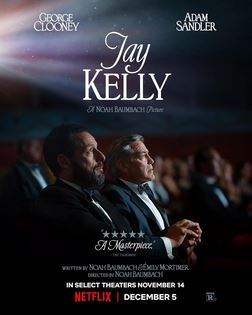
A hit TV role is a big deal. But carrying a feature film is another level of the stratosphere. Clooney is undeniably a great actor and a legit A-lister. But he is most famous not for acting, but being handsome — one of the many real-life acknowledgments of Noah Baumbach’s “Jay Kelly,” an intriguing but unsatisfying film that too often wearily goes where many others have worn down a path.
If you believe that “Jay Kelly” is depicting truth, then the most obvious truth has to be that movie stars are boring. Sofia Coppola brilliantly suggested this in “Somewhere” and also in “Lost in Translation” and “The Bling Ring.” Those around Jay may be hoping for some invigorating experiences, but the only action involves trying to connect with him while he’s hopelessly dragged in many directions.
The idea of a parent having a strained relationship with a child has been done so many times in cinema (oh, um, “Lady Bird,” “Risky Business,” “Springsteen: Deliver Me From Nowhere,” “The Iron Claw,” “Wall Street,” “On Golden Pond,” many many more), it’s actually harder to name movies featuring parent-child relationships where there is not tension. One wonders how Baumbach saw anything original here. Or why Jay Kelly has to be a movie star; he could be a musical legend, an artist, an author, Professor Kingsfield. (At least he’s not a famous writer.)
One of the frustrating things about Jay is that he doesn’t have a drinking or drug problem that someone could actually help him out with. He’s just exasperating. So why would anyone want to be around him? Well, money is a big reason. Baumbach has possibly made one of the most cynical films ever, however hard it tries not to feel like it.
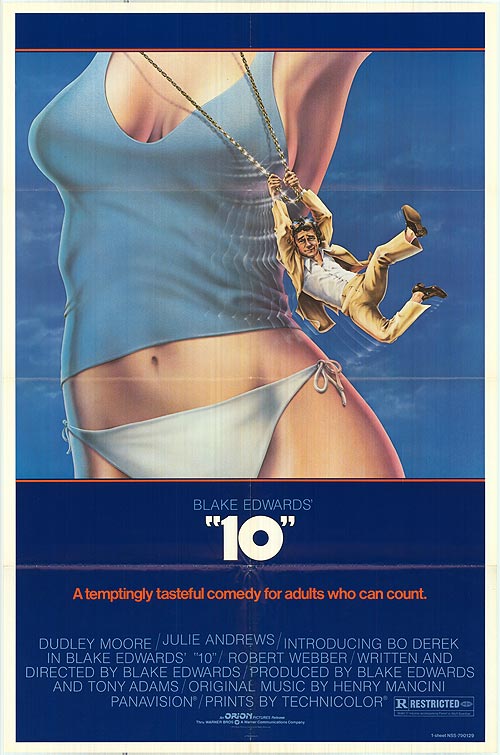
Maybe life is just a series of business arrangements. All of our relationships — parents, children, spouses, friends, siblings, co-workers, bosses, subordinates, customers, vendors — are quantifiable, compartmentalizable, and the more money/leverage we’ve got, the less attention we can pay to all of the above. That is a harsher version of one of the realities of “The Way We Were” and “10,” that entertainment elites are in another zone and that problems that cause depression for regular folks can generally be paid to go away. Baumbach isn’t comfortable with that notion, hence we have a movie about an elite who is actually troubled by the way people think of him. (And his kids seem unusually uninterested in either 1) Hollywood careers or 2) his potential financial support, or else the movie would be going in a different direction.)
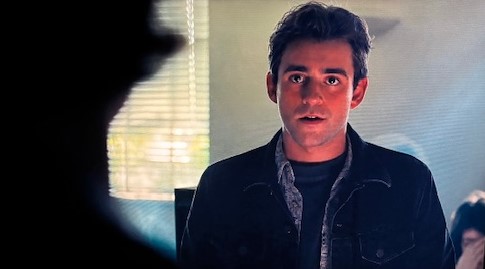
Baumbach paints his film into too many corners. The drama is generally talked about, not shown. (Even characters in one flashback are sitting around talking about events prior to the flashback.) For this reason, Baumbach should’ve considered not Clooney, but someone into Method Acting. Nearly all of the moments that characters are thinking about are offscreen. The major exception is the film’s best scene, a flashback to Jay’s breakthrough. It begins with a too-lengthy lead-up contrasting two student actors and their teacher’s reaction, but eventually it shows us several things at once: That Jay is savvy, opportunistic, supportive, talented; that Hollywood is a cutthroat rejection machine. It explains why Jay’s old friend Timothy is behaving the way he is in real time.
“I’m the king here,” the young George will say to young Timothy in their audition, words of great subtext that Timothy has never forgotten.
All good. Except that George Clooney is barely shown here, as an observer. When you have a movie and it’s all about a star and it’s his younger self/actor in the strongest scene, you have a problem.
One of the very important decisions in this sequence is making clear that Timothy was rejected, and that while Jay certainly seized the moment, he didn’t steal anyone’s part. Had he done so, our perception of him throughout the film surely would’ve been clouded.
In the intro to this sequence, Billy Crudup is fantastic as Timothy, conveying something under the surface that seems to confirm the suspicions of Jay’s manager that Jay meeting Timothy alone somewhere probably isn’t a good idea. But the flashback quickly overwhelms the current confrontation, making the bar fight ridiculous and indicating the irony that in Hollywood, the people who are the better actors aren’t the movie stars.
One of the curiosities of “Jay Kelly” is the age of the star. At 60, Jay is technically a little old to be having a mid-life crisis. One of Jay’s handlers deems it a “nervous breakdown.” Baumbach calls it an “identity crisis” in a podcast interview with Scott Feinberg. In a major contrast with Tarantino’s “Once Upon a Time...” and other Tarantino films, Jay’s career is not in crisis and he’s not fearing aging. He’s only getting better. He’s in high demand. For this movie, having George is far more important than having a more useful age. It seems 60 was decided because that’s the key number that Clooney is closest to (he was born in 1961). Realistically, all of these showdowns he is having would’ve all happened earlier in his life. But 60 does provide one advantage — Jay’s children can be adults, and a parent can still be living.
At 60, Jay draws an inferior contrast with Professor Isak Borg of Bergman’s “Wild Strawberries.” Borg is in his late 70s. Like Jay, he is receiving a career honor and taking a long ride to get there (for Borg, it’s by car). During the ride, he encounters all kinds of everyday characters, most of them young people who spur reminiscences in which the protagonist is shown at present looking in on a flashback scene from his life.
There also are obvious parallels to Assayas’ “Clouds of Sils Maria.” In that flawed but very interesting movie, the story arc is that a famous actress comes to grips with aging’s effect on her career, but the bulk of the film is the fantastic interaction between Juliette Binoche and Kristen Stewart as the star and assistant and how even though they operate great together, eventually something has to give. They too ride together on a train. Adam Sandler will reach a similar conclusion in “Jay Kelly.” Both movies excel at pitting the actors in situations in which it’s ambiguous as to which character is controlling the scene. Sandler’s Ron Sukenick has a more powerful position than Stewart’s character, and his frustration is far more evident and straightforward and delivers no surprises. The downside is that it feels like he’s been through these kinds of episodes many times before and, despite one of his decisions, will go through them again.
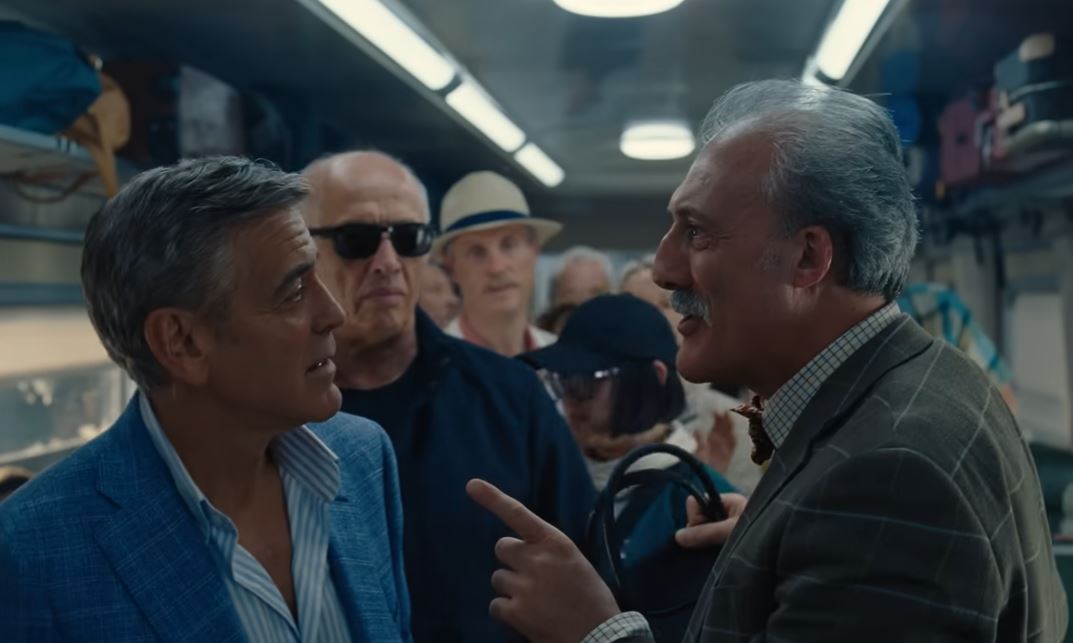
The centerpiece of “Jay Kelly” is the train trip in Europe, which clumsily involves references to both Paris and Tuscany. Regular folks politely interact with Jay, much like “Notting Hill.” Jay is only on this train because Daughter No. 2, Daisy, is on it. He will try to finally connect with her. Footage of the trip lasts for approximately 39 minutes and 10 seconds of screen time but includes flashbacks, especially Jay’s recollection of visiting Daughter No. 1, Jessica, in San Diego (she announces “San Diego” because otherwise, we wouldn’t know). It all begins to overwhelm the much-anticipated Daisy encounter. The existence of Jessica, who surprises Jay with a trip to her analyst whom Jay has never met before (and even more surprisingly, he agrees to attend), only dilutes the family dynamic.
Daisy is well on the road to a bohemian lifestyle. According to this script (somehow), Daisy’s friends don’t even know who her dad is. She doesn’t want him around. She’s not interested in his business. Hers is a lukewarm resistance. The train trip oddly includes a weird detour into empathy for the mentally ill. (After this thief runs, where exactly does he think he’s going?)
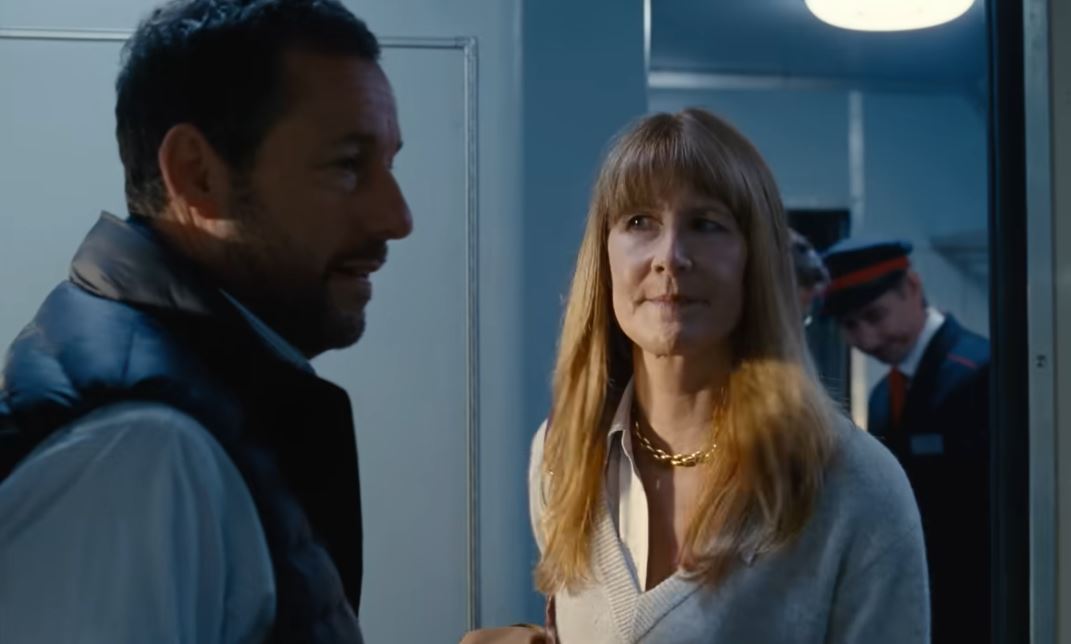
Probably the most important thing that happens on the train is that Jay’s two trusted associates, Ron Sukenick and Laura Dern’s Liz, are able to fill in viewers on what their jobs have been like. In exchanges that almost seem lifted from Seth Rogen’s “The Studio,” Ron and Liz argue whether their jobs are worth it. (Everyone else would say they are.) Liz says her work amounts to “taking care of an infant.” Ron, not convincingly, insists Jay is a “great artist.” Liz throws in the towel. Ron hasn’t. But she’s made him wonder. A little later, we’re going to get a little too much of a second movie star, Ben Alcock, who is there to reveal to Ron what Ron’s Jay obsession has cost himself.
The San Francisco Chronicle’s Mick LaSalle curiously writes that “Most movies about Hollywood are satires. ‘Jay Kelly’ benefits from not being one.” Actually, the whole concept is a satire. We have a famous and wealthy and powerful person who we see actually contributes little to society, not even superior acting. The Hollywood dig is most pronounced when Jay’s two handlers are seen and heard talking to each other on cellphones while standing feet apart. There is also pool-cleaning and angry wannabe actors toiling in non-acting professions. There are regularly people pretending to be super-admiring of Jay while we know on some level they’re not. Like so many films — not just Hollywood ones — there is cellphone satire of how much of our lives is conducted this way.
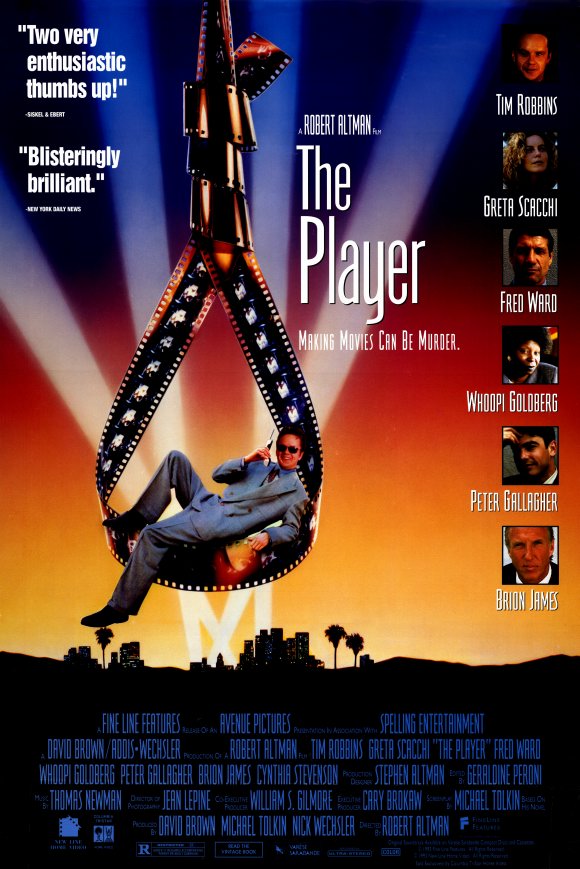
Whatever the reality, moviemaking has long been among the world’s most desirable jobs. Robert Altman’s “The Player” is likely the most famous satire. On the surface, it’s about an individual, but it’s as much about the jobs. Everyone’s is always at risk, and you stand a good chance of losing yours simply if someone else loses theirs.
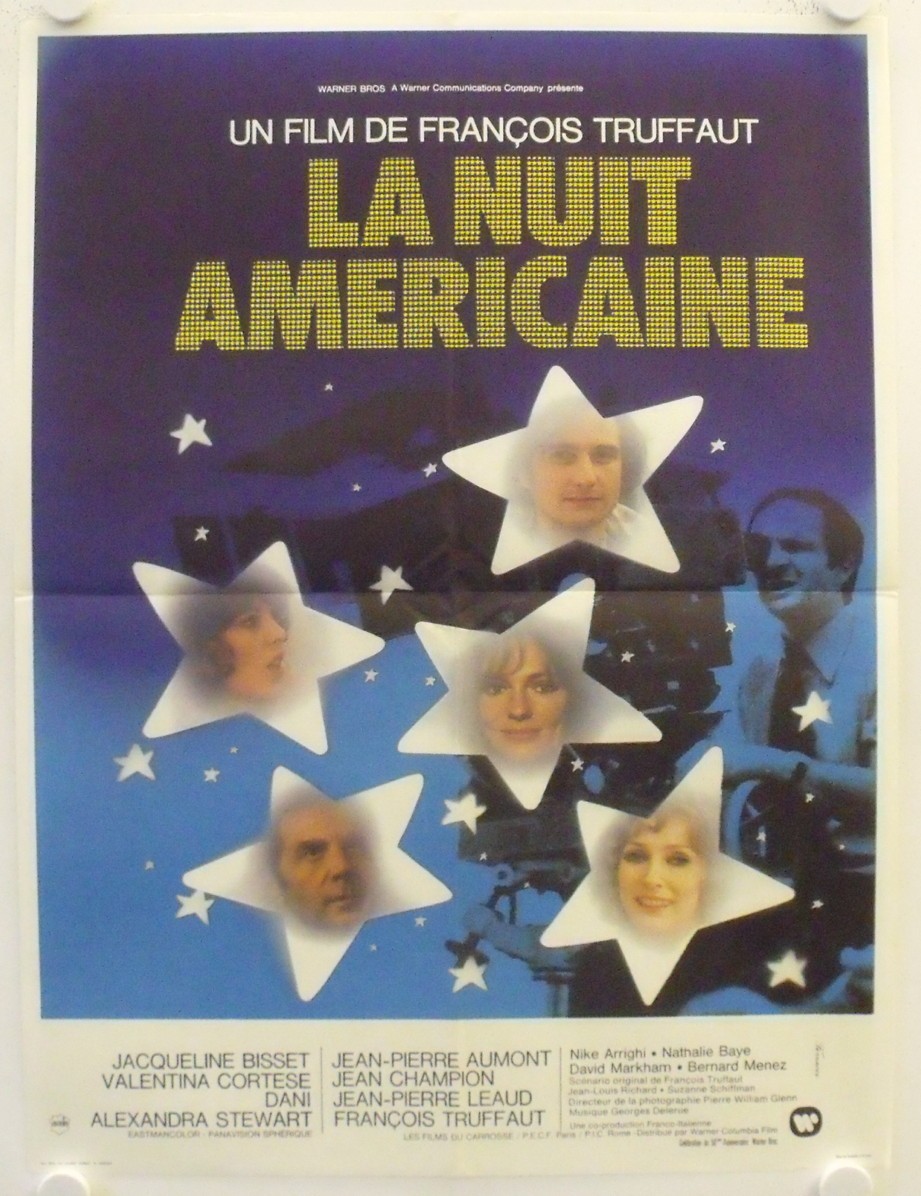
Truffaut’s “Day for Night” is about the business. There’s a lot of technical emphasis in that film, showing how they make it rain or snow or look like someone on a ladder is actually leaning out of a building. “Jay Kelly” is only interested in those curiosities in its opening scene, whre Jay is wrapping up a film (and Pepsi Cola clearly is paying for product placement). “Day for Night” is set in Europe but doesn’t avoid Hollywood jabs. All of the above-the-line talent, some from America, carries baggage. Getting the film made is a game of wack-a-mole. Ron Sukenick’s variation of leaning, prodding, cajoling and threatening happens often in “Day for Night.” Many diligent folks are heavily reliant on flawed people with everyday problems.

One older character early in “Jay Kelly” is actually honest, appearing to be a close confidant of Jay, only to admit that he needs a person of Jay’s stature attached to his project to get the green light. The flashback involving this person is recent, and the fact that their scene is a flashback is somewhat confusing. In “Springsteen: Deliver Me From Nowhere,” the flashbacks aren’t very much fun, but they are nearly all in black and white and easily discernible from the current story. Baumbach tells Feinberg that Jay’s flashbacks occur to him at times he’s “not prepared” for them. Baumbach says Linus Sandgren came up with ways to set apart the recollections. It’s not always easily discernible. “There’s a cinematic aspect to memory,” Noah says.
Probably the biggest cliché in a movie about an actor is that they’ve got a role that resembles their own life. Baumbach thankfully mostly does not go down this route — except for a few flashbacks to Jay’s early performances that Baumbach can’t resist. What Baumbach’s got instead aren’t much better. The current project that Jay is committed to but doesn’t care about that is causing Sukenick such grief, as well as this award Jay is receiving, become annoying macguffins as the audience quickly, like Jay, doesn’t care if he ever returns to the movie or accepts the honor.
Few A-listers have amassed such a large collection of films that are mediocre. Like they say, Everyone is typecast. Clooney is great; his movies, in general, are not. The best is “Gravity,” but he’s merely a supporting character. “The Perfect Storm” is his top starring vehicle. Like his TV career, he’s best in an ensemble. He has the look, and he’ll crack a joke, but there’s an austerity about him. A lot of his movies are typical action-adventure plots. Others are serious political statements about subjects that aren’t exactly visual.
It might be tempting to view “Jay Kelly” as Clooney’s version of “Unforgiven,” perceived as a response to the public reaction toward his career. In the tribute at the end, we see clips of actual Clooney movies, including “Leatherheads.” But this art isn’t imitating life. Jay Kelly is a one-note wonder. George Clooney is one of the busiest figures in Hollywood — ever. He has produced/executive produced dozens of films and TV series. He has directed at least nine films. He has received Academy Award nominations in an astounding six categories. On top of work, George Clooney is Hollywood’s most prominent political figure, spearheading the pressure on Joe Biden to step aside from the 2024 Democratic Party presidential nomination. Jay Kelly isn’t half the man of George.
3 stars
(December 2025)
“Jay Kelly” (2025)
Starring
George Clooney as
Jay Kelly ♦
Adam Sandler as
Ron Sukenick ♦
Stanley Townsend as
First Voice ♦
Emily Mortimer as
Candy ♦
Erica Sweany as
Costume Designer ♦
Kevin Shen as
2nd AD ♦
David Neumann as
Sound Recordist ♦
Leila Farzad as
1st AD ♦
Juliet Cowan as
Actress ♦
Eleanor Matsuura as
Dresser ♦
Lucas Aurelio as
Electrician ♦
Tuwaine Barrett as
Rain Rigger ♦
Martha West as
Set PA ♦
Philip Arditti as
Cinematographer ♦
Nigel Whitmey as
Stand-in ♦
Kyle Soller as
Director ♦
Parker Sawyers as
Props ♦
Giovanni Zeqireya as
Silvano ♦
Thaddea Graham as
Meg ♦
Grace Edwards as
Daisy ♦
Doug Cockle as
Nathan ♦
Greta Gerwig as
Lois Sukenick ♦
Sadie Sandler as
Vivienne Sukenick ♦
Helene Maksoud as
Mourner ♦
Dean Wareham as
Mourner ♦
Ruthie Rogers as
Mourner ♦
Josh Berger as
Mourner ♦
Penny Mortimer as
Mourner ♦
Billy Crudup as
Timothy ♦
Christine Crais as
College Kid at Bar ♦
Kwabena Peprah as
College Kid at Bar ♦
Carlos Jacott as
Gordon ♦
Eloise Jacott as
Michelle ♦
Laura Dern as
Liz ♦
John Macmillan as
Alan ♦
Andreas Muñoz as
Chef Mario ♦
Nicôle Lecky as
Krista ♦
Lars Eidinger as
German Cyclist ♦
Ferdi Stofmeel as
Dutch Cyclist ♦
Rosita Raffaelli as
Daisy Lookalike ♦
Antoinette Aaron as
French Fan ♦
Philippe Spall as
Train Conductor ♦
Nasser Memarzia as
Professor ♦
Christophe Guybet as
French Businessman ♦
Annabel Mullion as
Woman in the Window ♦
Federico Scribani as
Fireman ♦
Francesco De Vito as
Farm Equipment ♦
Sharon Rooney as
Backpacker ♦
Hannah Onslow as
Backpacker ♦
Amber Mendez Martin as
Backpacker ♦
Janine Duvitski as
Sharon ♦
Jamie Demetriou as
Clive ♦
Patsy Ferran as
Brenda ♦
Pippo Crotti as
Priest ♦
Yinka Awoni as
Priest ♦
May Nivola as
Phoebe ♦
Théo Augier Bonaventure as
Guillaume ♦
Alex Jarrett as
Rio ♦
Alaïs Lawson as
Daisy’s Friend ♦
Cassius Hackforth as
Daisy’s Friend ♦
Alba Rohrwacher as
Alba ♦
Patrick Wilson as
Ben Alcock ♦
Stacy Keach as
Jay’s Dad ♦
Emily Piggford as
Captain Jenny ♦
Danielle Lewis as
Co-Pilot Lourdes ♦
Giovanni Esposito as
Antonio ♦
Monica Nappo as
Catherina ♦
Galatea Ranzi as
Camilla ♦
Fabio Vannozzi as
Giovanni ♦
Lucian St Aubyn as
Zeke ♦
Arianna Becheroni as
Isabella ♦
Marco Conte as
Doctor ♦
Isla Fisher as
Melanie Alcock ♦
Donald Sabourin as
Brother-in-law Spike ♦
Jim Broadbent as
Peter Schneider ♦
Matilda Thorpe as
Barbara ♦
Charlie Rowe as
Young Jay ♦
Lenny Henry as
Larry ♦
Louis Partridge as
Young Timothy ♦
Morgan Beale as
Acting Class Student ♦
Ruby Stokes as
Sara ♦
Alastair Coughlan as
Actor at Audition ♦
Andrew Malik as
Actor at Audition ♦
Joe Hewetson as
Actor at Audition ♦
Max Beken as
Actor at Audition ♦
Tom Francis as
Actor at Audition ♦
Carly-Sophia Davies as
Casting Assistant ♦
Debora Weston as
Casting Director ♦
Riley Keough as
Jessica Kelly ♦
Josh Hamilton as
Carter ♦
Eve Hewson as
Daphne ♦
Martin McDougall as
1st AD ♦
Kit Rakusen as
Eli ♦
Sadie Stallcup as
Young Daisy
Directed by: Noah Baumbach
Written by: Noah Baumbach
Written by: Emily Mortimer
Producer: Noah Baumbach
Producer: David Heyman
Producer: Amy Pascal
Co-producer: Christine Crais
Associate producer: Madeline Donahue
Line producer: Italy: Vito Colazzo
Consulting producer: Italy: Enzo Sisti
Executive producer: Emily Mortimer
Executive producer: Donald Sabourin
Music: Nicholas Britell
Cinematographer: Linus Sandgren
Editors: Valerio Bonelli, Rachel Durance
Casting: Douglas Aibel, Nina Gold
Production design: Mark Tildesley
Art direction: Ben Collins, Briseide Siciliano, Timothy Moen, Chris Peters, Camille M. Verhaeghe
Set decoration: Véronique Melery, Beatrice Della Porta, Meg Everist
Costumes: Jacqueline Durran
Makeup and hair: Domingo Santoro, Raffaella Iorio, Melissa Malkasian, Francesca Iamundo, Ricci-Lee Berry, Cheryl Garvey, Joseph Koniak, Annabelle McMahon, Niall Monteith-Mann, Clarissa Antinori, Carmel Jackson, Ann Pala, Chris Lyons, Marika Marino, Cydney Jade Burnett, Danielle Helm
Executive in charge of production: Basil Grillo
Unit manager: Raffaello Liguori
Unit production manager: Donald Sabourin
Unit production manager: Michelle Mullen
Post-production supervisor: Emma Zee
Stunts: Franco Maria Salamon, Gabriele Ragusa, Marlow Warrington-Mattei, Ben Wright, Paul Eliopoulos, Emanuele Ercolani, Riccardo Geremia, Emanuele Freddo, Marco Lascari, Daniele Balconi
Thank you: Peter Lambert