
Gus Van Sant’s ‘Psycho’ remake isn’t spread thin enough
Orson Welles famously dreaded the thought of anyone colorizing “Citizen Kane.” He’s really not the one who thwarted it — that credit goes to the outrage of the film community at large. Those who think Welles and his backers may have been wrong should probably get a load of Gus Van Sant’s 1998 “Psycho.”
There can be reasonable scientific arguments that some black-and-white films might actually look better in color. “Psycho” is not one of them. Rather than taking this film to a higher level, Van Sant’s color footage reduces this classic to looking like any other movie. That is the greatest achievement of Van Sant’s film, a spectacular fail that makes the case for b/w far stronger than Welles’ will.
OK, it’s not just the color. Given all the various options for doing a “Psycho” film, Van Sant somehow picks what might be the sleepiest — same scenes, same script, same dialogue, though different, albeit otherwise great, actors who seem out of sync with the original. He does add some scenes to indicate the nightmarish machinations of Norman Bates’ mind. Those are small touches.
Some movies are hated just by mention of the concept. That is probably the case with 1998’s “Psycho,” and perhaps with the 1976 “King Kong.” Both are among the most controversial films ever made. Could any critic in 1998 not have prejudged this film before seeing it? “Useless” and “needless” are terms seen in the Rotten Tomatoes summaries. They are mostly correct, even if those views may represent a kind of self-fulfilling prophecy.
Superelite works are generally exempt from a remaking, whether by legal reasons or professional courtesy. Probably no one’s going to attempt another “Citizen Kane” or “Casablanca” or “Star Wars” or “The Wizard of Oz.” “The Godfather” and “Vertigo” would seem exempt. Howls would greet any updates.
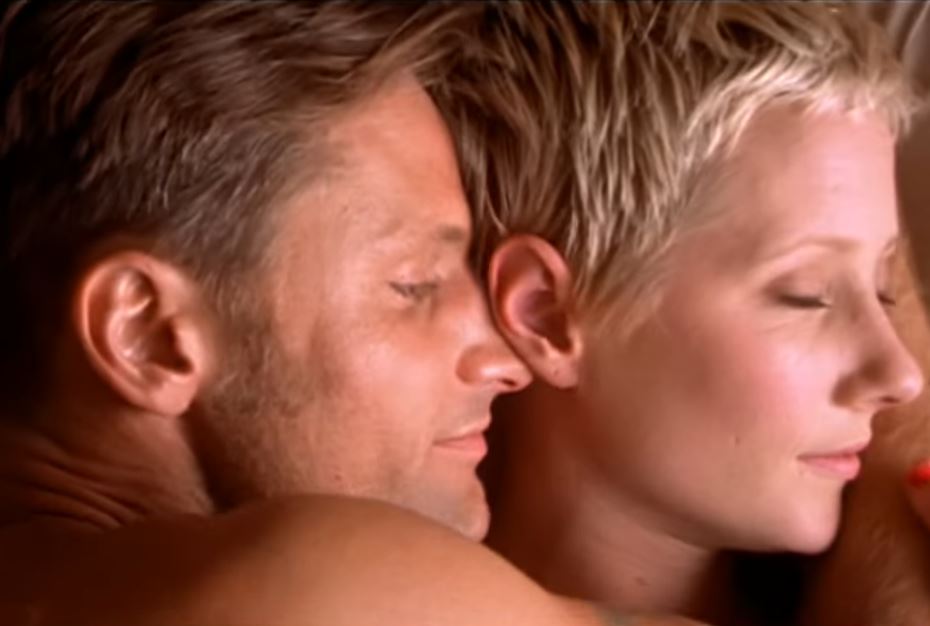
Yet, no one howls if there’s another version of “Romeo & Juliet,” or “Frankenstein,” or “Little Women,” or “Dracula” or “All Quiet on the Western Front.” That “Psycho” is regarded by so many as an unimprovable, singular film sensation is a testament to the original film’s astounding imprint on pop culture.
“Psycho,” perhaps, is the most acclaimed film ever to be “remade” — that is, same title, same characters, same story. Van Sant’s re-creation of a previous film has possibly never been done before or since. However, boundaries become squishy. Consider the ways successful films are, for lack of a better term, “recycled” ...
Re-releases. Bring the popular movie back to theaters years later. Disney did it all the time. Not as common in today’s cinematic world, but sometimes it makes perfect sense, such as re-offering the first “Wicked” film before the sequel opens. A few superelite films (“Star Wars,” “Apocalypse Now” and “The Exorcist”) have been re-released to great fanfare with some deleted scenes restored.
Sequels. The most common approach. Look at the ’70s alone. “Star Wars,” “Jaws,” “The Godfather,” “The Exorcist,” “The Sting,” “Billy Jack,” “Saturday Night Fever,” “Escape to Witch Mountain,” “Love Story,” “The French Connection,” “Grease,” “Dirty Harry,” “Rocky” all got a sequel at some point. (Some didn’t: “Network,” “Annie Hall,” “The Way We Were,” “The Deer Hunter,” “Apocalypse Now,” “One Flew Over the Cuckoo’s Nest,” “The Towering Inferno.”)
Remakes. A faithful retelling of the original hit film, with modern equipment and sensitivities. The list includes “King Kong” (both 1976 and 2005), “Cape Fear,” “Ocean’s 11,” “The Parent Trap,” “The Nutty Professor,” “War of the Worlds,” “The Fly,” “Invasion of the Body Snatchers,” “True Grit.” Sometimes called a “reboot,” a computer-era term implying a fresh start.
Alternative Remakes. Similar concept (and often name, but not necessarily) of the original film, but different setting and sometimes outcome. Sometimes a judgment call. “A Star is Born” (several times), “Scarface,” “She’s All That,” “Titanic” (1997) qualify. Some famous and highly regarded films — such as “The Magnificent Seven” and “A Fistful of Dollars” — are remakes of foreign films that few Americans saw.
Franchises. When a sequel isn’t enough. Godzilla, Batman or Superman, “Amityville Horror,” “Airport,” “Planet of the Apes,” James Bond, “Friday the 13th,” anything with “Fast and Furious” in the title.
Classics. Adaptations of famous literature. “Little Women,” Frankenstein, Dracula, “The Great Gatsby,” “Romeo & Juliet,” “Pride & Prejudice,” “Great Expectations,” anything from Homer. Various versions are often compared against each other, but no one is faulted for trying again.
Van Sant’s work clearly falls under the “Remake” category. He is adhering to the original film in a way perhaps no one else has done with any remake. Yet, it is perhaps the film world’s most dubious example of recycling.
He apparently told a website in 2023 in an article labeled “exclusive” that an executive of the Universal Library suggested Van Sant could remake a 1950s title, and “in 1989 there was a fashion of remaking films, say a film noir,” but that endings would be changed to be less depressing. Van Sant says he suggested a remake of a movie using the same script and same shooting approach and not changing it, and “they laughed,” but years later, after the buzz about “Good Will Hunting,” “they thought it was a good idea.”
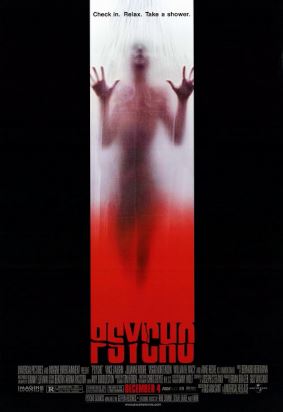
Upon his initial suggestion, studio execs would understandably wonder, If it’s the same movie, why not just re-release the original. Either Van Sant or someone else may have argued, “People will want to see the shower scene in color.” It’s fair to be a little cynical. Just look at the poster.
Van Sant is a popular director who does not exploit audiences. If anyone should be attempting this project, he’s a fine choice. Artistically, his vision here was a bust. His treatment of cinematic gold is to turn it into copper. But by being so faithful to the script, he has illustrated that movie success is not about the technicalities — but vibe, inspiration, filmmakers finding themselves in the right place at the right time.
Or in a word, unpredictable.
His actors, based solely on comparisons to the original, mostly seem miscast. It’s still an elite group. One of the first decisions for Van Sant had to be whether to use unknown actors or well-known stars. The reason for using unknowns is not to save money — the argument would be that this is a tribute to a great film with a title that sells itself; the marquee names shouldn’t matter. Van Sant — or the film’s backers — opted instead for marquee names.
Was landing the actors a tough sell? A lot of elites may shun a project that is already famous for having other actors. Vince Vaughn says he was more interested in working with Van Sant than working on a famous title. Vaughn says it was merely an “interesting exercise” to reimagine a famous character, not a statement that suggests he views this as a landmark production.
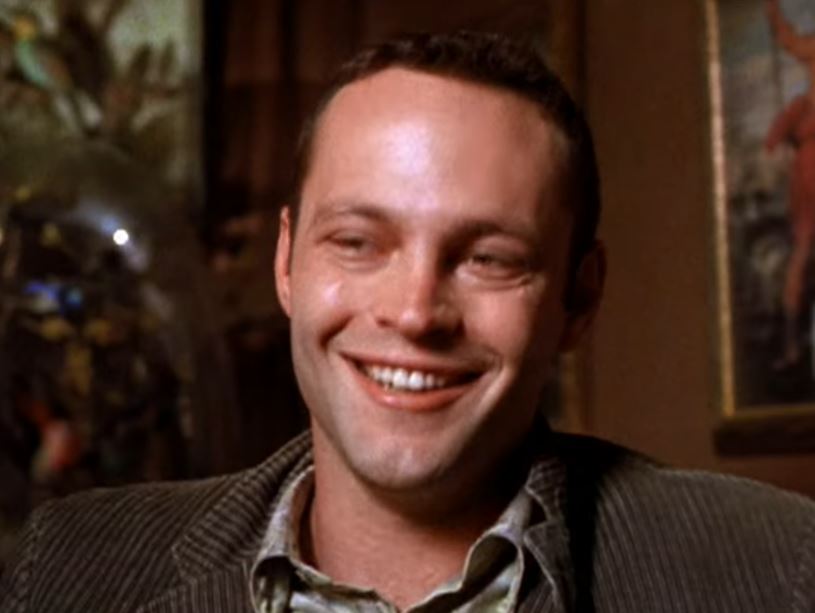
The actors apparently had differing approaches to playing these characters. Most seem to be mimicking famous performances; collectively, it’s a little bit of a tribute band. Vaughn and Julianne Moore give the Hitchcock characters something a little different. Vaughn’s Norman is not as subdued as Anthony Perkins’; there’s less of a contrast between the polite clerk and raving madman. For whatever reason, it feels like his character is talking too much. There is one very important physical difference between the two Normans — Anthony Perkins is unusually thin. Vaughn is not overweight. But he is not unusually thin, specifically in the face. Vaughn is reportedly 6-5. Perkins was somewhere around 6-1 or 6-2.
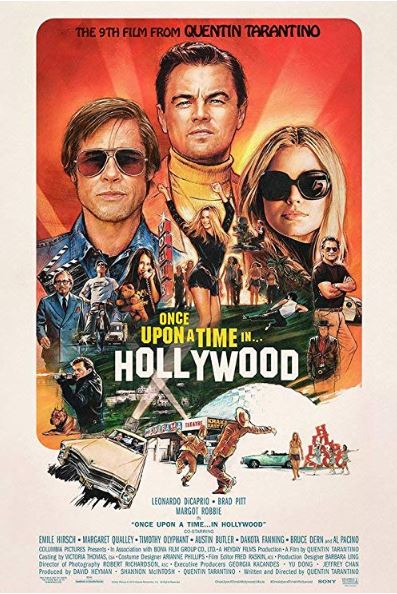
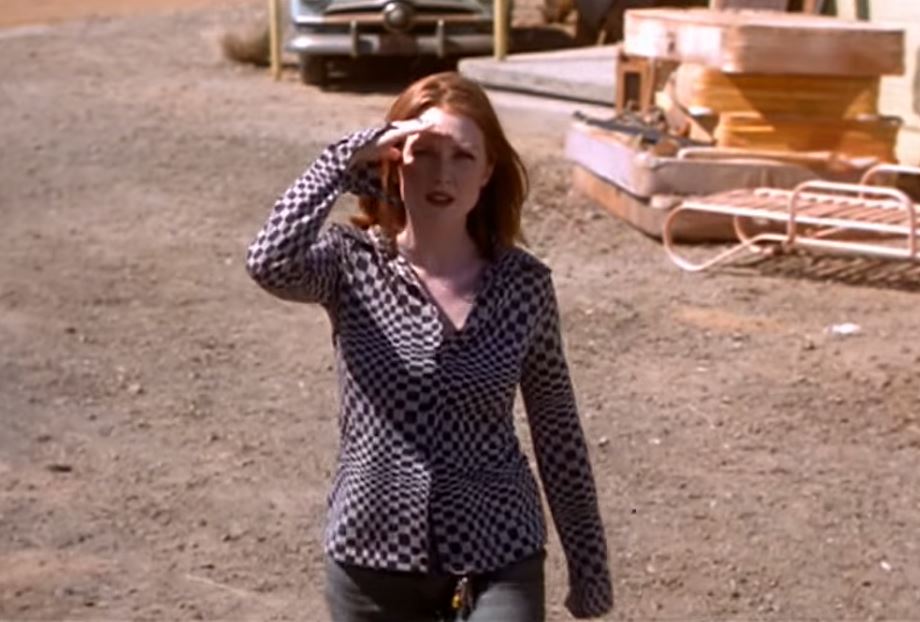
Moore is telling the rest of the characters to wake up. She’s the only character here convinced that someone may have actually died. She stalks the grounds a little bit like Brad Pitt at the Spahn Ranch in “Once Upon a Time... in Hollywood.”
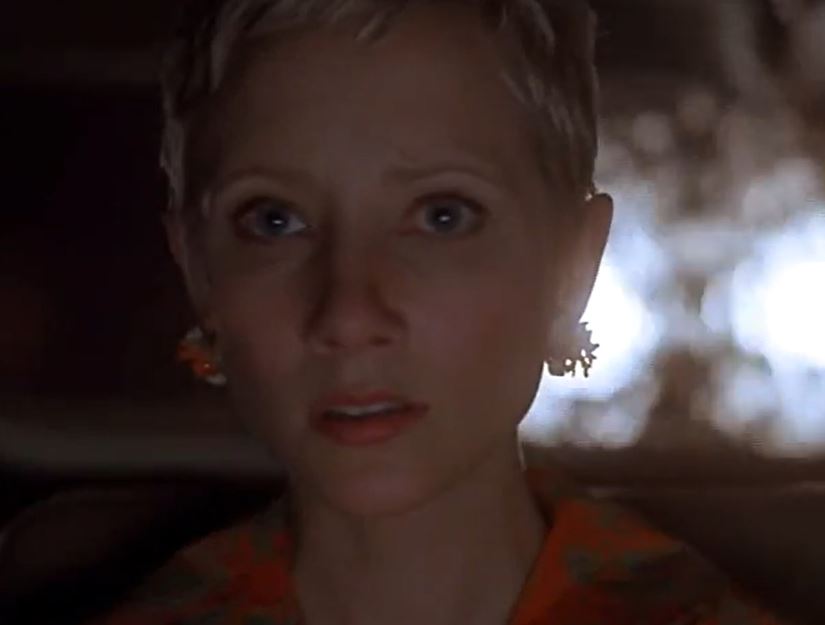
Anne Heche resembles someone in a rock band or pottery class — or Mia Farrow in “Rosemary’s Baby” — not a desperate office worker. She’s neither convincing as someone who goes astray nor as someone making amends. She received a Golden Raspberry for this performance. Her career and life, though, are quite interesting. She is most famous not for a movie role but for one of, to this day, the world’s most prominent same-sex relationships. It didn’t last, and she apparently described all of her other relationships as straight. She is also famous for how she died, in 2022. She went out in, for lack of a better term, a demolition derby in Los Angeles’ Mar Vista neighborhood, striking a garage, another car, and then plowing into a house and remaining stuck in the car while the house burned. Still, she nearly survived. There were traces of drugs in her system, but she was not deemed impaired.
Another key character from the original seemingly didn’t have to be changed, but was — the house.
Van Sant was not tinkering with cinematic purity. The original “Psycho” was diluted well before he took interest. He notes in his 2023 interview that “ ‘Psycho’ had been remade by people including Anthony Perkins, there was a ‘Psycho II,’ ‘Psycho III.’ And he says, whether seriously or not, that there were “big plans” to do more if the 1998 film did well. The original was a one-and-done for Alfred Hitchcock, but three years after his 1980 passing, “Psycho II” starred Perkins. That got decent reviews and made money, even if, as Gene Siskel writes, it was “played as much for laughs as for horror.” That led to “Psycho III” a few years later, the well running dry.
Quentin Tarantino, who evidently isn’t a big fan of Hitchcock, has stated that he finds not only “Psycho 2” but Van Sant’s film superior to the original. Tarantino says “Psycho II” was dreaded by some in the same way as Van Sant’s film.
Appreciation for Van Sant’s film may hinge largely on whether the viewer has already seen Hitchcock’s version. Those who haven’t are bound to be more impressed, but still may do little more than shrug.
It was nearly four decades after the original “Psycho” when Van Sant got a chance at it. In Hollywood, when opportunity knocks, you have to answer. Unfortunately, Van Sant’s timing is off. He does update his film for inflation, but today it seems about as nostalgic as the original. Print newspapers still have a prominent role. No one in Van Sant’s film is carrying around cellphones. The internet is a non-factor in the story. Today’s AI era, on the other hand, allows lots of intriguing possibilities. What if Norman Bates is not a person but a high-functioning robot, suffering a malfunction like Yul Brynner in “Westworld”? What if Marion Crane took a self-driving Waymo in Phoenix, and that’s how her death occurred. Any improvement of “Psycho” would have to involve a scarier death location than the shower — anyone with knowledge of one would be best served steering clear of “Psycho” in favor of doing their own film.
Hitchcock’s “Psycho” is the standard-bearer of the notion that so many movies are simply about inventing new ways of killing or maiming people. Had Norman Bates simply used a gun, it wouldn’t be such a memorable film. But probably no other filmmakers will ever have the situation Hitchcock found himself with — long-standing practices that had kept slasher scenes out of mass market movies, but times were quickly changing, and here is that rare director who could get away with it in 1960. It’s not exploitive. It’s art.
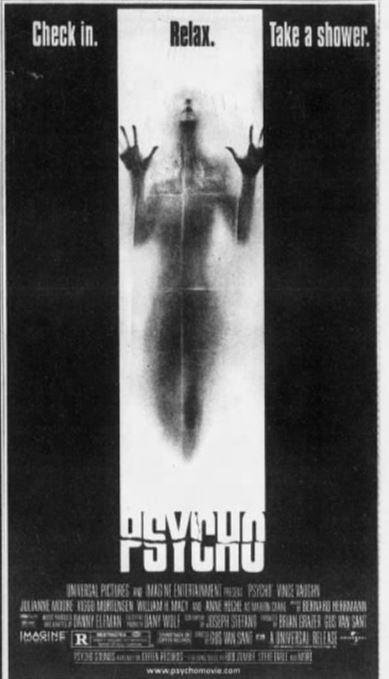
A newspaper ad for “Psycho” in December 1998
Pauline Kael, who writes of Hitchcock defying Hollywood convention, and audiences’ expectations, by killing off his marquee actress so early in “Psycho,” concedes the power of this scene but suggests that the legendary director may have crossed the line, not in the visuals but in his own perceived appreciation of Norman Bates. She writes in a 1978 essay, “One film has shocked me in a way that made me feel that it was a borderline case of immorality — Hitchcock’s ‘Psycho,’ which, because of the director’s cheerful complicity with the killer, had a sadistic glee that I couldn’t quite deal with. It was hard to laugh at the joke after having been put in the position of being stabbed to death in the motel shower. The shock stayed with me to the degree that I remember it whenever I’m in a motel shower. Doesn’t everybody? It was a good dirty joke, though, even if we in the audience were its butt.”
There are probably some who regard the original “Psycho” as a perfect film. “Perfection” is not really a term that applies to filmmaking, but everyone gets the point. People being attacked, out of the blue, with a knife is high drama. But “Psycho” has, in some instances, too much tell and not enough show. The movie made the previously mundane motor lodge into a scary place, but aside from the shower, the motel grounds are uninteresting. Viewers need to be told the real story of Norman’s parents. A lot of key details are shared in phone calls. Kael once wrote that the explanation of Norman Bates’ behavior was “arguably” the worst scene.
The 1998 credits include special thanks to Hitchcock’s daughter, Pat Hitchcock, and estate. Pat Hitchcock, in 1998 DVD footage (a featurette called “Psycho Path”), calls Van Sant’s movie “flattering.” A great question, perhaps one Van Sant even likes, is whether he deserves praise or scorn for attempting this remake. For those who think it’s all bad, the 1998 “Psycho” actually only tied for third in the Golden Raspberry Awards for Worst Remake or Sequel, with “Godzilla” and “The Avengers” (the British TV show, not the Marvel characters ... a case of someone with an eye on Hollywood profit having the right title but totally wrong movie.) Van Sant’s effort was noble. Unfortunately, it just wasn’t that good, and its presence does amplify a possible small stigma about the original already created by the sequels, that maybe it’s not necessarily a singular work of greatness, but a typical franchise. There’s a high bar for messing with the classics. Van Sant failed to clear it. Why remake a great movie? Why not try again on something that was bad?
2 stars
(November 2025)
“Psycho” (1998)
Starring
Vince Vaughn as
Norman Bates ♦
Anne Heche as
Marion Crane ♦
Julianne Moore as
Lila Crane ♦
Viggo Mortensen as
Sam Loomis ♦
William H. Macy as
Milton Arbogast ♦
Robert Forster as
Dr. Simon ♦
Philip Baker Hall as
Sheriff Chambers ♦
Anne Haney as
Mrs. Chambers ♦
Chad Everett as
Tom Cassidy ♦
Rance Howard as
Mr. Lowery ♦
Rita Wilson as
Caroline ♦
James Remar as
Patrolman ♦
James LeGros as
Car Dealer ♦
Steven Clark Pachosa as
Police Guard ♦
O.B. Babbs as
Mechanic ♦
Flea as
Bob Summerfield ♦
Marjorie Lovett as
Woman Customer ♦
Ryan Cutrona as
Chief of Police ♦
Ken Jenkins as
District Attorney
Directed by: Gus Van Sant
Written by: Joseph Stefano (screenplay)
Written by: Robert Bloch
Producer: Brian Grazer
Producer: Gus Van Sant
Consulting producer: John Marshall
Associate producer: James Whitaker
Executive producer: Dany Wolf
Music: Bernard Herrmann
Cinematography: Christopher Doyle
Editor: Amy E. Duddleston
Casting: Howard Feuer
Production design: Tom Foden
Art direction: Carlos Barbosa
Set decoration: Rosemary Brandenburg
Costumes: Beatrix Aruna Pasztor
Makeup and hair: Candy L. Walken, Elaine L. Offers, Sylvia Nava, Edward St. George, Lana Heying, Gina Monaci, Nadege Schoenfeld, Chad Waters, Clayton Martinez, Matthew Mungle, Matt Rose, Rick Baker
Unit production manager: Buddy Enright
Unit production manager: Dany Wolf
Post-production supervisor: Robert Hackl
Stunts: Mickey Giacomazzi, Robin Lynn Bonaccorsi, Jack Carpenter, Eliza Coleman, Tabby Hanson, Tricia Peters, Stephanie Reaves
Special thanks: Pat Hitchcock and the estate of Alfred Hitchcock, for their support and friendship
Special thanks: John Woo, for his kitchen knife
Special thanks: Foxcroft Sportswear
Special thanks: Yale University Press